
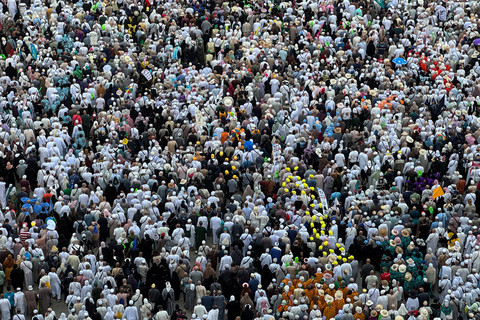

The annual Hajj pilgrimage, a cornerstone of Islamic faith requiring a six-day spiritual journey to the holy city of Makkah, faces unprecedented cost increases this year, largely attributed to the ongoing conflict in Iran.
For Egyptian pilgrims, who represent the largest Muslim population in the Middle East, the financial burden is particularly steep. Average ticket prices have surged from 30,000 Egyptian Pounds (approximately 10 million Indonesian Rupiah) to 50,000 Egyptian Pounds (around 17 million Indonesian Rupiah). Furthermore, pilgrimage package costs have escalated by 30 percent, with some soaring from 70,000 Egyptian Pounds (roughly 23 million Indonesian Rupiah) to an astounding 90,000 Egyptian Pounds (around 30 million Indonesian Rupiah), according to the Egyptian tourism federation, as reported by Bloomberg on Saturday, May 30.
This year’s Hajj is overshadowed by the geopolitical tensions emanating from the Iran conflict. Since February, the instability has severely disrupted air traffic across the Gulf states, pushing jet fuel prices to record highs. This direct impact on operational costs for airlines has, in turn, inevitably led to significant increases in airfare.
Airlines are directly feeling the pinch. Jazeera Airways, which transports over 30,000 pilgrims from Russia and Central Asian countries to Makkah, reported a staggering 40 percent increase in fares this season, primarily due to not hedging their fuel costs. Broadening the scope, travel company WEGO indicates that airfares to Saudi Arabia from major Muslim markets, including Egypt, Pakistan, and India, have climbed between 20 percent and 40 percent compared to the same period last year, with some specific routes now commanding prices approximately 50 percent higher.

While Saudi Arabia has largely remained untouched by the direct disruptions of the war, the ripple effect of escalating prices has profoundly impacted the Kingdom and the more than 1.5 million foreign pilgrims flying in to perform the Hajj. This sacred religious journey remains the sole form of tourism actively developed by Saudi Arabia and continues to be its most consistent revenue stream.
Each nation is allocated a specific quota determining how many of its citizens can undertake the Hajj, often leading to extensive waiting lists for prospective pilgrims. Enhancing religious tourism is a key strategic focus for the Kingdom of Saudi Arabia, as it actively seeks to enrich the pilgrim experience and diversify its national income sources beyond oil.
The economic significance of the Hajj pilgrimage is projected to grow substantially. According to research group Future Market Insights Inc., the Hajj economy is anticipated to triple in value, reaching approximately USD 350 billion by 2034.
Summary
The annual Hajj pilgrimage faces significant cost increases this year, largely attributed to the ongoing conflict in Iran. This instability has disrupted air traffic across Gulf states and driven jet fuel prices to record highs, directly impacting airline operational costs. Consequently, airfares to Saudi Arabia from major Muslim markets like Egypt, Pakistan, and India have climbed by 20% to 50%.
For example, Egyptian pilgrims are seeing ticket prices surge by approximately 50%, with pilgrimage package costs rising by 30%. Although Saudi Arabia remains largely untouched by direct war disruptions, it is affected by these escalating prices, impacting the more than 1.5 million foreign pilgrims. The Hajj, a crucial revenue stream for Saudi Arabia, is projected to triple in value, reaching an estimated USD 350 billion by 2034.
