
News Summary:
- The United States government plans to launch a strategic initiative to assist vessels stranded in the Strait of Hormuz.
- This policy was directly announced by President Donald Trump.
- Tehran also asserted that these discussions are unrelated to nuclear negotiations.
The United States government is preparing to roll out a strategic plan aimed at aiding vessels currently trapped in the Strait of Hormuz, a critical waterway heavily influenced by Iran. This initiative is slated to commence on Monday morning, May 4, 2026, local time.
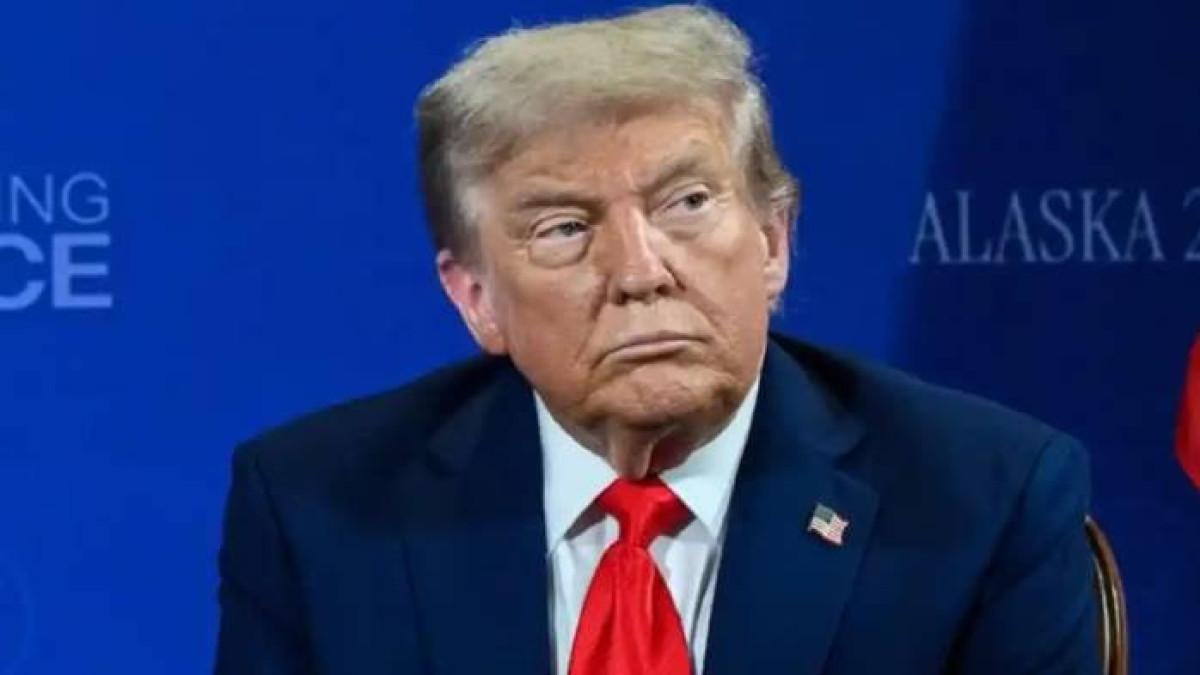
President Donald Trump personally announced the policy, though specific details regarding its implementation remain undisclosed. This bold step is anticipated to bring relief to hundreds of ships and an estimated 20,000 sailors who are currently marooned in the troubled region. Trump’s announcement came merely hours after Iran indicated it was reviewing the U.S. response to its latest proposal for a conflict cessation. Tehran, however, was quick to assert that these discussions bear no relation to ongoing nuclear negotiations. Amidst this tense backdrop, a fragile three-week-old ceasefire appears to be holding, albeit precariously.
In a social media post on Sunday, May 3, 2026, Trump highlighted the broader impact of the conflict on nations not directly involved. “We have informed these countries that we will safely guide their ships out of these restricted waterways, so they can freely and capably continue their business,” he stated. He further underscored the initiation of the operation with the declaration, “Project Freedom will begin Monday morning in the Middle East.”

According to Trump, U.S. representatives are currently engaged in continuous discussions with Iran to forge a broader solution. He even suggested that these talks could yield something “very positive for all parties.” Iran’s effective closure of the Strait of Hormuz since the outbreak of conflict on February 28, 2026, has profoundly shaken global market stability. Numerous oil, gas, and cargo tankers are reportedly stranded in the Persian Gulf region, facing an uncertain future. Crews aboard these vessels are grappling with arduous conditions, ranging from the constant threat of attacks to critical logistical shortages. Meanwhile, several Iranian media outlets have dismissed Trump’s statements as mere “claims.”
Iran Receives US Response
Iran confirmed on Sunday that it had received the U.S. response to its latest offer for peace talks. This announcement came just a day after President Donald Trump had indicated he might reject Iran’s proposal, citing that “they haven’t paid a sufficient price.” Iranian state media further reported that Washington conveyed its response to Iran’s 14-point proposal via Pakistan, and Tehran is currently reviewing it. However, there has been no immediate confirmation from either Washington or Islamabad regarding the contents of the U.S. response.
“At this stage, we are not conducting nuclear negotiations,” state media quoted Iranian Foreign Ministry spokesperson Esmaeil Baghaei as saying. This statement appeared to reference Iran’s proposal to defer discussions on nuclear issues until after the conflict concludes and both parties agree to lift their reciprocal blockades on shipping in the Gulf.

Efforts to End the War
The United States and Israel ceased their bombing campaign against Iran four weeks prior. Subsequently, U.S. and Iranian officials held one round of discussions. However, attempts to arrange further meetings have, thus far, proven unsuccessful. Iran submitted its latest proposal on Thursday, April 30, 2026. A senior Iranian official confirmed on Saturday that Tehran envisions first ending the war and resolving the shipping deadlock, with talks on Iran’s nuclear program to follow at a later stage.
While Trump initially expressed dissatisfaction with Iran’s proposal on Friday, he stated on Saturday that he was still considering it. “They told me about the concept of the deal. They will tell me the exact wording now,” he informed reporters, as quoted by Al Arabiya. When pressed on whether he might resume attacks against Iran, Trump responded: “I don’t want to say that. I mean, I can’t say that to a reporter. If they behave badly, if they do something bad, now we will see. But that is a possibility that could happen.”
Earlier on Sunday, a cargo vessel near the Strait of Hormuz reported being attacked by several small boats, according to a report from the United Kingdom Maritime Trade Operations (UKMTO). This incident marks the latest in at least two dozen attacks in and around the Strait since the war with Iran commenced, serving as a stark reminder of the inherent risks should the new U.S. initiative proceed. All crew members of the unidentified northward-bound cargo ship survived after the assault off the coast of Sirik, Iran, to the east of the Strait, the British monitoring agency confirmed.
Iranian officials maintain that they control the Strait and that vessels not affiliated with the United States or Israel can pass through if they pay duties – a stance that directly challenges the internationally guaranteed principle of freedom of navigation. Iran, however, denied any attack, as reported by semi-official Iranian media Fars and Tabnak, stating instead that a passing vessel had been stopped for document inspection as part of routine monitoring. Notably, this was the first reported attack in the area since April 22, 2026. Tehran has effectively closed the Strait by attacking and threatening vessels, and the threat level in the area remains critical.
(Attribution: Tribunnewsmaker.com / Tribunnews.com / Nuryanti)
Summary
The United States government, under President Donald Trump, is launching “Project Freedom” on May 4, 2026, to assist vessels stranded in the Strait of Hormuz. This strategic initiative aims to safely guide ships out of the critical waterway, bringing relief to hundreds of vessels and approximately 20,000 sailors. The Strait has been effectively closed by Iran since February 28, 2026, significantly impacting global market stability.
Trump’s announcement follows Iran’s confirmation of receiving the U.S. response to its latest peace proposal for a conflict cessation. However, Tehran asserts that these discussions are separate from ongoing nuclear negotiations. Amidst a fragile ceasefire and recent reports of an attack on a cargo vessel near the Strait, Iran denies attacks, stating it controls the waterway and performs routine inspections.
