
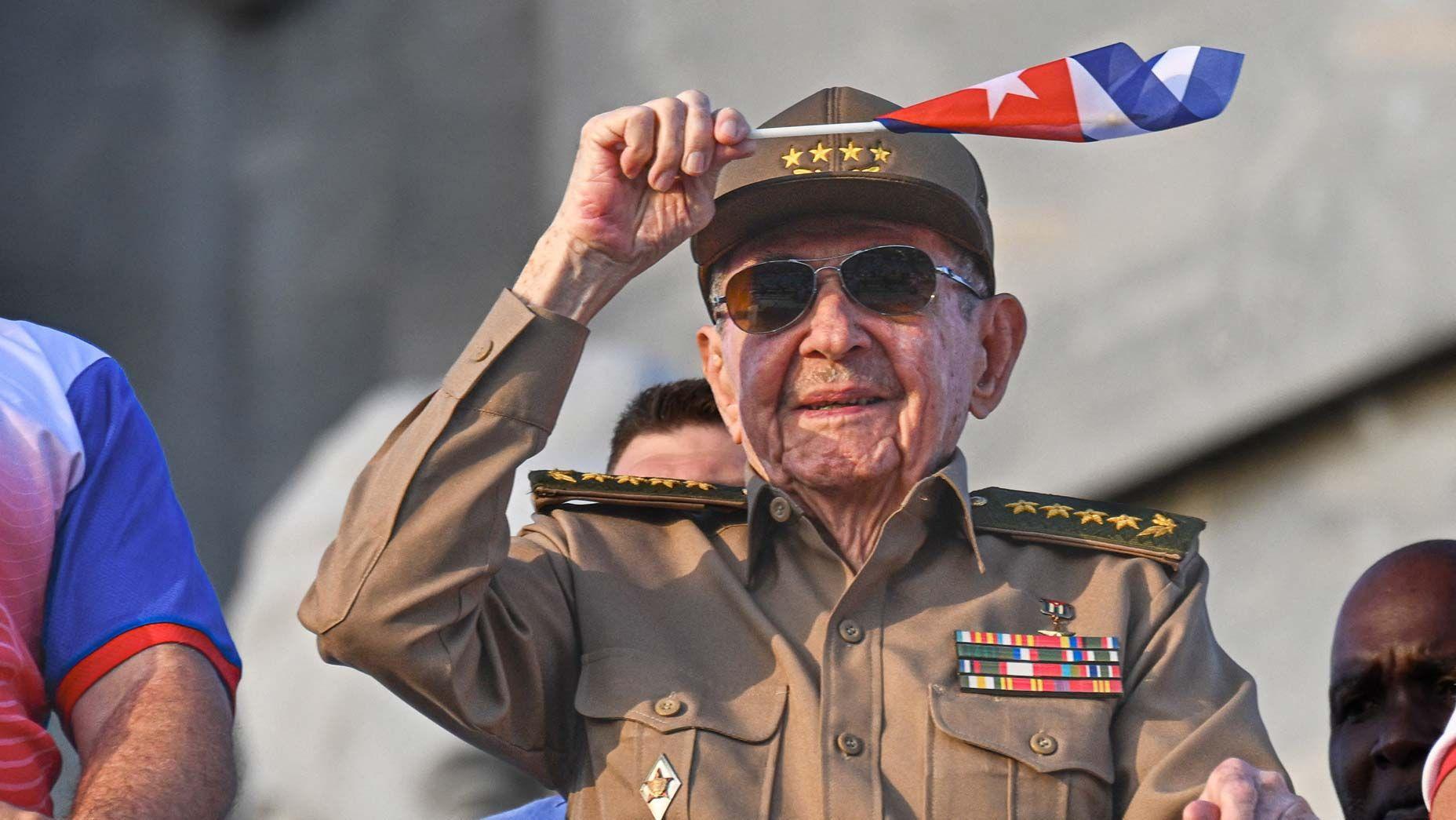

The United States has formally indicted 94-year-old former Cuban President Raúl Castro on murder charges, sparking intense speculation that Havana could become the next target for a regime change orchestrated by Washington D.C.
This development unfolds against a backdrop of severe economic strain in Cuba, currently grappling with its most profound fuel and energy crisis. Amidst these escalating pressures, numerous U.S. officials have persistently advocated for the swift dismantling of the island’s communist government, which has held power for an uninterrupted 66 years.
President Donald Trump, on one hand, has publicly expressed his belief that “escalation” is not required. Yet, paradoxically, the White House has concurrently pledged unwavering intolerance for what it describes as a “rogue state,” situated a mere 144 kilometers (90 miles) off the U.S. coastline.
The path forward for Cuba is fraught with uncertainty, making predictions difficult. Potential outcomes range from a complete economic collapse and widespread domestic upheaval to direct military intervention by the United States.
Below, we explore three distinct possibilities that could unfold.
The U.S. Could Attempt to Arrest Raúl Castro
The indictment against Raúl Castro, stemming from the 1996 downing of two civilian planes by Cuban fighter jets, immediately ignited speculation that U.S. forces might launch an operation to apprehend him and bring him to an American court. This type of audacious operation is not without precedent in U.S. foreign policy.
Indeed, just this past January, U.S. commandos executed a swift operation in Venezuela, aiming to capture President Nicolás Maduro, a long-standing ally of Cuba, and transport him to New York to face drug and weapons charges. Furthermore, in 1989, Operation Just Cause saw thousands of U.S. troops invade Panama to overthrow and detain its then-leader, Manuel Noriega.
Read also:
- Which country might Trump target after Venezuela?
- CIA operations in Indonesia: Pornographic films, communist hunting lists, to the Jakarta Method
- 60th anniversary of the Cuban revolution, Castro condemns US ‘confrontational’ politics
Despite these historical parallels, President Trump has, thus far, dismissed questions regarding the execution of a similar operation in Cuba. Nevertheless, several prominent U.S. lawmakers have openly advocated for such a mission. Florida Senator Rick Scott emphatically told reporters, “We should not take any options off the table. The same thing that happened to Maduro should happen to Raúl Castro.”
Experts agree that, from a purely military standpoint, apprehending Castro is feasible, albeit fraught with considerable risks and complexities. These challenges include his advanced age and the potential for fierce resistance. “In some ways, it might be easier to extract him,” noted Adam Isacson, a regional expert from the Washington Office on Latin America, an NGO. He added, “He has symbolic value, which means he’s very heavily guarded. But it’s certainly possible.”

However, analysts caution that removing Castro, who stepped down as president in 2018, might not significantly alter the overall Cuban government, despite his years as an influential symbolic figure. “I don’t think [an arrest] would affect the power structure in Cuba much anymore. He’s 94 years old,” Isacson explained. “The Castro family dynasty is influential, but it’s no longer at the center of what they’ve built.” He further elaborated, “For domestic political reasons, it would probably be a hit. They would love to humiliate the Castro family and imprison one of the original revolutionaries from 1959. But its strategic value is questionable.”
The U.S. Could Instigate Regime Change in Cuba
A second distinct possibility, frequently voiced by U.S. officials including President Trump himself, envisions a new leadership assuming power in Havana. This scenario would constitute a significant shift for the Cuban government.
Experts highlight a striking parallel to this approach in Venezuela, where Delcy Rodriguez replaced Maduro. In that instance, the Venezuelan government structure largely remained intact but established direct communication channels with the Trump administration.
Read also:
- Donald Trump wants to control Venezuela’s oil, how?
- Who is Delcy Rodriguez, Venezuela’s leader replacing Nicolas Maduro?
- Intelligence, drones and firearms: How the US captured Maduro
Trump has repeatedly asserted that he is already in contact with figures within Cuba who are seeking U.S. assistance amidst the island’s deteriorating economic conditions. “Cuba is asking for help, and we will talk,” he posted on Truth Social on May 12.

Days after Trump’s social media declaration, CIA Director John Ratcliffe reportedly met with Cuban officials, including Castro’s grandson, Raúl Guillermo Rodríguez Castro, and Interior Minister Lázaro Álvarez Casas. Speaking to reporters in Florida on Thursday, May 21, Secretary of State Marco Rubio affirmed, “We will interact with Cuba… ultimately they have to make decisions. Their system isn’t working.”
The U.S.-desired changes could encompass a wide range of reforms: opening the Cuban economy, actively inviting increased foreign investment and greater involvement from the Cuban exile community, and securing a commitment to end the presence of Russian or Chinese intelligence agencies on the island. Crucially, such changes could allow the broader Cuban government apparatus to remain largely functional.
“Just as they wanted to avoid instability in Venezuela, they also want to avoid instability in Cuba,” stated Michael Shifter, a professor of Latin American studies at Georgetown University and former head of the Inter-American Dialogue, a Washington-based think tank. He further cautioned, “Imposing regime change would be too risky.”
However, several experts consulted by the BBC point to a significant challenge for the Trump administration: the apparent lack of a ready-made successor figure within Cuba. “I don’t think there’s a Delcy Rodriguez-like figure in Cuba, and power works differently in Cuba compared to Venezuela,” Shifter observed. “It’s hard to find what they’re looking for, but I think they’re looking for some kind of governing structure.”
Cuba Could Face Economic Collapse and Widespread Unrest
The third potential scenario sees Cuba succumbing to its immense economic pressures, leading to a complete collapse marked by daily, hours-long power outages and severe food shortages. This would represent an unprecedented crisis for the island nation.
President Trump reiterated his stance this week, stating, “There will be no escalation. I don’t think it’s necessary. The place is collapsing. It’s a disaster, and they’ve lost control to a certain extent.” His comments suggest a belief that internal pressures alone could destabilize the government.
However, experts argue that the situation in Cuba is far more intricate. They point out that the Cuban government’s control mechanisms over its population largely remain intact, even amidst profound economic hardship. “You have to distinguish between the Cuban economy and the Cuban state and government,” Michael Shifter explained. “The Cuban economy can collapse, and it is collapsing… but the state still functions, especially on the security side,” he added, highlighting the resilience of the political apparatus.
A full collapse in Cuba could also present a formidable challenge for the Trump administration, particularly if it triggers a mass exodus of Cuban citizens seeking refuge, primarily towards the United States. This potential refugee crisis would be compounded by the fact that recent Cuban immigrants have faced limited access to political asylum and stricter immigration restrictions under the Trump presidency.
“If there’s a collapse, a large part of the Cuban population will do everything to leave, as has happened from Haiti for years,” Adam Isacson remarked. He noted, “Florida is the closest place, but I also expect some people will head to Mexico.” Isacson further expressed his “surprise” that such a large-scale wave of migration has not yet materialized, given the dire circumstances. “People are probably surviving on 1,000 or 1,500 calories a day, and unable to get basic health services,” he concluded, adding, “We thought people would have started building boats by now.”
- The world loses ‘iconic figure of the 20th century’ Fidel Castro
- Fidel Castro, a true communist who fell in love with New York
- End of the Castro era in Cuba after six decades
Summary
The United States has formally indicted 94-year-old former Cuban President Raúl Castro on murder charges related to the 1996 downing of civilian planes. This action has fueled speculation regarding potential U.S. intervention, ranging from a tactical operation to apprehend Castro to broader efforts to force regime change. While some U.S. lawmakers advocate for a mission similar to past operations in Panama or Venezuela, experts note that such an arrest might hold more symbolic than strategic value given Castro’s age and diminished role in the current power structure.
Alternatively, the U.S. is exploring avenues to foster a shift in leadership and policy, potentially through direct engagement with Cuban officials to encourage economic reforms and reduce foreign intelligence influence. However, the island also faces the risk of complete economic collapse, which could trigger widespread civil unrest and a mass migration crisis. Despite these severe internal hardships, analysts observe that the Cuban government maintains firm control over its security apparatus, complicating the possibility of an immediate political transition.
