
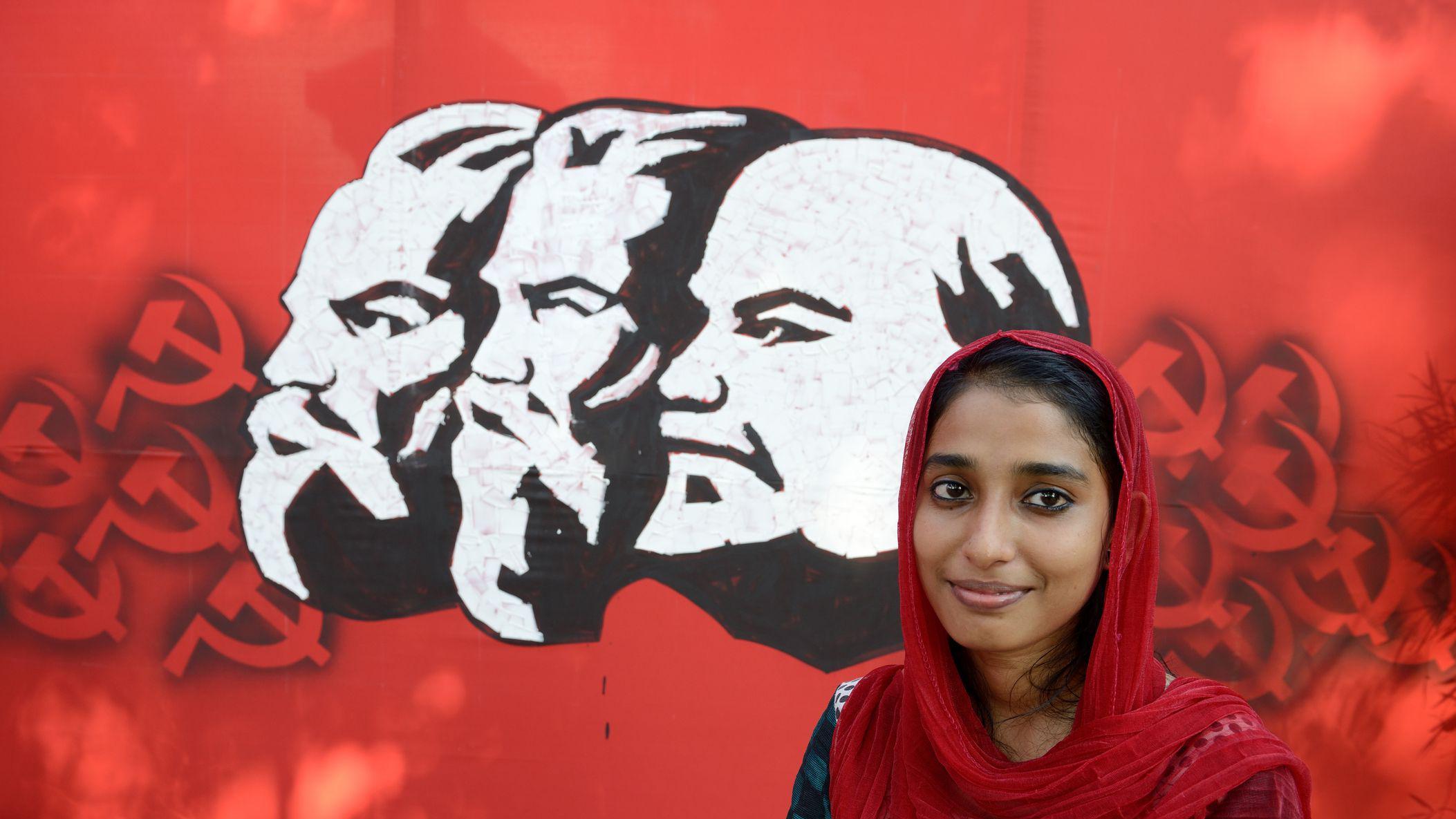

For the first time since India’s independence, and specifically since 1957, the Communist Party now holds no governing power in any Indian state.
This historic shift follows the recent defeat of the Left Democratic Front (LDF), led by the Communist Party of India (Marxist) [CPI(M)], in the state of Kerala. After a decade in power, their loss signifies a potential end to what was once considered the world’s most enduring democratic communist system—at least for the foreseeable future.
At the zenith of their influence, communist parties in India governed a significant number of states, stretching from West Bengal across to Kerala and Tripura. Their extensive reach impacted the lives of over 100 million people, facilitated through powerful trade unions, farmer organizations, student wings, and a meticulously structured network of cadres.
West Bengal, in particular, witnessed an unbroken rule by the Left Front from 1977 to 2011, establishing one of the longest-serving democratically elected communist governments globally. Similarly, in Tripura, the Left maintained power for a total of 35 years, including an impressive 25-year uninterrupted stretch, before being unseated by Prime Minister Narendra Modi’s Bharatiya Janata Party (BJP) in 2018.
Kerala charted a distinct course. Since 1957, when the state elected one of the world’s first democratically chosen communist governments under EMS Namboodiripad, power consistently alternated between the Left and the Congress. This dynamic ensured the communists remained a persistent, yet never permanently dominant, political force.
The Left’s influence nearly extended to the national stage. In 1996, Jyoti Basu, a co-founder of the CPI(M) and then Chief Minister of West Bengal, was on the cusp of becoming India’s prime minister as the leader of a coalition government. However, his party famously declined the offer, a decision he later lamented as a “historic blunder.”
Beyond state governance, communist parties also played a crucial role in New Delhi’s coalition politics. In 2008, they withdrew support from Prime Minister Manmohan Singh’s government over a contentious civilian nuclear deal with the United States. At that time, the Left parties commanded 62 seats in the lower house of parliament—a considerable bloc that forced Singh to face a vote of confidence before ultimately securing the agreement.

Their impact wasn’t confined to parliamentary maneuvers. Despite facing economic stagnation in West Bengal and concerns over declining educational standards under Left rule, communist parties exerted substantial sway over economic thought, intellectual discourse, and cultural life, extending well beyond their core electoral strongholds.
However, many observers now contend that much of this pervasive influence has significantly waned.
Presently, the Left’s strength persists unevenly across India. While Kerala has seen a recent electoral setback, the Left retains considerable political significance there. In Tamil Nadu, their survival largely depends on alliances. Bihar offers a glimmer of resurgence, with the Communist Party of India (Marxist-Leninist) [CPI(ML)] emerging as a dynamic grassroots force in several regions. Moreover, student wings supported by Left exponents continue to hold sway in prominent universities.
Yet, in their former bastions of West Bengal and Tripura, communist parties have plummeted far from their past glory. Nationally, the CPI(M)’s vote share has dramatically fallen from over 6% during its peak in the 1980s to below 2% in the most recent national elections.
This decline is symptomatic of a broader shift: the fading resonance of traditional political rhetoric centered on class struggle and collective mobilization. These concepts have been gradually supplanted by the rise of identity politics, fervent nationalism, charismatic populist figures, and targeted welfare policies.
Mohammed Salim, the CPI(M) secretary in West Bengal, views this transformation as part of a larger historical current. Since the 1990s, he argues, the ascendance of Hindu nationalism and market liberalization has unleashed a “religious, political, and economic onslaught” that has pressured the Left from multiple directions.
“The middle class was shown these green pastures,” Salim explains. “Development, modernization, infrastructure—you will get your share. Aspirations were aroused.”

He further notes that communist parties have struggled to adapt to a political landscape increasingly focused on identities such as caste and religion, rather than class. “The politics of division,” Salim asserts, “weakens class unity.”
However, experts caution that the Left’s decline cannot be solely attributed to the rise of Hindu nationalism, caste-based politics, and aspirational politics.
Unlike in China or Vietnam, communist parties in India operated exclusively at the state level within a “federal political economy,” explains Sanjay Ruparelia, a professor of politics at Toronto Metropolitan University. This unique position placed them under intensifying pressure to attract private investment and foster economic growth.
In West Bengal, this contradiction became starkly evident: a party that had risen to power on the back of agrarian reform was later accused of forcibly acquiring farmers’ land in the name of industrialization.

Kerala, on the other hand, distinguished itself with internationally lauded achievements, including decentralized planning, high social indicators, impressive literacy rates, significant poverty reduction, and a robust public health system.
Nevertheless, this acclaimed model harbored fundamental pressures. “Kerala remains heavily reliant on remittances from abroad, which fluctuate in performance, leading to increased fiscal pressures and inadequate job creation, especially for young people,” Ruparelia highlights.
Even more strikingly, the communists in Kerala themselves began to pivot towards economic models they had previously rejected. A 2022 CPI(M) policy document controversially embraced private investment, public-private partnerships, private universities, and globally integrated technology services.
For political scientists like Ruparelia, these shifts underscore a broader reality: communist parties in India are often “more accurately understood as social democrats than communists.” Rather than pursuing revolution, they have generally functioned as parliamentary parties prioritizing welfare, labor rights, and redistribution.
“India is unusual in having successful democratic electoral communist-tradition parties,” he notes.
However, according to CPI(M) General Secretary MA Baby, state governments have always operated within severe limitations. “They have limited financial and administrative power. The real power resides in New Delhi,” he states. “We used state governments to demonstrate that even within a capitalist socio-economic structure, people-centric and alternative policies are possible, despite limited authority.”
Yet, the very social base that underpinned this model has steadily eroded. Organized labor unions have always represented a minority within India’s vast informal economy. Furthermore, welfare politics has increasingly shifted away from class-based mobilization towards direct cash transfers and identity-based coalitions.
When farmer protests erupted in 2020 against proposed agricultural laws by Prime Minister Narendra Modi, the events starkly illustrated how much rural politics had changed. The Left remained part of the movement—acting as a “voice of conscience,” as analyst Shikha Mukherjee described it—but they no longer led. That leadership role had been assumed by regional parties and independent farmer unions.

“The Left has lost its position as the main voice for rights and welfare guarantees. They struggled to adapt to the modern economy, and ideological confusion is now at the heart of the movement,” Mukherjee observes.
Contemporary India is characterized by widening inequality, chronic youth unemployment, and escalating economic uncertainty—conditions that, ironically, were once predicted to be fertile ground for Marxist politics. As Ruparelia points out, “the objective conditions, as the Left often refers to them, should be favorable to them.”
But, Mukherjee questions, where are the communists? “The Left should be on the streets. Where are they?”
This paradox is not exclusive to India. Following the 2008 financial crisis, Europe also witnessed the emergence of new Left parties. However, many struggled against nationalist populism, which proved adept at mobilizing workers through “politics of immigration and ethnonationalism, rather than class solidarity,” according to Ruparelia. Mukherjee believes the Left in India faces a similar formidable challenge from the BJP.
Nevertheless, writing an “obituary” for a political movement known for its resilience may still be premature.

Communism in India has historically weathered internal divisions, state repression, and significant electoral setbacks. Its organizational networks, though weakened, still retain a presence across various regions.
The crucial question, however, remains whether the Left can transform this lingering strength into meaningful political renewal.
“The CPI(M) needs to reinvent itself—to work within an economic system shaped by liberalization, not merely to oppose it,” Mukherjee suggests.
In West Bengal, Salim asserts his party is actively “reconsolidating, repositioning, and renewing itself.” To shed the image of an aging, anti-change entity, the party has begun to promote a younger generation of leaders to the forefront.
“Communists must constantly renew themselves. The only thing that remains is change itself,” Baby affirms.
However, the scale of the Left’s decline remains stark. In the West Bengal elections, the CPI(M) secured only one seat out of 294 legislative seats, garnering just over 4% of the vote.
Kerala, in contrast, presents a different picture: even in defeat, the LDF still commanded approximately one-third of the votes, affirming the communists’ continued status as a significant political force there. In Tripura, however, their return to power appears to be a distant prospect.
Despite these electoral challenges, party leaders insist that diminished vote tallies do not fully capture their social and political relevance.
“Are we optimistic? Of course,” says Baby. “Indeed, we ask: without us, what kind of future is there? Seats are important, but our place in the hearts of the people is far more important.”
- Can China still be called a communist country?
- How communism was overthrown by the people in three countries in 1989
- The dilemma of Vietnam, a successful communist country in the international arena
Summary
The Communist Party in India has lost governing power in all states for the first time since 1957, marking a significant decline from its peak influence. Previously, communist parties governed states like West Bengal for 34 years and Tripura for 35 years, while consistently alternating power in Kerala. At their zenith, they impacted over 100 million people and wielded considerable national influence, even nearly seeing Jyoti Basu become Prime Minister in 1996. However, their national vote share has dramatically fallen, and their former strongholds have weakened.
This decline is attributed to a shift from class struggle to identity politics, the rise of Hindu nationalism, and challenges in adapting to a liberalized economy. Pressures from India’s federal structure forced communist parties to pursue private investment, sometimes contradicting their historical base. While still significant in some regions and student movements, the Left now faces the formidable challenge of reinventing itself within a changed political and economic landscape. Leaders maintain optimism, emphasizing their enduring social relevance despite electoral setbacks.
