
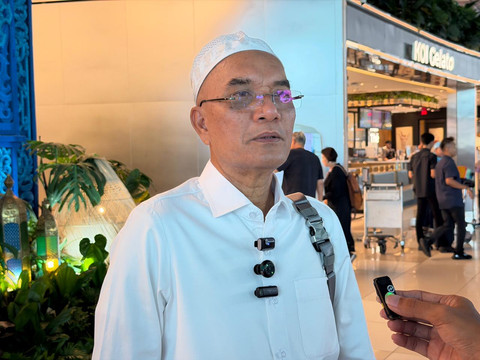

Marwan Dasopang, Chairman of Commission VIII of the Indonesian House of Representatives (DPR RI) and a member of the Hajj Supervisory Team (Timwas) from the PKB Faction, has generally lauded the organization of the 1447 H/2026 Hajj pilgrimage as successful. However, he emphasized that the persistent issue of pilgrim overcrowding in Mina remains a critical concern, demanding immediate and effective solutions.
According to Dasopang, all stages of the Hajj organization, from initial preparations to the climax of the rituals, have proceeded largely as scheduled. Despite this overall positive assessment, the challenging conditions in Mina continue to be directly experienced by pilgrims.
Speaking from Makkah on Saturday (May 30), Marwan reiterated, “Overall, the Hajj pilgrimage has been well-executed. The initial phases right up to the pinnacle of the rituals have unfolded according to plan. We must commend the various parties who have tirelessly worked to provide services to the pilgrims.”
He swiftly added, “Yet, the situation in Mina remains the primary challenge. The capacity of the tents and the available area simply cannot provide sufficiently comfortable space for all pilgrims. Overcrowding persists and is a reality directly felt by those performing the Hajj.”

Mina Facilities Still a Concern
Beyond the pervasive issue of limited space, Marwan also highlighted that several facilities in Mina are not operating optimally. These deficiencies range from malfunctioning air conditioning units to inadequate water availability at various points.
“We have received extensive feedback concerning the facilities in Mina. There are issues with air conditioners not functioning optimally, insufficient water supply, and various other obstacles arising from the high density of pilgrims within a very confined area,” he stated.
Marwan stressed that the challenges in Mina are not new; they are a recurring issue every Hajj season, thus necessitating the urgent development of long-term solutions.
Proposing Multi-Story Tents
Marwan believes that if the expansion of the Mina area is not feasible due to land limitations, then innovative breakthroughs are imperative. He asserted, “We must begin to consider new formulas. If the Mina area genuinely cannot be expanded, then various options such as multi-story tents or other schemes that would provide more spacious and humane conditions for pilgrims must be explored.”
Advocating for the Tanazul Scheme
Furthermore, Marwan proposed implementing a ‘Tanazul’ scheme for a segment of Indonesian pilgrims whose hotels are located conveniently enough to allow them to return to their respective accommodations during the ‘mabit’ period in Mina. He believes that this scheme holds significant potential to substantially reduce overcrowding.
Marwan elaborated, “Out of approximately 201,000 Indonesian pilgrims, around 60,000 could potentially be considered for mabit in hotels, provided there are proper arrangements and adherence to existing regulations. If this can be realized, the space in Mina would become considerably more ample for the pilgrims who remain in the tents.” The Tanazul scheme allows pilgrims not to stay overnight in Mina tents but instead to return to designated hotels or accommodations under special arrangements.
Saudi Government Support is Crucial
Marwan acknowledged that these proposals necessitate thorough study, meticulous organization, and crucially, approval from the Saudi Arabian government. Consequently, he expressed hope that the Indonesian Ministry of Hajj and Umrah could assume a strategic role in engaging in communication and negotiation with Saudi authorities to secure long-term solutions for the persistent challenges in Mina.
He firmly asserted, “This is no easy task. It requires robust coordination, regulatory support, and intensive communication with the Saudi Arabian government. However, the issue of Mina cannot be allowed to recur without a definitive solution. We must be bold in seeking breakthroughs to enhance the comfort and safety of Indonesian pilgrims.”
Summary
Marwan Dasopang from the Indonesian House of Representatives (
