
Claims by Cabinet Secretary Teddy Indra Wijaya that President Prabowo Subianto personally covered excess costs for his official overseas trips “violate the State Treasury Law,” according to observers. This contention highlights a crucial issue: such practices undermine the fundamental principle of accountability in state financial budgeting. The existing legal framework strictly dictates that any government activity lacking sufficient or available budget allocation must not be carried out.
The controversy surrounding President Prabowo’s extensive international travels was ignited by former Deputy Foreign Minister Dino Patti Djalal, who deemed the frequency of these visits excessive and beyond reasonable limits. Dino specifically questioned the substantial budget allocated for these trips, citing the considerable expenses for the entourage, luxurious accommodations, protocol, and security. Adding weight to these concerns, Misbah Hasan, Secretary-General of the Indonesian Forum for Financial Transparency (Fitra), estimated that the state has already spent approximately IDR 500 billion on at least 50 of Prabowo’s international engagements. In response, Cabinet Secretary Teddy Indra Wijaya defended the high frequency of presidential foreign visits, attributing it to an increasingly volatile global landscape prone to crises. He further asserted that the size of the accompanying delegation for these trips had been significantly streamlined, reduced by up to 50%.
In a candid video shared on his Instagram account, former Deputy Foreign Minister Dino Patti Djalal articulated profound concerns regarding President Prabowo’s international travels. He argued that these trips consumed an exorbitant amount of public funds for accommodation and protocol, contrasting sharply with the severe economic hardships faced by the Indonesian public domestically. Dino’s assessment was rooted in his observation that the president’s international mobility appeared unprecedented, making him the most frequently traveling head of state among global leaders.
“In our calculations, among all world leaders, President Prabowo has become the head of state who travels abroad most frequently,” Dino Patti Djalal stated, emphasizing the unusual pattern. He further elaborated, “Since taking office as President, he has spent one out of every six days abroad, and it is unsurprising that some consider this practice irregular and beyond reasonable limits.” Dino also expressed skepticism about the sustainability of this pace, asserting, “It is highly improbable that, in the next 18 months, President Prabowo will continue to undertake international visits with the same high frequency.” The former Indonesian Ambassador to the United States meticulously detailed the substantial financial components embedded in each international official agenda, including costs for advance teams, airfare, hotels, logistics, consumption, protocol fees, and security. “A single overseas trip can easily incur tens, even hundreds of billions [of rupiah] in expenses.” Consequently, Dino advocated for more efficient diplomatic strategies for President Prabowo, such as leveraging video calls, organizing bilateral meetings on the sidelines of international forums, and prioritizing receiving state guests within Indonesia. “Thus, with a single video call costing zero rupiah, the state could practically save hundreds of billions on overseas trips,” he underscored.
The Presidential Palace promptly responded to these criticisms through Cabinet Secretary Teddy Indra Wijaya. In a detailed 6-minute, 44-second video uploaded to the Cabinet Secretary’s official Instagram account, Teddy presented several key points to counter Dino’s assertions. Firstly, Teddy claimed that any costs for international visits exceeding the state’s allocated budget are fully borne by President Prabowo himself. Secondly, he highlighted a significant reduction in the size of the accompanying delegation for overseas trips. During Prabowo’s tenure, he asserted, the number of delegates had been drastically cut by more than half compared to previous administrations, noting, “Previously, one overseas trip could involve over 120 people, as it was during Mr. Dino’s time. Now, under President Prabowo, the number ranges between 50-60 people at most.”
Thirdly, Teddy underscored the dynamic global landscape, which he argued necessitates both annual and urgent overseas visits to address pressing international developments. Fourthly, regarding protocol and the frequency of foreign travel over the past 1.5 years, Teddy stated that Prabowo is a new president who assumed office during a period of widespread global crises, citing conflicts in Ukraine, Venezuela, Iran, and the Middle East. He contended that proactive engagement is vital, asserting that leaders must forge close relationships with their global counterparts rather than merely seeking assistance only when crises emerge. The mid-ranking TNI officer vigorously refuted the perception that Prabowo’s foreign visits were merely ceremonial, instead pointing to significant achievements during his era, including Indonesia’s pathway to permanent BRICS membership and a claimed total investment inflow of IDR 2,430 trillion into Indonesia within 1.5 years.
However, the claim of the President personally covering expenses for state duties raises serious legal questions. According to Ministry of Finance Regulation Number 66/PMK.05/2020 concerning the Components and Accountability of Official Travel Expenses for the President and Vice President, official travel must strictly adhere to four key principles:
- Selectivity: Travel must be for extremely high-priority interests directly related to government administration.
- Budget Availability: There must be sufficient budget allocation and alignment with ministerial/institutional performance objectives.
- Efficiency and Effectiveness: State expenditures must be utilized efficiently and effectively.
- Accountability: Clear accountability is required for official travel orders and the allocation of travel expenses.
The regulation specifies that costs for official travel include transportation, accommodation, daily allowances, insurance, and operational expenses.
Dian Puji Simatupang, an expert in bureaucracy and state administration from the University of Indonesia, emphasized that beyond the Ministry of Finance Regulation, the budget for official overseas travel is also governed by Law Number 1 Year 2004 concerning the State Treasury. Article 3, paragraph 3 of this crucial law explicitly states: “Every official is prohibited from taking actions that result in expenditures charged to the State Budget (APBN) / Regional Budget (APBD) if the budget to finance such expenditures is unavailable or insufficiently available.” This legal provision, Dian clarified, unequivocally means that any government activity lacking an adequate budget or having no budget at all should not be undertaken. “For instance, if a state visit costs IDR 1 million, but the state only has a budget of IDR 50,000, that state visit should not proceed until the necessary budget allocation becomes available,” she explained to BBC News Indonesia on Tuesday (June 2).
This legal backdrop is precisely why Dian questioned Cabinet Secretary Teddy Indra Wijaya’s assertion that President Prabowo fully covers any excess costs of international visits beyond the state’s allocated budget. If such a practice were indeed occurring, it would constitute a clear violation of regulations. The use of private funds, or even funds from third parties, for official state duties is fraught with peril, raising concerns about potential conflicts of interest that could unduly influence government decisions and erode the bedrock principle of accountability. “The reason why the use of non-state funds is prohibited is the concern about other interests beyond those of the government,” she elaborated. “Mixing private money with state money is not allowed because it eliminates the principle of accountability in the budgeting and management of state finances.” She added, “If the budget is insufficient, one should not undertake the trip, let alone ‘cover the shortfall.’ Wait until the budget is available, then proceed. So, it’s not a matter of pride; it’s a violation of the rules.”
Furthermore, from an administrative standpoint, Dian pointed out that intermingling state and private funds for official state duties would severely complicate the reporting process. She highlighted that such a practice is not recognized within Indonesia’s state financial system and, based on her extensive observations, has never been employed by previous presidents. Dian also stressed that using personal funds for government activities carries legal ramifications, potentially classified as a deviation under Article 35, paragraph 1 of the Law on State Finance. “There will be a reporting system, material documents that must be accounted for. If the budget is ambiguous or half-and-half, it becomes confusing,” she articulated. “Therefore, the issue of spending money is not about good intentions or personal wealth, but accountability. That is the crucial point.” She recalled a similar past controversy: “Previously, there was also an issue where the free nutritious meal program was intended to be personally funded by the President; that, too, is not allowed because it is a government program. If private money is to be used, it must first be deposited into the state treasury before it can be utilized. This system must be recorded. One cannot simply ‘cover the shortfall’ spontaneously.”
Dian also criticized President Prabowo’s perceived inconsistency, recalling that upon initially taking office, he had himself restricted and tightened official overseas travel for both central and regional officials, citing the critical need for budget efficiency. At that time, Prabowo had noted that officials’ overseas travel expenses amounted to approximately US$3 billion annually, and a 50% reduction could yield savings of IDR 15 trillion. Prabowo’s directive was subsequently formalized in a Circular Letter from the Ministry of State Secretariat in December 2024, which mandated that official overseas travel must be conducted effectively, efficiently, and selectively, strictly limited to truly essential purposes.

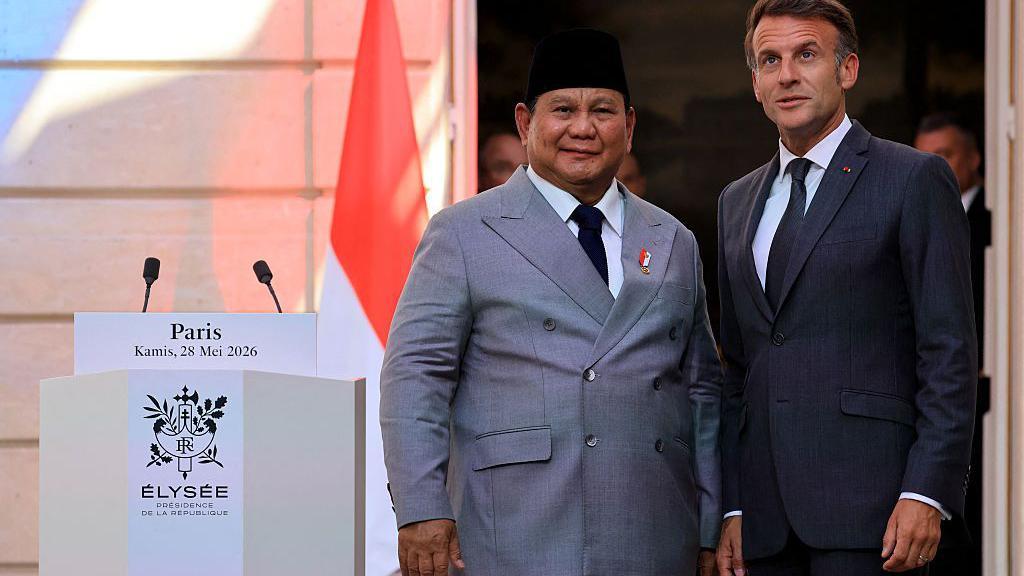
Since his inauguration as President on October 20, 2024, President Prabowo has reportedly undertaken approximately 51 overseas visits by the end of May 2026. This significant figure encompasses a wide range of engagements, including state visits, bilateral meetings, participation in international forums, and various diplomatic tours to numerous countries. Media reports indicate that the nations most frequently visited by Prabowo since assuming office include Malaysia, France, the United Arab Emirates, Egypt, Russia, the United States, and the United Kingdom. This pattern of international engagement notably diverges from that of previous Indonesian presidents, who typically focused more intently on ASEAN member states, the Middle East, and established economic and defense partner nations.

Misbah Hasan, Secretary-General of the Indonesian Forum for Financial Transparency (Fitra), estimated that the state has incurred costs of approximately IDR 500 billion for at least 50 of Prabowo’s international visits. “That’s merely a rough estimate, because detailed information regarding the president’s official travel expenses is not publicly disclosed. For a single overseas visit, we estimate an average cost of about IDR 5 billion to IDR 10 billion. So, multiplied by 50, it reaches roughly [IDR 500 billion],” he informed BBC News Indonesia on Tuesday (June 2). Despite the extensive number of international trips, Hasan noted that tangible results remain largely elusive, with most claimed investments still primarily existing as Memoranda of Understanding (MoUs) or preliminary agreement documents. This observation led Fitra to conclude that the management of Prabowo’s overseas visits appears to lack clear prioritization, failing to distinguish between essential engagements and those that could be postponed. This high frequency of official travel is particularly concerning given the backdrop of various pressing domestic issues, such as the weakening rupiah against the US dollar and the ongoing deficit in the State Budget.
“I believe this presents a crucial opportunity for the Supreme Audit Agency (BPK) and the Corruption Eradication Commission (KPK) to conduct a thorough audit if [Cabinet Secretary Teddy’s claim of private funding] is indeed true,” Hasan urged. He expressed profound skepticism, stating, “Although I am not convinced the President is actually spending his own money, even for sacrificing cattle, the State Budget was used – an expense that by religious law should clearly be personal. Yet, IDR 100 billion was drawn from the State Budget for it.” Hasan suggested that the Supreme Audit Agency (BPK), as the independent external supervisor of state finance, should rigorously audit the budget utilization for the President’s international travel and his accompanying entourage. Such an audit, he argued, would reveal any potential for irregularities, scrutinizing “whether state money is being used appropriately and effectively to generate a positive impact on the Indonesian economy, or if it is instead being privately enjoyed by certain circles, such as individuals accompanying the President who are merely tagging along.”
Summary
President Prabowo Subianto is facing significant criticism regarding the high frequency and cost of his official overseas travels, which have reached an estimated 51 visits since taking office. While Cabinet Secretary Teddy Indra Wijaya defended the trips as necessary for navigating global crises and claimed that the President personally covers any costs exceeding the state budget, experts argue that this practice violates the State Treasury Law. They emphasize that the government is prohibited from conducting activities if budget allocations are insufficient, as mixing private and state funds undermines financial accountability and transparency.
Legal experts and transparency advocates, such as those from the Indonesian Forum for Financial Transparency (Fitra), warn that such financial arrangements complicate state reporting and raise concerns about potential conflicts of interest. Critics have called for a thorough audit by the Supreme Audit Agency to verify the legitimacy of these expenditures and ensure that official travel remains efficient, selective, and aligned with national priorities. Given the current domestic economic pressures, there are growing calls for the administration to prioritize fiscal responsibility over frequent international engagements.
