
News Summary:
- Mojtaba Khamenei has not appeared in public since sustaining injuries early in the conflict.
- The United States believes Mojtaba Khamenei is becoming “increasingly involved” in decision-making processes.
- Iran’s current internal decision-making process is described as highly centralized, relying on intermediaries.
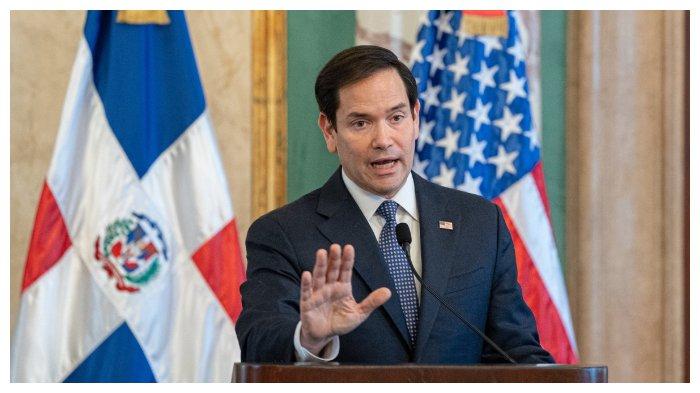
Teknowarta – U.S. Secretary of State Marco Rubio confirmed on Tuesday, June 2, 2026, that Iranian Supreme Leader Mojtaba Khamenei remains alive. Despite failing to make a public appearance since he was wounded during the onset of the conflict, Rubio believes the leader is becoming “increasingly involved” in governance.
“We haven’t seen him in public, and I imagine, given what has happened to several leaders within that system, appearing in public probably isn’t something that is advised for them internally,” Rubio told members of the Senate Foreign Relations Committee.
Rubio noted that although all of Khamenei’s communications are currently handled through written notes and intermediaries, there are clear indications of his growing influence on state affairs.
A Highly Centralized Decision-Making Process
According to Rubio, Iran’s internal decision-making is exceptionally centralized, creating significant delays in diplomatic efforts. Proposals brought forward by Iranian officials, such as Abbas Araghchi and Mohammad Bagher Ghalibaf, must be vetted by a governing council before any response is issued.
“Based on our understanding of this system, and as has been conveyed to us by both intermediaries and directly by Iranian officials, anything that Araghchi and Ghalibaf take from us must be brought back to this council to obtain direction. That process often takes three to five days to generate a response,” Rubio explained.
While both Rubio and President Donald Trump maintain that talks with Iran are ongoing, Iranian media reported on Tuesday that the exchange of messages between the two nations has been at a standstill for several days.
Context of the Fragile Ceasefire
Rubio’s comments arrive as Washington and Tehran attempt to transform a fragile ceasefire into a broader agreement. The conflict, which began on February 28, 2026, following U.S.-Israeli strikes against Iran, has resulted in heavy casualties. Iranian authorities report more than 3,000 deaths, while at least 13 U.S. military personnel have lost their lives in retaliatory Iranian strikes. The hostilities have also seen Iran target U.S. allies in the Gulf and implement a blockade of the Strait of Hormuz.
Although a ceasefire mediated by Pakistan went into effect on April 8, subsequent negotiations in Islamabad failed to secure a lasting peace, leaving both sides to continue searching for a viable resolution.
Mojtaba Khamenei Remains in Seclusion

Persistent delays in finalizing a potential U.S.-Iran agreement are attributed largely to the difficulty of communicating with Mojtaba Khamenei. U.S. intelligence suggests that the Supreme Leader is living under tight security within a secret bunker.
Mojtaba Khamenei was injured during the February 28, 2026, air strikes, an operation that also claimed the life of his father, the former Supreme Leader Ali Khamenei. Since the start of the war, he has remained completely out of the public eye.
According to reports from CBS, U.S. officials familiar with the intelligence indicate that Khamenei is “essentially hiding” in an undisclosed location with limited access to the outside world. He is reportedly reachable only through a complex network of couriers and intermediaries, which has significantly slowed Iran’s response time to American proposals.
This convoluted communication network has created internal friction, with Iranian officials involved in negotiations with the Trump administration struggling to coordinate effectively within their own government. Despite these logistical hurdles, a senior U.S. administration official confirmed to CBS that Khamenei has officially approved the current outline of the draft agreement.
(Reporting by Nuryanti, Tribunnews.com)
Summary
U.S. Secretary of State Marco Rubio has confirmed that Iran’s Supreme Leader, Mojtaba Khamenei, remains alive and is increasingly involved in the nation’s decision-making processes, despite not appearing in public since his injury in February 2026. Because Khamenei resides in a secure, undisclosed location, all communications are conducted through written notes and a network of intermediaries. This highly centralized system requires a governing council to vet all proposals, often causing significant delays in diplomatic negotiations with the United States.
The ongoing communication hurdles have slowed progress toward transforming a fragile ceasefire into a broader, lasting peace agreement. While U.S. and Iranian officials continue to search for a resolution, the complex process of relaying messages through couriers has created internal friction and hindered coordination. Nevertheless, U.S. officials maintain that Khamenei has officially approved the current outline for a potential diplomatic agreement.
