
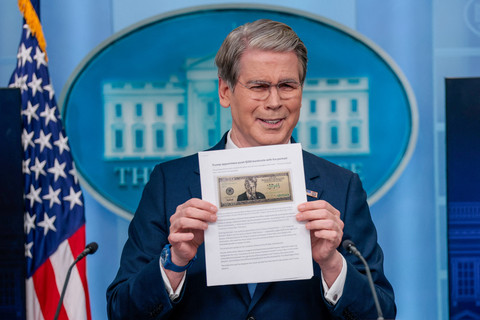

A groundbreaking proposal has emerged, suggesting that former US President Donald Trump could be featured on a new USD 250 bill. This unprecedented move would mark a significant shift in American currency tradition, potentially making Trump the first living individual in approximately 150 years to have his likeness imprinted on US money.
The plan, initially reported by the Washington Post on Thursday (May 28) and cited by AFP on Friday (May 29), highlights a potential departure from long-standing conventions. Historically, US currency has exclusively featured deceased figures, making this proposition particularly noteworthy and, for some, controversial.
Adding weight to the discussions, US Treasury Secretary Scott Bessent confirmed the existence of active legislative efforts. He stated that bills are currently under consideration in both the House of Representatives and the Senate, aiming to amend existing rules that prohibit the depiction of living individuals on American currency.
During a press conference, Bessent explicitly articulated the objective: “There are now bills in the House and Senate to change the first rule so that a living person, Donald J. Trump, can appear on a USD 250 bill.” This direct statement underscores the specific focus of the proposed legislative changes.
Bessent further indicated that the government has initiated preliminary preparations should Congress approve the necessary legislative amendments. However, he emphasized that these preparations would strictly adhere to all applicable laws and regulations, ensuring due process.

Early design concepts, which have reportedly circulated, showcase Trump’s image prominently displayed on the obverse of the proposed bill. These designs also feature the inscription “America 250 anniversary,” a clear reference to the upcoming 250th commemoration of US independence, which dates back to July 4, 1776.
Reports suggest that two Treasury Department officials, both appointed by Trump in the previous year, had approached the Bureau of Engraving and Printing (BEP) with requests to prepare prototypes of the envisioned currency. This proactive step indicates serious intent behind the proposal.
Despite these internal moves, numerous employees within the government’s currency printing bureau have voiced substantial concerns. They reportedly view the plan as a direct contradiction of federal law, which explicitly forbids the image of a living president from appearing on US currency.
A spokesperson for the Treasury Department confirmed that the Bureau of Engraving and Printing is currently undertaking a thorough review and planning process concerning the proposal. Furthermore, US Treasurer Brandon Beach has reportedly refrained from requesting any actual printing until a definitive decision is reached by Congress.
Compounding the internal dissent, Patricia Solimene, the Director of the Bureau of Engraving and Printing at the time, was reportedly removed from her position after raising warnings about significant legal and procedural obstacles related to the currency plan. This development adds another layer of complexity and potential controversy to the situation.
The proposal to print Trump’s image on currency is seen by many as another example in a series of steps taken by the Trump administration to prominently feature the president’s personal identity across various national institutions, sparking debate about the intersection of personal branding and public office.

Earlier in the year, the US Commission of Fine Arts approved the minting of 24-karat gold commemorative coins for the nation’s 250th anniversary. Beyond currency, Trump’s name has also been associated with several cultural institutions, including the esteemed John F. Kennedy Center for the Performing Arts and the US Institute of Peace, signifying a broader trend of personalization.
In further examples of this trend, Trump’s likeness has been prominently displayed on large banners adorning the buildings of both the US Department of Justice and the Department of Agriculture. There are also reports suggesting his image is slated to appear on certain US passports, expanding the reach of his personal iconography.
The specific legislation pertaining to the USD 250 bill was initially introduced last year. However, despite the ongoing discussions and internal preparations, the bill has yet to demonstrate any substantial progress or garner significant traction within Congress.
Unsurprisingly, the concept of a USD 250 bill featuring Trump’s face has drawn sharp criticism from Democrats. Senator Mark Warner, a vocal opponent, characterized the proposal as a blatant attempt by the White House to indulge the president’s ego, highlighting the deep political divisions surrounding the initiative.
Summary
A groundbreaking proposal suggests former US President Donald Trump could be featured on a new USD 250 bill, an unprecedented move that would mark him as the first living individual in approximately 150 years to appear on US currency. US Treasury Secretary Scott Bessent confirmed active legislative efforts in both the House and Senate to amend existing rules prohibiting the depiction of living individuals on money. Early design concepts reportedly showcase Trump’s image and the inscription “America 250 anniversary.”
However, this plan faces significant internal opposition from government currency printing bureau employees, who view it as a direct contradiction of federal law. The Director of the Bureau of Engraving and Printing was reportedly removed after raising warnings about legal obstacles. The specific legislation for the USD 250 bill has yet to gain substantial traction in Congress and has drawn sharp criticism from Democrats, who characterize it as an indulgence of the president’s ego.
