
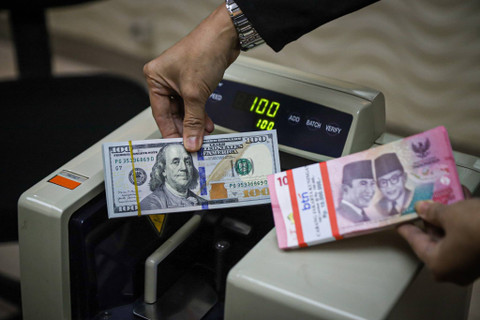

Bank Indonesia (BI) has once again addressed the persistent weakening of the rupiah against the US dollar. Data from Bloomberg indicated that the rupiah briefly depreciated to Rp 17,893 per US dollar on Friday, May 29, before recovering to strengthen by 0.20 percent, settling at Rp 17,880 by 4:10 PM Western Indonesian Time (WIB).
Ramdan Denny Prakoso, Head of BI’s Communication Department, explained that the ongoing pressure on the rupiah’s exchange rate is primarily driven by lingering global uncertainties, exacerbated by the protracted conflict in the Middle East. Compounding this, there’s a seasonal surge in foreign currency (forex) demand, specifically for external debt repayments and dividend repatriation, occurring amid a constrained inflow of US dollars into the domestic market.
In response, BI has reiterated its steadfast commitment to maintaining the stability of the rupiah’s exchange rate by actively engaging in the market “around the world, around the clock.” This proactive stance underscores the central bank’s dedication to mitigating volatility and ensuring a robust financial environment for Indonesia.
Ramdan further elaborated that this commitment is realized through a multifaceted approach to optimizing foreign exchange market interventions. These strategies include executing Non-Deliverable Forward (NDF) transactions in the offshore market, conducting spot and Domestic Non-Deliverable Forward (DNDF) transactions within the domestic market, and consistently and measurably purchasing government bonds (SBN) in the secondary market. These actions are designed to manage liquidity and stabilize the currency effectively.
Beyond direct interventions, BI is also fortifying the effectiveness of its monetary policy mix. This involves strengthening the structure of pro-market interest rates for monetary instruments, a move intended to bolster the attractiveness of domestic financial assets and encourage the inflow of foreign capital, thereby supporting the rupiah’s stability from a broader economic perspective.

Addressing the demand side for US dollars, Ramdan announced a new measure: BI has set a cash threshold for foreign currency purchases without underlying transactions at USD 25,000 per participant per month. This regulation is slated to come into effect in June 2026, aiming to manage speculative demand and enhance transparency in forex transactions.
Moreover, Ramdan highlighted BI’s continuous efforts to strengthen coordination with relevant authorities. This collaboration is crucial for supporting overall financial market and exchange rate stability, including enhanced supervision of banks and corporations exhibiting high US dollar purchasing activities to prevent excessive outflows and mitigate risks.
Concluding his remarks, Ramdan emphasized that Bank Indonesia will maintain close vigilance over developments in both global and domestic financial markets. He affirmed BI’s ongoing presence in the market, ready to take necessary, consistent, and measured steps to safeguard rupiah exchange rate stability and bolster the external resilience of Indonesia’s economy.
Summary
The Indonesian rupiah recently faced significant pressure, briefly depreciating to Rp 17,893 against the US dollar due to global geopolitical uncertainties and seasonal demands for debt and dividend payments. In response, Bank Indonesia (BI) is actively intervening in the market through spot transactions, domestic and offshore non-deliverable forwards, and strategic government bond purchases. These efforts are further supported by a focus on attracting foreign capital through optimized monetary policy and pro-market interest rates.
To ensure long-term stability, BI will implement a new regulation in June 2026 that limits foreign currency purchases without underlying transactions to USD 25,000 per month per participant. Additionally, the central bank is enhancing coordination with other authorities to monitor excessive US dollar outflows and strengthen supervision over financial institutions. BI remains committed to consistent, measured interventions to safeguard the national economy and manage currency volatility effectively.
