
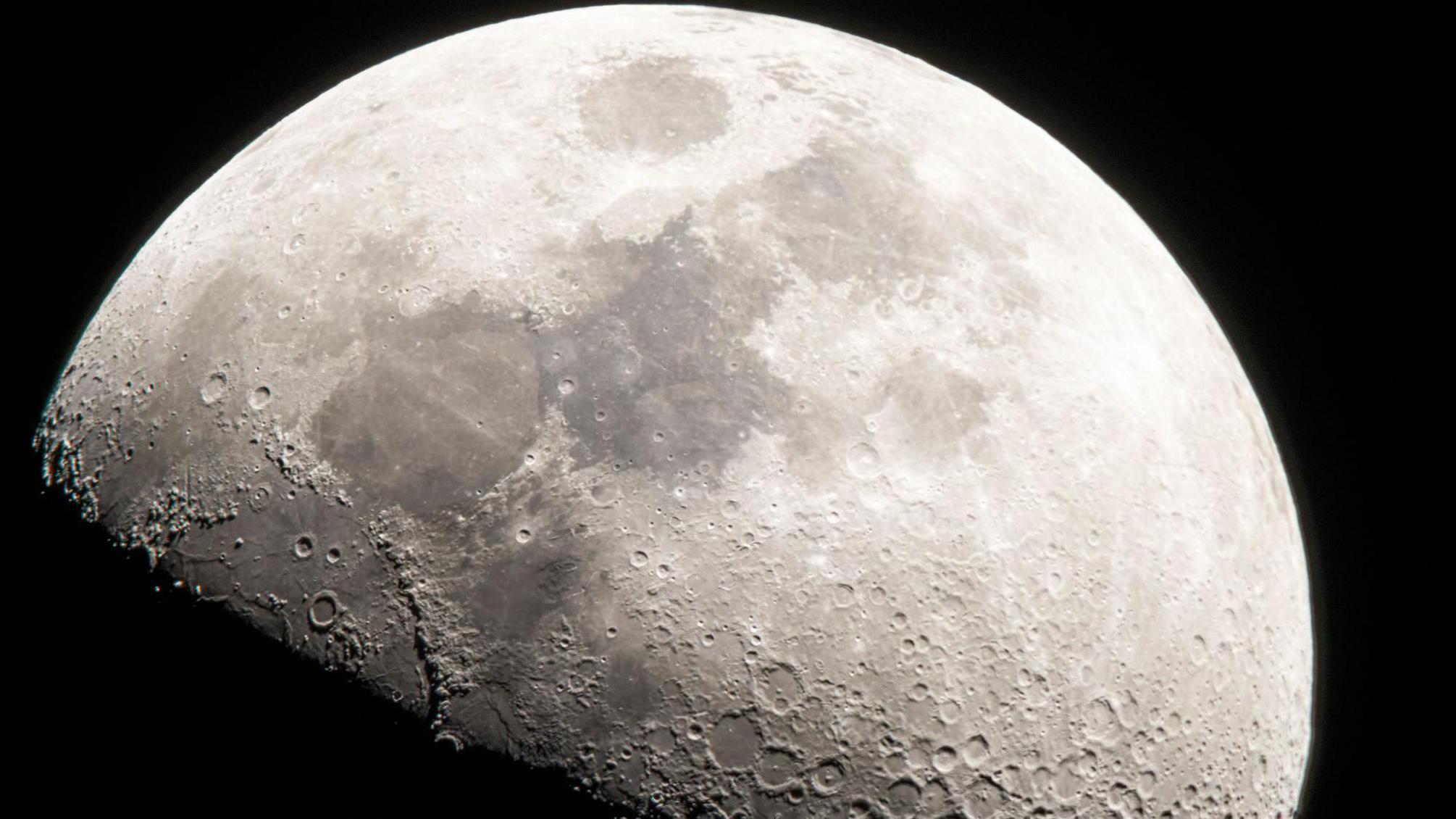

The U.S. National Aeronautics and Space Administration (NASA) has unveiled comprehensive details regarding the robotic landers, hopping drones, and advanced vehicles slated for deployment to the Moon. These missions are integral to America’s ambitious plan to establish a permanent lunar base, marking a significant step in future space exploration efforts.
Among the key players selected to develop these cutting-edge machines is Blue Origin, the aerospace company founded by Amazon’s Jeff Bezos. Their involvement underscores the collaborative approach NASA is taking, leveraging private sector innovation to achieve its lunar objectives.
The United States aims to land astronauts on the Moon again before President Donald Trump concludes his term in 2029. This aggressive timeline places considerable pressure on NASA, especially as it finds itself locked in a renewed space race with China to return humans to the lunar surface and demonstrate technological superiority.
The US vs China Space Race Intensifies
China continues to advance its own lunar ambitions, with plans to land humans on the Moon by 2030. Reinforcing this drive, the nation successfully launched its Shenzhou-23 spacecraft on Monday, May 25, delivering a fresh crew of astronauts to its Tiangong space station. These consistent efforts highlight China’s growing prowess in space exploration.
In March, NASA announced a monumental $20 billion program dedicated to constructing a permanent base at the Moon’s south pole by 2032, powered by both nuclear and solar energy. This strategic location is highly coveted due to the potential presence of water ice, a critical resource for sustained lunar presence.
NASA Administrator Jared Isaacman declared on Tuesday, May 26, that this announcement signifies the U.S. will “never surrender the Moon again,” emphasizing the nation’s commitment to long-term lunar habitation. Establishing a permanent base offers numerous advantages, from facilitating scientific experiments and potentially mining valuable resources to serving as a crucial stepping stone for future missions to Mars.
Despite these bold pronouncements, many experts remain skeptical about NASA’s proposed timeline, viewing it as highly optimistic. While the U.S. successfully sent four astronauts around the Moon during the Artemis II mission in April, some scientists believe China is likely to be the next nation to land humans on the lunar surface, underscoring the fierce competition.
“It wouldn’t surprise me at all if China gets there first,” Dr. Simeon Barber, a lunar scientist at the Open University, told BBC News. He pointed to the significant hurdles NASA faces in developing a reliable human-rated lander capable of safely transporting astronauts to the Moon’s surface.
Stages of Establishing a Permanent Lunar Base
NASA’s ambitious “Ignition Moon Base” Program is structured into three distinct phases, each critical to the overall success of the permanent lunar base initiative. This phased approach ensures systematic exploration and infrastructure development before human habitation.
Before human missions commence, the space agency plans to deploy a fleet of robotic landers and innovative hopping drones. These initial explorers will extensively survey and map the lunar surface, gathering vital data and identifying optimal locations for future facilities and scientific endeavors.
Alongside these robotic scouts, crucial cargo vehicles will transport astronauts, advanced communication equipment, and a suite of scientific instruments across the lunar landscape. On Tuesday, May 26, NASA confirmed that several leading aerospace companies, including Blue Origin, Intuitive Machines, and Astrobotic, have secured contracts to develop these essential machines.

Blue Origin’s lunar lander, named Endurance, is designed for high-precision landings and will feature autonomous navigation and control capabilities, critical for complex lunar operations. Similarly, Astrobotic’s Griffin-1 lander is expected to target the Nobile Crater, located near the Moon’s intriguing South Pole.
These sophisticated machines will also deliver a range of scientific instruments for NASA, including high-resolution cameras for detailed imaging and laser altimeters, which use reflected laser light to aid precise landing and surface mapping. This robotic exploration phase is projected to continue until 2029.
Carlos García-Galán, the Moon Base program executive, confirmed on Tuesday, May 26, that all probes, totaling up to 4 metric tons in weight, will be transported to the Moon via 25 separate launches. Following this extensive robotic reconnaissance, NASA’s next objective is to construct advanced nuclear and solar energy facilities on the Moon, including a specialized fission reactor to provide sustainable power.

By 2032, NASA envisions humans living in “semi-permanent” habitats on the Moon, marking a major milestone in lunar exploration. Additionally, specialized rovers will enable astronauts to traverse long distances across the rugged lunar terrain, expanding their reach for scientific study and resource assessment.
The Moon’s South Pole is of particular interest due to the confirmed presence of water ice, which could be utilized for drinking water or processed to produce oxygen and rocket fuel. However, NASA’s ambitious plan hinges significantly on the timely readiness of its human landing system capable of safely transporting astronauts to the lunar surface.
Elon Musk’s SpaceX has been contracted to develop the Starship Human Landing System, but this pivotal project has encountered numerous obstacles and delays. “The limiting step is getting astronauts down to the surface,” explained lunar scientist Simeon Barber, highlighting the bottleneck in current capabilities.
“It sounds like to me that [NASA] feels they’re in a position where they have to start saying that they’ve got a plan. So I think there’s a lot of political impetus behind this,” he added, suggesting that political pressures play a significant role in NASA’s expedited timelines for establishing a permanent lunar presence.
- Why are so many countries ambitious about sending people to the Moon?
- Many new missions to the Moon, why are countries choosing to explore it again?
- China’s spacecraft returns to Earth carrying Moon rock samples
- The story of the scientist who helped China become a superpower after being deported by the U.S.
- Artemis II returns to Earth, four astronauts land in the Pacific Ocean
- China and Russia agree to build a lunar space station
- Apollo-Soyuz: The historic moment when U.S. and Soviet astronauts shook hands in space
- China’s spacecraft sends color photos from the Moon
- China launches a rover to Mars, will it follow America’s success?
Summary
NASA telah merinci rencana pengerahan pendarat robotik dan kendaraan canggih ke Bulan sebagai bagian dari ambisi Amerika untuk membangun pangkalan permanen di sana, dengan tujuan mendaratkan astronot kembali sebelum 2029. Program senilai $20 miliar ini menargetkan pembangunan pangkalan di kutub selatan Bulan pada tahun 2032, didukung oleh energi nuklir dan surya. Upaya ini merupakan bagian dari perlombaan antariksa yang intens dengan Tiongkok, yang juga berencana mendaratkan manusia di Bulan pada tahun 2030.
Program “Ignition Moon Base” NASA akan dimulai dengan eksplorasi robotik hingga 2029, melibatkan perusahaan seperti Blue Origin, untuk memetakan permukaan Bulan. Tahap selanjutnya termasuk pembangunan fasilitas energi sebelum manusia dapat menghuni habitat semi-permanen pada tahun 2032. Namun, kerangka waktu ambisius NASA menghadapi skeptisisme para ahli, terutama mengenai kesiapan sistem pendaratan manusia yang vital, yang saat ini dikembangkan oleh SpaceX.
