
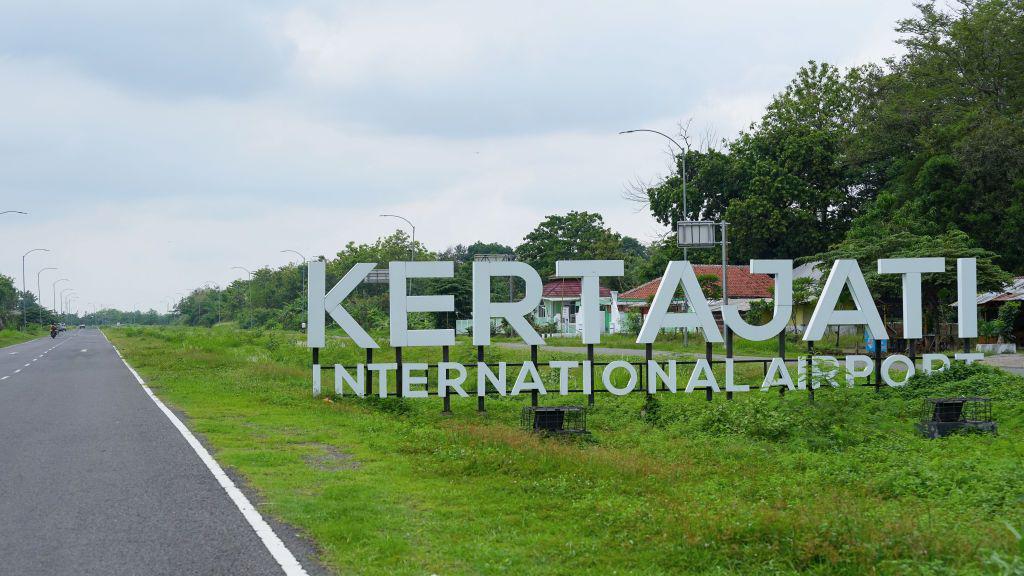

A proposed partnership between Indonesia and the United States to utilize Kertajati Airport in Majalengka, West Java, as an “international workshop” for Hercules/C-130 aircraft presents a substantial national security risk that far outweighs its potential financial benefits, according to experts. The ambitious plan has sparked significant debate, drawing scrutiny from defense analysts and policymakers alike.
Ziva Narendra, an aviation expert from Aviatory Indonesia, highlights that Kertajati Airport operates exclusively under a civilian aviation concept. Consequently, it possesses inadequate defense or military capacity to handle the complexities associated with such a venture. Given that over 90% of Hercules/C-130 aircraft globally are military variants, their maintenance at Kertajati would necessitate the presence of foreign military personnel or contractors, thereby creating inherent security vulnerabilities.
“This is where the security risk emerges,” Narendra stated, emphasizing the critical oversight challenges. Echoing these concerns, TB Hasanuddin, a member of Commission I of the House of Representatives (DPR), urged the government to proceed with extreme caution. He stressed that this collaboration should not be viewed merely as an ordinary industrial project, but rather as one with profound strategic, defense, and national sovereignty implications that demand a comprehensive and thorough assessment.
Conversely, Rico Ricardo Sirait, Head of the Defense Information Bureau at the Secretariat General of the Ministry of Defense, affirmed that discussions regarding the project are still in their nascent stages. Sirait proactively clarified that the initiative to establish Kertajati Airport as a Maintenance, Repair, and Overhaul (MRO) hub for Hercules/C-130 aircraft is explicitly not intended to construct a US military base in Indonesia.
How Did the Idea Emerge?
The proposal to transform Indonesia into a primary MRO center for Hercules/C-130 aircraft materialized during a Joint Working Meeting held on Tuesday, May 19. Defense Minister Sjafrie Sjamsoeddin, alongside Commission I DPR and the Indonesian National Armed Forces (TNI), revealed that US Secretary of War Pete Hegseth had extended the offer, proposing Indonesia as the regional hub for C-130 maintenance across Asia. Crucially, Hegseth reportedly offered to bear all associated costs, signaling the US’s strong interest in the venture.
“He (Pete Hegseth) made an offer that no other ASEAN country has received. He offered, ‘How about I centralize all C-130 maintenance across Asia in Indonesia, at our expense?’,” Sjafrie recounted. He added, “I reported this to the President, and he said, ‘Give them Kertajati.’ We are now working on that.” This presidential endorsement underscores the high-level consideration of the proposal.
In a separate statement, Rico Ricardo Sirait of the Ministry of Defense confirmed the US offer, reiterating plans to develop Kertajati Airport as one of Asia’s key MRO centers for Hercules/C-130s. The selection of Kertajati, he explained, was based on its extensive land availability and supposedly adequate aviation support facilities. The development of Kertajati as an MRO or maintenance hub for C-130 aircraft throughout Asia is envisioned to unfold in phases. This phased approach, Sirait noted, aligns strategically with Indonesia’s broader efforts to bolster its defense industry independence and enhance national strategic aviation logistics support. While definitive investment figures remain undisclosed, Sirait assured that all activities would strictly adhere to Indonesian sovereignty, national laws, and inter-ministerial mechanisms governing airspace, flight safety, and foreign aircraft entry procedures.
Kertajati Airport: Indonesia’s Largest, Yet Struggling?
West Java International Airport (BIJB) Kertajati, located in Majalengka, West Java, was officially inaugurated by President Joko Widodo in 2018. The genesis of this ambitious airport project dates back to the early 2000s, driven by the pressing need to alleviate congestion at the overcapacity Husein Sastranegara Airport. Feasibility studies commenced around 2003, with significant construction efforts beginning in the mid-2010s.
Boasting a formidable runway measuring approximately 3,000 x 60 meters, Kertajati is capable of accommodating wide-body aircraft such as the Boeing 777 and Airbus A330. It features dozens of parking stands and was strategically designed to cater to Hajj, Umrah, and cargo flights. In terms of developed area and long-term capacity, designed to handle up to an impressive 29 million passengers annually, Kertajati stands as one of Indonesia’s largest airports, a testament to its grand vision.
However, since its operation, Kertajati Airport has metaphorically been in a state of “suspended animation.” Its remote location, significant distance from Bandung city center, and previously suboptimal transport connectivity have severely hampered its utilization. Consequently, passenger numbers remained low for an extended period, leading several airlines to discontinue their routes. Recent efforts to revitalize the airport show promise; in 2024, Kertajati served approximately 413,240 passengers, a significant threefold increase compared to the roughly 135,000 passengers in 2023. The government continues to explore avenues to boost Kertajati’s activity, including opening new international routes, expanding Hajj and Umrah flights, developing the Rebana Metropolitan industrial area, and crucially, establishing an aircraft maintenance center or MRO facility.
What Are the Risks of Kertajati Becoming a Hercules Maintenance Hub?
Ziva Narendra, the aviation expert, reiterates that while Kertajati Airport is being developed as an aircraft maintenance center, its original concept was strictly for civilian aircraft. This fundamental distinction creates a significant disconnect when considering military maintenance. With over 90% of the world’s Hercules/C-130 fleet being military variants, an MRO hub for these aircraft would inevitably involve foreign military personnel or contractors. If Kertajati Airport were to be repurposed into an “international workshop” for military aircraft, it would inherently introduce substantial national security risks.

A critical concern is the glaring absence of adequate defense or military capacity at Kertajati to properly supervise the movements and activities of foreign military personnel or contractors. “Who will monitor them and ensure that their activities remain within the established parameters?” Ziva Narendra questioned, highlighting a crucial oversight gap. He clarified his stance, stating, “I see a lot of complexity here; it doesn’t mean I’m accusing them of smuggling weapons or anything… or that troops will enter via West Java, it’s not that extreme.” Instead, he described the risk as “subtle leakage”—a gradual erosion of control and potential for unintended consequences. “When a civilian airport is used for work or activities involving military assets, there will be consequences or risks,” he added, underscoring the inherent incompatibility.
Narendra dismissed concerns that Kertajati would become a US military base as “exaggerated.” He reasoned that if a military base were the objective, numerous other locations would be strategically more suitable than West Java. Furthermore, establishing a military base would necessitate a significant deployment of personnel and military assets, including barracks, battalions, or squadrons, requiring substantial investment in human resources and equipment. Based on these considerations, Narendra firmly believes that using Kertajati Airport as an “international workshop” for military aircraft like the Hercules/C-130 is ill-advised. He contends that such a move would compromise national security for economic or political gains that are not commensurate with the risks.

Moreover, he estimated that the number of Hercules/C-130 users in Asia is considerably less than in the United States and Europe, further diminishing the potential economic rationale. “I believe the economic or political benefits are not proportional to the security risks,” Narendra asserted. He suggested that if the government wishes to pursue such cooperation, it should explore alternative locations that do not compromise national security. He cited examples such as Halim Perdanakusuma Airport, a TNI AU military base that also manages civilian operations, as well as major TNI AU bases in Surabaya (East Java), Makassar (South Sulawesi), and Batam. These airports, he argued, are more suitable due to their established military oversight personnel and clearly defined airspace designations, ensuring proper control and adherence to protocols.
Could Such a Placement Violate Indonesian Regulations?
TB Hasanuddin, a member of Commission I DPR, reiterated his call for the government to exercise extreme caution regarding the proposed agreement to make Kertajati Airport a maintenance hub for Hercules/C-130 aircraft, as suggested by the United States government. Hasanuddin emphasized that this cooperation cannot be viewed as a mere civil aviation industry project; instead, it encompasses critical strategic, defense, and national sovereignty dimensions that demand a holistic and meticulous review.
He also stressed the imperative for clarity regarding the operational scope of the MRO facility. Should the facility be exclusively dedicated to supporting US military Hercules/C-130 aircraft operating in the Asia-Pacific region, it could potentially trigger significant legal and strategic-political complications. “If the facility is exclusive to supporting US military aircraft operations in Asia, the perception could evolve into a form of US military base in Indonesia,” TB Hasanuddin cautioned. “This, of course, must be carefully considered as it could clash with Indonesian laws and regulations, as well as the ‘free and active’ foreign policy principles adopted by Indonesia,” he added, highlighting potential foreign policy contradictions.

Furthermore, Hasanuddin pointed out that the offer originated from the US Secretary of War, not from the Hercules aircraft manufacturer as a purely industrial collaboration. This distinction strongly suggests a significant US military strategic interest driving the proposal. The politician from the PDI-P party also drew attention to Kertajati Airport’s current status as a civilian airport. He argued that if it were to be utilized as a maintenance center for foreign military aircraft, it would necessitate substantial adjustments to regulations, governance frameworks, and clear zoning arrangements. “Kertajati Airport currently holds civilian aviation status. If it later becomes a military aircraft maintenance center, there must be clear regulations to ensure it does not disrupt civilian aviation services for the people of West Java,” he explained, underscoring the need to safeguard civilian operations.
Hasanuddin observed that similar MRO collaborations with the United States do exist in countries like Malaysia, Singapore, Japan, and the Philippines, typically supporting US military aircraft operations in the Indo-Pacific region. However, he noted that these facilities are generally situated within special industrial zones or existing domestic aircraft maintenance industry facilities. Therefore, he urged the government to ensure that the partnership yields tangible benefits for the national defense industry, particularly for PT Dirgantara Indonesia, a state-owned aerospace company. “The primary principle is to safeguard national sovereignty, ensure national interests remain a priority, and strengthen the domestic defense industry,” he concluded, setting clear benchmarks for the government’s approach.
What is the Government’s Stance?
To date, discussions concerning the project to establish Kertajati Airport as a Hercules/C-130 maintenance hub remain in their preliminary stages. However, Rico Ricardo Sirait, Head of the Defense Information Bureau at the Secretariat General of the Ministry of Defense, emphasized that this cooperation is highly strategic. He believes it will significantly benefit Indonesia’s defense capabilities, facilitating easier collaboration and diplomatic relations with other Asian nations that operate Hercules transport aircraft. “This step also aligns with efforts to strengthen the independence of the national defense industry and support strategic national aviation logistics,” he stated, articulating the broader strategic vision.
Despite these assertions, Rico did not elaborate on the specific progress of the MRO facility’s development or provide a timeline for its construction. Meanwhile, Minister of Transportation Dudy Purwagandhi assured that the land area at Kertajati Airport is sufficiently vast to accommodate the construction of an MRO center. When asked about the possibility of US-based manufacturer Lockheed Martin building the MRO facility, Dudy acknowledged the prospect, suggesting that the Ministry of Defense would collaborate with the operating parties. “Yes, if the Ministry of Defense procures Hercules aircraft, they will usually collaborate, including on maintenance arrangements. If the manufacturer agrees, discussions must have already taken place,” Dudy clarified, indicating ongoing engagement with potential partners.
- Prabowo’s outreach to Trump – Benefits or exploitation for Indonesia?
- Prabowo-Trump agree on 19% trade tariff to US – What are the impacts of this agreement?
- Prabowo and Trump’s conversation at the Gaza Summit, recorded and leaked – What was Foreign Minister Sugiono’s response?
- Insights from Prabowo’s 95-day foreign visits: Tangible investments, strong leader image, and budget efficiency criticisms
- Indonesian product imports hit with 19% US tariff – ‘Indonesia’s position is actually weak’
- Authorities silence journalists and activists with ‘foreign stooge’ narrative, report says
- Issues behind President Prabowo’s statement ‘people in villages don’t use dollars’
- Prabowo invited to the Pentagon, human rights groups protest, US: ‘We consistently advocate for human rights’
- President Prabowo assigns state-owned enterprises to control commodity exports – ‘If corrupt behavior persists, leaks will still happen’
Summary
The United States has proposed establishing Kertajati Airport in West Java as an international maintenance, repair, and overhaul (MRO) hub for Hercules/C-130 aircraft across Asia, with the US offering to cover associated costs. President Joko Widodo has reportedly endorsed Kertajati for this initiative, which the Ministry of Defense views as a strategic step to bolster national defense independence and aviation logistics. The Ministry of Defense clarified that this project is not intended to build a US military base in Indonesia, and discussions are still in their preliminary stages.
However, aviation experts and members of the House of Representatives have voiced significant national security concerns, noting Kertajati’s civilian status lacks the capacity for military aircraft maintenance. They argue that the involvement of foreign military personnel for the largely military C-130 fleet could create security vulnerabilities and potentially clash with Indonesia’s “free and active” foreign policy. Critics suggest that the economic benefits might not outweigh these risks, proposing that existing military airbases would be more suitable for such a partnership.
