
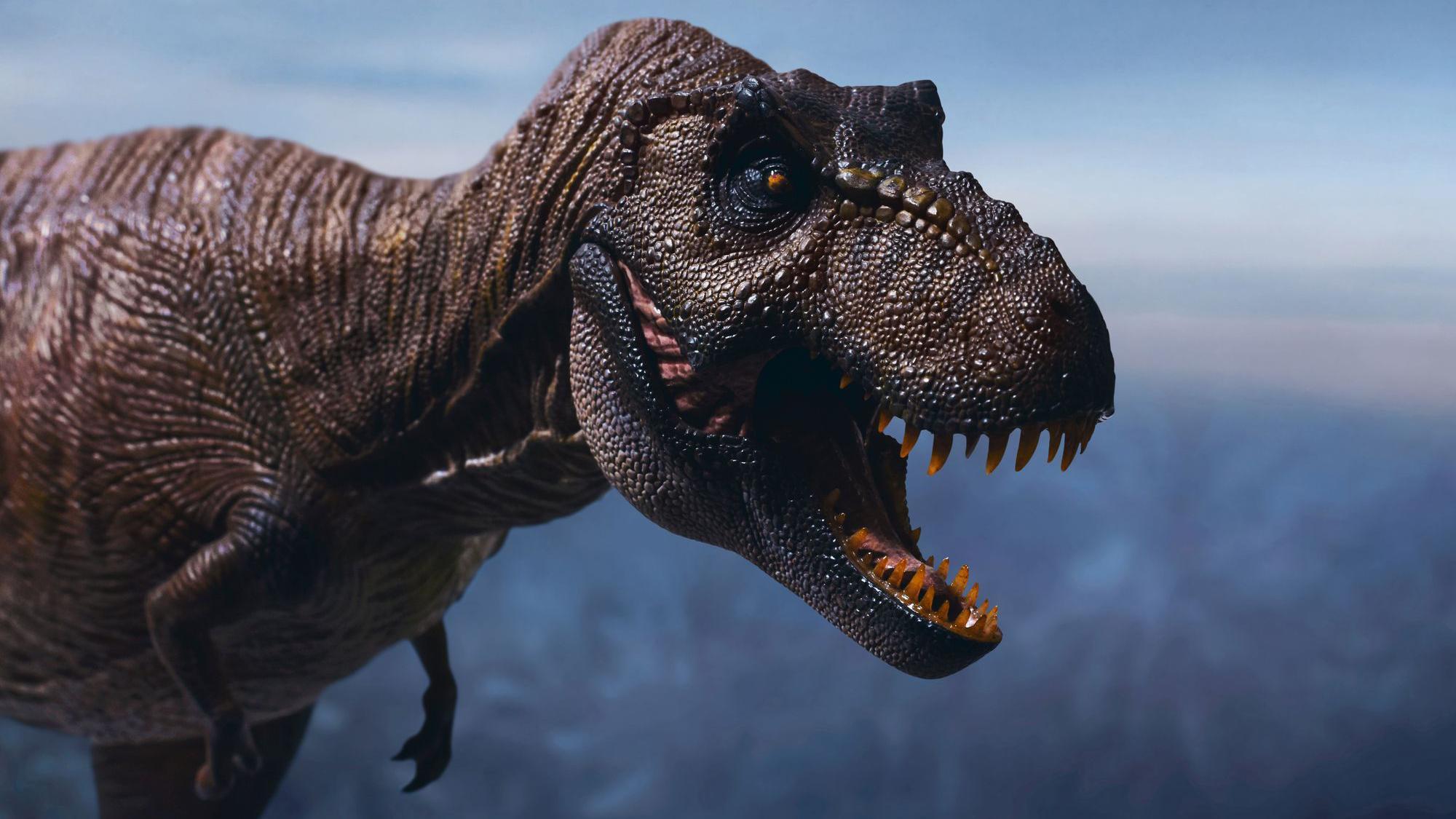

Why did a dinosaur as massive as Tyrannosaurus rex possess such remarkably tiny arms, despite its colossal body? A groundbreaking new study from the University of Cambridge and University College London (UCL) in the UK has finally unveiled a compelling potential answer to this enduring paleontological mystery.
T. rex belonged to the diverse group of bipedal dinosaurs known as theropods, the majority of which were formidable carnivores. While many members of this group reached immense sizes, some, surprisingly, developed extraordinarily diminutive forelimbs. This intriguing observation was highlighted by the research leader, Charlie Roger Scherer, a PhD student at UCL.
For instance, an adult T. rex could grow to an impressive length of 12 or even 13 meters. Yet, its arms measured only about a meter long – an incredibly small proportion compared to its overall body dimensions. Previous theories attempting to explain the function of these short arms ranged from assisting T. rex during mating to helping them push themselves up from the ground.

This new research presents an alternative, more profound explanation. It suggests that the elongated arms of their ancestors likely began to shrink because they became increasingly obsolete for capturing prey. Instead of maintaining prominent forelimbs, the evolutionary trajectory of these dinosaurs prioritized the development of significantly larger and more powerful heads and jaws.
“Everyone has always wondered why large carnivorous dinosaurs like T. rex have tiny arms,” Dr. Elizabeth Steell from the University of Cambridge, one of the study’s authors, told BBC. The research team meticulously examined 82 theropod species, discovering that this forelimb shortening occurred in five distinct groups, including the tyrannosaurids, the broader family encompassing T. rex.
Crucially, the scientists also devised a novel method to quantify the robustness of dinosaur skulls. This innovative measurement was based on the dimensions of the head and the way its bones were fused. “We looked at the comparison between skull size and body size. We also compared forelimb length to skull and body size, and then looked for patterns,” Steell explained, detailing their methodological approach.
Evolutionary Arms Race
The research team’s findings reveal a strong correlation between the shortening of forelimbs and the concurrent evolution of massive skulls and potent jaws. This relationship was found to be far more pronounced than any link to overall body size, strongly suggesting that the reduction in arm length was not merely a side effect of growing larger bodies.
Indeed, some dinosaurs exhibited small arms even without possessing particularly large bodies. A prime example is Majungasaurus, an apex predator that once roamed Madagascar. Despite not being gigantic in stature, these formidable creatures possessed remarkably robust heads. “This adaptation often occurred in regions populated by truly gigantic prey,” Scherer noted, indicating a direct link to their ecological niche. He further hypothesized that these significant changes in body form were intimately connected with their evolving hunting strategies.

A significant portion of theropod diets consisted of massive herbivorous animals, such as the long-necked, long-tailed sauropods. Researchers propose that theropod skulls became progressively more robust as the size of these herbivorous prey species also increased. To gain an advantage in this “evolutionary arms race,” theropods had to pivot their primary hunting mechanism from claws to their powerful jaws.
“Attempting to pull and grip a 30-meter-long sauropod with claws would have been entirely impractical. Attacking and holding prey with the jaws would have been far more effective,” Scherer vividly illustrated. “The offensive function was ultimately taken over by the head, no longer the arms. This is a classic case of ‘use it or lose it,’ as the arms became redundant, their size shrinking over time.” However, Dr. Steell clarified that some dinosaurs did retain the use of their arms. “But you can observe that their skull shapes were different. Their skulls were more elongated and slightly more fragile,” she added.

Scherer acknowledges that the study primarily establishes a correlation between skull robustness and forelimb length, rather than definitively proving a direct causal link. Nevertheless, he expressed that it is “highly probable” that more robust skulls evolved first, preceding the shrinkage of the forelimbs. “Evolutionarily, it makes no sense for the opposite to occur. Predators wouldn’t abandon their primary attack mechanism without having a backup weapon already in place,” he logically argued.
The research team also uncovered another fascinating detail: various theropod groups shortened their forelimbs in distinct ways. Some groups experienced specific shortening in their palms and forearms, while others exhibited a more uniform reduction across the entire limb. This indicates that these different groups arrived at the same evolutionary outcome – short arms – through parallel evolutionary pathways.
“We have simply confirmed what many people have already suspected. If you have a large skull, you don’t really need your arms as much,” Steell concluded. She added that similar techniques for measuring skull robustness would be incredibly valuable to apply to other animals. “It would be particularly exciting to apply this to birds, which are also theropod dinosaurs, but are still alive today,” she mused about future research directions.
- Giant dinosaur ‘equivalent to nine adult elephants’ successfully identified from fossils in Thailand
- Chicken-sized dinosaur discovered in Spain
- If they hadn’t gone extinct, could giant dinosaurs have evolved to be even larger?
- Dinosaurs that lived amidst ice and snow in the Arctic Circle
Summary
A new study from the University of Cambridge and UCL offers a compelling explanation for why massive dinosaurs like Tyrannosaurus rex had tiny arms. The research suggests that the forelimbs of their ancestors began to shrink as they became less crucial for catching prey. Instead, these theropods evolved significantly larger and more powerful heads and jaws, shifting their primary hunting mechanism. This adaptation prioritized a robust skull over arm length.
Scientists, examining 82 theropod species, found a strong correlation between forelimb shortening and the development of massive skulls, independent of overall body size. This evolutionary change was crucial for preying on gigantic herbivores, where powerful jaws were far more effective than claws for subduing prey. As the head took over the offensive function, the arms became redundant, leading to their reduction in size over evolutionary time.
