
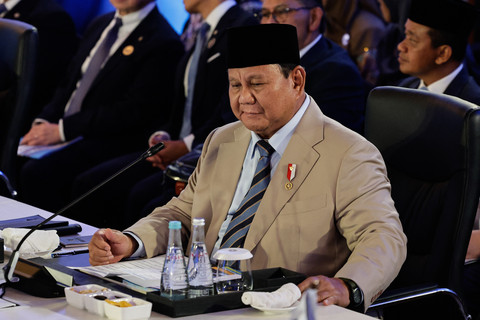

President Prabowo Subianto recently delivered a significant address at a regional forum, spotlighting the persistent global supply chain disruptions that continue to exert immense pressure on the energy landscape of ASEAN nations. Speaking at the opening of the 48th ASEAN Summit in Cebu, Philippines, on Friday, May 8, he issued a stark call for ASEAN to brace for worst-case scenarios by undertaking an urgent and non-negotiable overhaul of its energy architecture through robust diversification.
Highlighting Indonesia’s proactive stance, President Prabowo detailed concrete national strategies aimed at fortifying renewable energy adoption. “Indonesia is taking tangible steps by embarking on an ambitious 100-gigawatt solar energy program, slated for completion within three years,” Prabowo announced. This pioneering initiative is complemented by strategic plans to advance bioenergy development and accelerate the widespread adoption of electric vehicles, collectively forming critical pillars for bolstering Indonesia’s national energy resilience.
Beyond energy, President Prabowo also underscored the paramount importance of safeguarding maritime trade routes across the region from potential disruptions. He posited that the stability of ASEAN’s vital waterways is fundamental to averting a global food crisis, as even minimal disturbances along these routes could directly imperil the worldwide distribution of essential commodities. He explicitly warned, “Any disruption in our waters not only destabilizes global supply chains but also critically impairs the global food supply system.”
Food Security and the El Nino Threat
Transitioning to another pressing concern, President Prabowo addressed the escalating threat posed by the extreme El Nino phenomenon. He urged intensified technological cooperation and more robust food information exchange among ASEAN member states to mitigate its impact. Firmly asserting the strategic importance of agriculture, he declared that its management should never be fully entrusted to the private sector, given its direct bearing on national sovereignty and the very survival of its citizens.
Emphasizing the government’s indispensable role, President Prabowo stated, “We must advance local-based food reserves. Food security is fundamentally about government leadership and decisive government intervention. Indonesia does not believe that agriculture should solely be delegated to the private sector. Agriculture is simply too vital; food security is paramount.” This steadfast conviction underscores Indonesia’s belief that comprehensive food security is an absolute governmental responsibility.
President Prabowo powerfully articulated that food sovereignty forms the indisputable foundation of a nation’s independence. He warned that without ensuring sufficient food availability for its populace, the aspirations for stability and peace across the region would remain unattainable. His concluding remarks resonated with profound gravity: “Without food, there is essentially no society. Without food, there is no independence. Without food, there is no peace.”
Summary
At the 48th ASEAN Summit, President Prabowo Subianto highlighted global supply chain disruptions affecting ASEAN’s energy landscape and called for robust diversification. He announced Indonesia’s ambitious plan for a 100-gigawatt solar energy program within three years, complemented by bioenergy development and accelerated EV adoption. Prabowo also stressed the paramount importance of safeguarding maritime trade routes to prevent a global food crisis from potential disruptions.
Furthermore, President Prabowo addressed the escalating El Nino threat, urging intensified technological cooperation and food information exchange among ASEAN members. He emphasized that agriculture’s strategic management, including local-based food reserves, requires strong government leadership and intervention, not solely reliance on the private sector. Prabowo concluded by asserting that food sovereignty is the undisputed foundation of a nation’s independence, without which stability and peace remain unattainable.
