

The Jakarta Provincial Government, in collaboration with Statistics Indonesia (BPS), has reported a significant decline in the number of slum-designated community units (RW) across the capital. According to the latest data, the number of slum areas in Jakarta has dropped from 445 in 2017 to 211 by 2026.
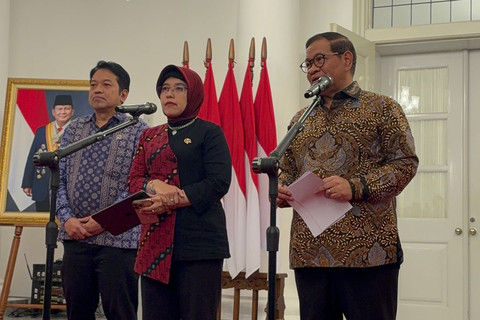
Jakarta Governor Pramono Anung highlighted this achievement, noting that the number of slum areas has been cut by more than half over the past several years. “We have seen a reduction from 445 slum RWs in 2017 to 211 this year, representing a decline of approximately 52.58 percent,” Pramono told reporters at Jakarta City Hall on Wednesday (6/5).
While acknowledging the progress, the Governor emphasized that this result was not an overnight success. He pointed to the challenges posed by rapid population growth and the increasing complexity of urban issues on the ground. “I do not want to claim that this is solely due to our efforts alone. Given the rising population and the increasingly complex field conditions, achieving a reduction of over 52 percent is truly extraordinary, and I am grateful for this progress,” he added.

Providing further technical context, Head of BPS RI, Amalia Adininggar Widyasanti, explained that out of the 2,749 total RWs identified in Jakarta, only 211 are currently classified as slum areas. “Based on our final data collection for 2025 and the finalization in 2026, we have identified 211 slum RWs out of the total 2,749 in Jakarta,” she stated.
Amalia noted that these findings were reached using a robust, dual-method approach. The agency combined traditional field data collection with advanced satellite imagery calibration to ensure the accuracy of the assessment.
Looking ahead, BPS and the Jakarta Provincial Government plan to extend their collaboration to assess the remaining residential areas. This initiative aims to ensure that all community units meet modern standards of urban livability. “BPS will continue this strong partnership with the Jakarta government. We plan to overlay the remaining 1,904 RWs with satellite imagery to determine which areas still require further verification,” she concluded.
Summary
The Jakarta Provincial Government, in collaboration with Statistics Indonesia (BPS), has successfully reduced slum areas across the capital. The number of slum-designated community units (RWs) has dropped significantly from 445 in 2017 to 211 by 2026, marking an approximate 52.58 percent decline. Governor Pramono Anung praised this achievement as extraordinary, acknowledging the complex urban challenges and rapid population growth.
BPS RI Head, Amalia Adininggar Widyasanti, confirmed that only 211 out of Jakarta’s 2,749 total RWs are currently classified as slums, a finding derived from a dual-method assessment using field data and satellite imagery. BPS and the Jakarta government plan to extend their partnership to further assess the remaining 1,904 RWs to ensure all residential areas meet modern urban living standards.
