
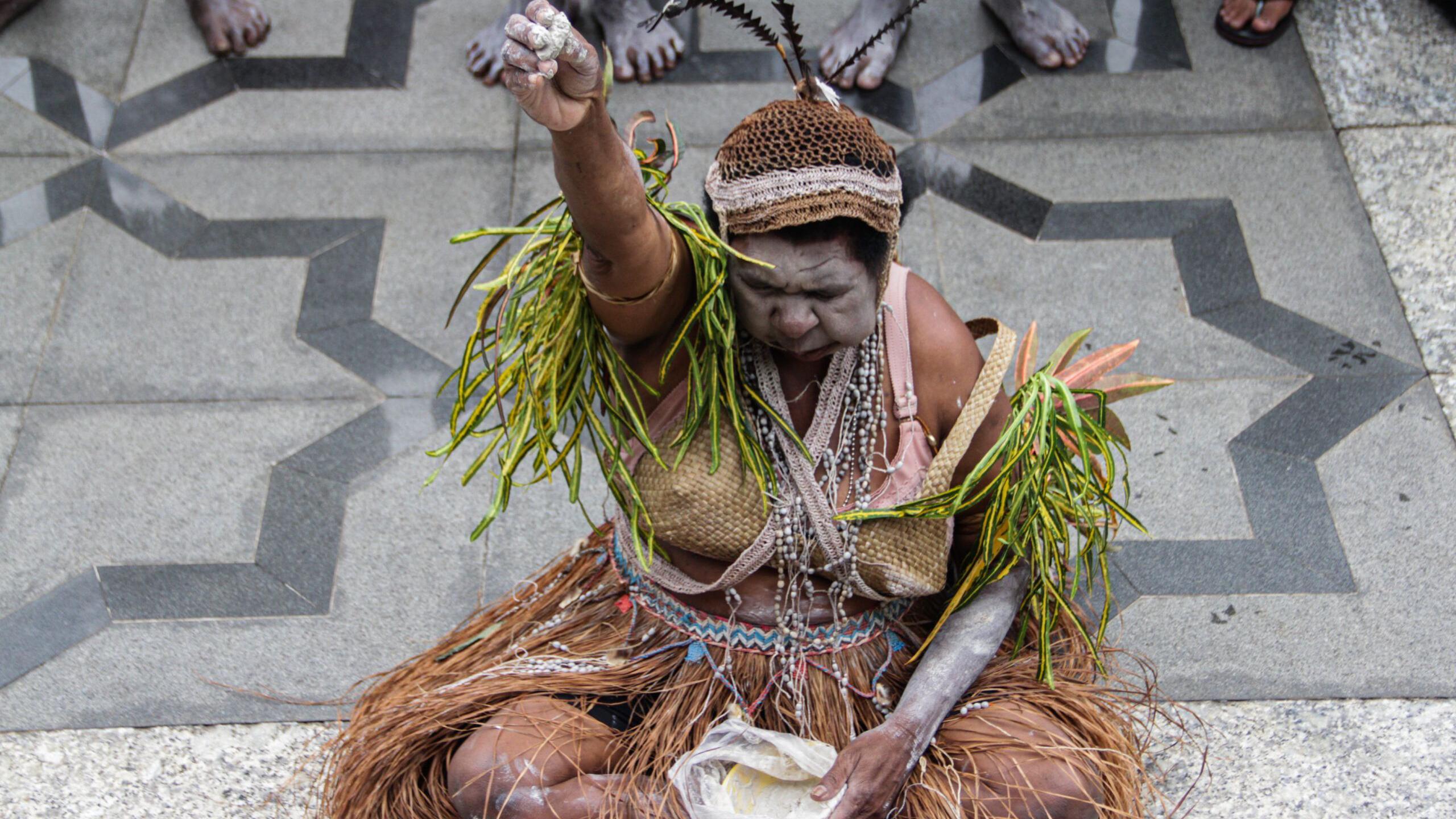

The documentary film “Pesta Babi” (Pig Feast) has once again seized public attention following a significant development: Yasinta Moiwend, widely known as Mama Yasinta or Mama Sinta, a central character in the film, publicly voiced her disappointment and filed a report against the leader of LBH Pos Merauke with the Metro Jaya Regional Police on Friday, May 29th.
LBH Pos Merauke has been instrumental in providing advocacy and legal support to Mama Sinta in her steadfast opposition to the controversial Food Estate program in Merauke—a critical issue that forms the core subject of the “Pesta Babi” documentary. This new turn of events adds another layer of complexity to the already contentious film.
In recent weeks, “Pesta Babi” has been embroiled in controversy. Public screenings of the film in several regions faced severe intimidation and threats from members of the Indonesian Military (TNI) and National Police (Polri), leading to widespread condemnation and drawing national scrutiny.
Responding to Mama Sinta’s actions, film directors Dandhy Dwi Laksono and Cypri Dale stated, “We respect Mama Yasinta’s choice.” Meanwhile, LBH Pos Merauke, now the subject of a police report, announced its intention to issue a formal response to the allegations.
A formidable indigenous woman and environmental champion from Merauke, South Papua, Mama Sinta visited the Metro Jaya Regional Police headquarters because her image was featured prominently in “Pesta Babi” without her consent. She unequivocally demanded an immediate halt to all screenings of the film, asserting, “Stop it! Stop it from today! If anyone screens that film, please process that person.”
“Pesta Babi” is a powerful documentary that exposes the rampant environmental exploitation and systematic displacement of indigenous communities, particularly in South Papua. It meticulously unravels the intertwined roles of government officials, security forces, and influential business actors behind these destructive practices.
Accompanied by her legal team, Yasinta lodged a complaint against John Teddy Wakum, the director of LBH Papua Pos Merauke, under Indonesia’s Personal Data Protection Law. This legal action escalates the internal conflict surrounding the film and its mission.
Who is Mama Yasinta?
Yasinta Moiwend, or Mama Yasinta, also affectionately known as Mama Sinta, has been a tireless advocate and an outspoken opponent of the National Strategic Project (PSN) large-scale food estate in Papua for many years. She is a proud member of the Malind Anim indigenous community, residing in Kampung Wanam, Ilwayab District, Merauke, South Papua.
Mama Yasinta is one of the key figures depicted in “Pesta Babi,” a film officially released on the Jubi TV YouTube channel on May 22nd. Within just one week of its release, the documentary garnered an astonishing 10 million views, highlighting its significant public interest and reach.

Her prominent role is particularly notable, as few indigenous Papuan women have vocally expressed their grievances regarding the fate of their ancestral lands. In 2024, she participated in the 836th Kamisan Action, a weekly silent protest held in front of the Presidential Palace, where she, alongside other indigenous communities from Papua, delivered a letter to then-President Joko Widodo.
“We came from Merauke to Jakarta with a specific purpose and message for President Jokowi,” Yasinta stated on October 17, 2024. “Because we, the affected ones, have tried; we wanted to lean on the Merauke Regency government, even up to the central government, but they did not respond.”
Mama Sinta and various indigenous community groups have repeatedly organized demonstrations, raising their concerns about the project to regional heads, the South Papua People’s Assembly, the Merauke Regency Parliament, and even the Merauke Archdiocese. Yet, their voices consistently fell on deaf ears.
“We performed Tanam Sasi, but we were not respected. They still evicted us,” she reiterated on numerous occasions.
- The involvement of the military in the Merauke Food Estate project instilled fear in indigenous communities, described as “a significant military presence like a war zone.”
Tanam Sasi, a traditional Marind customary death ceremony, profoundly symbolizes grief and loss. Mama Sinta herself has experienced deep sorrow.
“We feel the loss of our hamlets, the loss of our food and water sources, the loss of the animals in our forests.”
Mama Sinta highlighted that the rice field development project even encroached upon sacred areas within her village. Her unwavering dedication was recognized in 2025 when she was awarded the S.K. Trimurti Award by the Alliance of Independent Journalists (AJI). This prestigious award honors women for their profound dedication, courage, and unwavering commitment to championing human rights, democracy, press freedom, and social justice in Indonesia.
During a pre-launch event for the “Pesta Babi” film, broadcast on Jubi TV in March 2026, Mama Sinta passionately declared, “We must be strong; whatever happens before us, we must fight. From 2024 to 2026, I will continue to stand for the struggle for our land across Papua,” a statement met with resounding applause.
However, after the film’s official premiere on April 12th in Jakarta, subsequent “Pesta Babi” screenings faced disturbing “intimidation” and forced disbandment in various regions, carried out by members of the TNI, campus authorities, and local officials. Notably, Coordinating Minister for Legal, Human Rights, Immigration, and Penitentiary Affairs Yusril Ihza Mahendra claimed these actions were “not a directive from the government or law enforcement agencies, which are typically centralized.”
Amidst this backdrop, a video statement from Mama Sinta went viral last week, sending shockwaves across social media. In the video, she expressed her “disappointment” with the “Pesta Babi” film, asserting that it was created “without my permission, without my knowledge.”
“That’s why I am so disappointed with LBH (Pos Merauke) now,” Yasinta was quoted saying in the video, as reported by Tribunnews.
What Led to Mama Sinta’s Shift in Stance?
Mama Sinta’s surprising change of heart regarding the multi-million-hectare food project in South Papua is what has truly captured attention. In her viral video statement last week, Mama Sinta declared that she was no longer associated with LBH Pos Merauke, the organization that had long assisted her in her advocacy campaigns.
“I have made my own decision. So, I want to find a job in a company, find a job because I want my house renovated as it is no longer suitable,” she explained, revealing personal motivations for her decision.

She further emphasized that her three children also require employment to meet their daily needs. “So, Mama hopes for help in the future. I am with the company now, not like before because previously I was exploited; I was invited by the LBH people,” she clarified, suggesting a feeling of being used by the legal aid organization.
Why Did Mama Sinta Visit the Metro Jaya Regional Police?
Approximately one week after her video statement created a social media stir, Mama Sinta, accompanied by her legal counsel, visited the Metro Jaya Regional Police on Friday, May 29th. As reported by the Antara news agency, Mama Sinta articulated her reasons for traveling to Jakarta to file a police report.
“My face is being shown everywhere in that film; I am hurt. Without my permission. That’s why I came to Jakarta,” she asserted, citing the unauthorized use of her image as a primary grievance.
- Indigenous Merauke communities demanded a UN Special Rapporteur visit Papua, having “seen firsthand our forests, rights, and lives forcibly taken.”
- “They pitted us against each other,” declared the Solidarity of Merauke Indigenous Communities, rejecting the National Strategic Project.
- “We are being pitted against by companies,” said indigenous people resisting the PSN Merauke, facing attacks.
She also claimed that there was no prior communication or consent regarding the use of her image on the film’s cover. Her demand was unequivocal: the film’s screenings must cease immediately. “Stop it! Stop it from today! If anyone screens that film, please process that person,” she reiterated.

During the same occasion, her legal counsel, Hamonangan Daulay, confirmed that a report had been filed against John Teddy Wakum, the director of LBH Pos Merauke, under the Personal Data Protection Law. “This report is against an individual. An individual, the Head of LBH Merauke. The Head of LBH Merauke, yes. John, his initial is JTW,” Hamonangan stated, as reported by Detik.
The report specifically cites Article 65 juncto 67 of the Personal Data Protection Law, which pertains to alleged legal violations for disclosing personal data without consent. The potential penalties for such an offense include imprisonment for a maximum of four years and/or a fine of up to IDR 4 billion.
Responses from the Directors and LBH Pos Merauke Papua
BBC News Indonesia reached out to Johnny Teddy Wakum for comment. He stated, “We will respond. We will send a release,” indicating an official statement from LBH Pos Merauke is forthcoming.
Meanwhile, Dandhy Dwi Laksono, the director of “Pesta Babi,” shared a message on his Instagram account addressing the situation:
“When their customary land was taken without permission, they did not come to pick them up and take them to Jakarta to report to the police.
Those who came were indigenous children who became pro bono lawyers out of solidarity and wanted to help protect their ancestral land.
We respect Mama Yasinta’s choice. Just as we respect everyone’s right to know what is truly happening in Papua.”
- What is the story behind the Pesta Babi Film?
- The seven-hour horror in Kembru District, Papua – ‘Soldiers shot at us while we slept, shot at us while we ran.’
- The TNI continues construction of Yonif TP headquarters amidst Biak land disputes – ‘For the people of Papua, land is not just physical space.’
- Native Papuan residents are pessimistic that local elections can prevent the potential negative impacts of the Merauke food estate – ‘It’s useless for us to complain to regional head candidates.’
- The Turmoil of National Strategic Projects: explosions of conflict, unfulfilled promises, and the circle of wealthy entrepreneurs.
- Indonesia’s deforestation rate increased, ‘potentially becoming the world champion in tropical deforestation’ within one year of Prabowo’s administration – ‘Triggered by mining concessions, palm oil, and food estates.’
Summary
Mama Yasinta (Yasinta Moiwend), a central figure
