
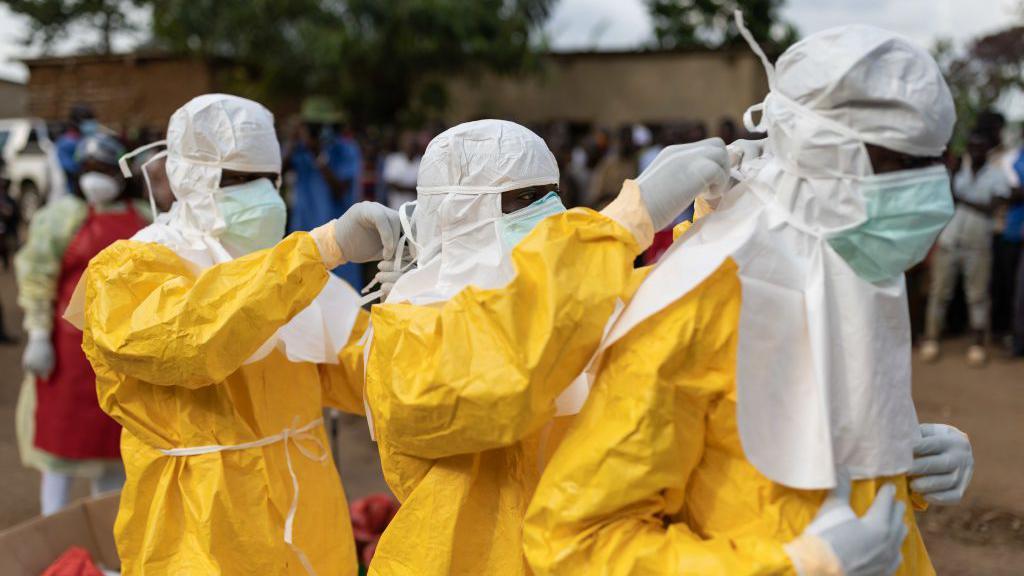

The World Health Organization (WHO) has declared the ongoing Ebola outbreak in the Democratic Republic of Congo (DRC) a Public Health Emergency of International Concern.
While the health body notes that the outbreak in the eastern Ituri Province—which has recorded approximately 246 suspected cases and 80 deaths—does not currently meet the criteria for a global pandemic, it has issued a stern warning. The WHO cautions that the outbreak has the potential to grow significantly larger than currently reported, citing substantial risks for local and regional transmission.
The current outbreak is attributed to the Bundibugyo strain of the Ebola virus, a variant for which no approved treatment or vaccine currently exists. The virus typically presents with initial flu-like symptoms such as fever, muscle aches, fatigue, sore throat, and headaches, which can rapidly progress to severe vomiting, diarrhea, rashes, and internal or external bleeding.
Understanding Ebola and Its Transmission
Ebola is a rare, severe, and frequently fatal viral disease. While there are three known species of the virus capable of causing outbreaks, this specific strain remains a significant concern due to the lack of specialized medical countermeasures. Transmission occurs through direct contact with infected bodily fluids, such as blood or vomit. Following exposure, the incubation period ranges from two to 21 days, with symptoms often manifesting suddenly. The virus is believed to have originated in animals, with fruit bats identified as a primary reservoir for initial human infection.
Geographic Spread and Containment Challenges
The virus has already been detected across several areas, with eight laboratory-confirmed cases reported. Impacted regions include Bunia, the capital of Ituri Province, as well as the gold-mining towns of Mongwalu and Rwampara. Furthermore, a suspected case linked to travel from Ituri was identified in the nation’s capital, Kinshasa. The outbreak has also crossed international borders, with two confirmed cases reported in neighboring Uganda. Tragically, a 59-year-old Congolese citizen succumbed to the virus in Uganda, with the body subsequently repatriated to the DRC.
Reports also confirm an additional case in the eastern city of Goma, a region currently under the influence of the M23 rebel group. The WHO has identified several complicating factors that exacerbate the risk of transmission, including ongoing security concerns, a humanitarian crisis, high population mobility, and the proliferation of informal healthcare facilities in affected areas.
In response, neighboring countries are on high alert. Rwanda has announced enhanced border screenings as a precautionary measure, strengthening its surveillance systems and deploying rapid response teams to ensure early detection.
Strategic Recommendations and Global Outlook
The WHO advises that both the DRC and Uganda establish emergency operations centers to effectively track, monitor, and implement infection prevention protocols. To curb the spread, confirmed patients must be isolated and treated until they return two negative test results for the Bundibugyo strain, taken at least 48 hours apart. While neighboring countries should ramp up health surveillance, the WHO emphasizes that travel and trade restrictions are not currently advised, as such measures are often rooted in fear rather than scientific necessity.
WHO Director-General Dr. Tedros Adhanom Ghebreyesus has highlighted the “significant uncertainty” regarding the true number of infections and the full geographic extent of the outbreak. Despite the formal declaration of an emergency, officials urge perspective. Dr. Amanda Rojek of the Pandemic Sciences Institute at the University of Oxford notes that while the situation is complex and demands international coordination, the global risk remains very low, as evidenced by the minimal impact of previous outbreaks on non-affected countries.
A History of Outbreaks
First discovered in 1976 in what is now the DRC, Ebola has since caused 17 separate outbreaks in the country. With an average mortality rate of approximately 50%, the virus remains a persistent threat. The Africa Centres for Disease Control and Prevention continues to monitor the high-risk mining regions and transit hubs, emphasizing that the significant movement of people necessitates robust regional collaboration. Over the last half-century, Ebola has claimed roughly 15,000 lives across Africa, with the 2018–2020 outbreak in the DRC marking one of the most devastating, resulting in nearly 2,300 deaths.


- How dangerous is the Ebola epidemic in West Africa?
- WHO declares Ebola outbreak a global health emergency
- Why are outbreaks like the coronavirus becoming more frequent?
- Hantavirus cases detected in Indonesia: How dangerous is it?
- Marburg virus cases raise pandemic potential; Indonesia monitors arrivals from Africa
- WHO: Hantavirus outbreak on cruise ship MV Hondius not the start of a pandemic
Summary
The World Health Organization has declared the Ebola outbreak in the Democratic Republic of Congo a Public Health Emergency of International Concern due to significant risks of regional transmission. This outbreak involves the Bundibugyo strain, for which no vaccine or treatment currently exists, and has already spread to neighboring Uganda. Factors such as regional conflict, high population mobility, and humanitarian challenges complicate containment efforts, though global risk remains low.
In response, the WHO recommends establishing emergency operations centers and strengthening surveillance systems in affected and neighboring regions to track and isolate cases. While officials urge international coordination, they emphasize that broad travel and trade restrictions are not currently advised. Health authorities continue to monitor high-risk areas, stressing the importance of regional collaboration to prevent further spread of the virus.
