
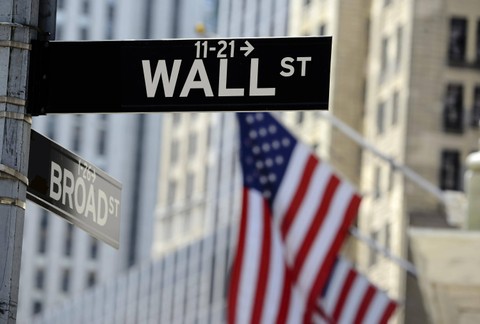

Wall Street’s major indices closed strong on Friday, February 20th, with a notable rally in big tech stocks like Alphabet and Amazon. This significant market upturn followed a pivotal decision by the U.S. Supreme Court, which effectively struck down the global tariffs previously imposed by President Donald Trump.
According to Reuters, the benchmark S&P 500 index advanced 0.69 percent, closing at 6,909.51 points. The technology-heavy Nasdaq saw a robust 0.90 percent increase, reaching 22,886.07 points, while the Dow Jones Industrial Average climbed 0.47 percent to 49,625.97 points.
The positive momentum was widespread across the market, with nine out of 11 S&P 500 sectors recording gains. The Communication Services sector led the charge, soaring 2.65 percent, closely followed by the Consumer Discretionary sector, which rose 1.27 percent.
Reflecting on the week’s performance, the S&P 500 posted a 1.08 percent gain, showcasing sustained strength. The Nasdaq continued its impressive run with a 1.51 percent weekly increase, while the Dow Jones registered a more modest but still positive 0.25 percent rise.
The Supreme Court, largely comprised of conservative justices, delivered a decisive 6-3 vote to reject the global tariffs that Trump had implemented last year. These tariffs were originally established under a federal law citing a national emergency, a justification the court ultimately found insufficient.

In a defiant response to the ruling, former President Trump condemned the decision as “a disgrace.” He subsequently declared his intent to impose a 10 percent global tariff for 150 days under Section 122 of the 1974 Trade Act, as a direct replacement for the emergency duties overturned by the court.
Market participants largely embraced the Supreme Court’s decision, according to Mike Dickson, Head of Research and Quantitative Strategy at Horizon Investments in Charlotte, North Carolina. Dickson commented, “Today marks the end of some uncertainty, and we will enter the next phase,” signaling investor relief and a potential shift in market dynamics.
The ruling provided a significant boost to several heavily-weighted, large-cap stocks favored by investors. Alphabet, Google’s parent company, saw its shares jump 3.7 percent. E-commerce giant Amazon surged 2.6 percent, while tech behemoth Apple strengthened by 1.5 percent.
Companies previously impacted by the tariffs also experienced a rebound. Shares of Hasbro, Wayfair, Williams-Sonoma, and RH all climbed, with gains ranging from 0.5 percent to 2.3 percent, underscoring the immediate positive effect of the tariff reversal on their valuations.
However, the broader implications of Trump’s tariff policies continue to unfold. Thousands of global companies have filed lawsuits challenging the substantial duties and are demanding refunds for tariffs already paid. Estimates from the Penn-Wharton Budget Model suggest the U.S. government could potentially face a liability of over $175 billion in tariff refunds.
From a macroeconomic perspective, recent data presented a mixed picture for the U.S. economy. Latest figures indicated that U.S. economic growth in the fourth quarter slowed more significantly than initially forecast. Concurrently, separate data pointed to an increase in inflation during December, adding complexity to the economic outlook.
Amidst these economic signals, market participants are closely monitoring the potential for a shift in monetary policy. According to CME’s FedWatch Tool, the probability of the U.S. central bank implementing an interest rate cut at its June meeting currently stands just above 50 percent, reflecting cautious optimism among investors.
Looking ahead, investors are also keenly observing the sustainability of the Artificial Intelligence (AI) rally on Wall Street, with Nvidia’s quarterly earnings report due next week being a focal point. AI-centric technology stocks have experienced considerable volatility in recent months, fueled by concerns over lofty valuations and the lack of concrete evidence that massive investments in the sector are translating into robust revenue and profit growth.
This sentiment has reverberated across numerous industries, from software development to logistics. A growing apprehension persists that the rapid advancements in AI technology could disrupt established business models and intensify competitive pressures, prompting a reevaluation of long-term strategies.