
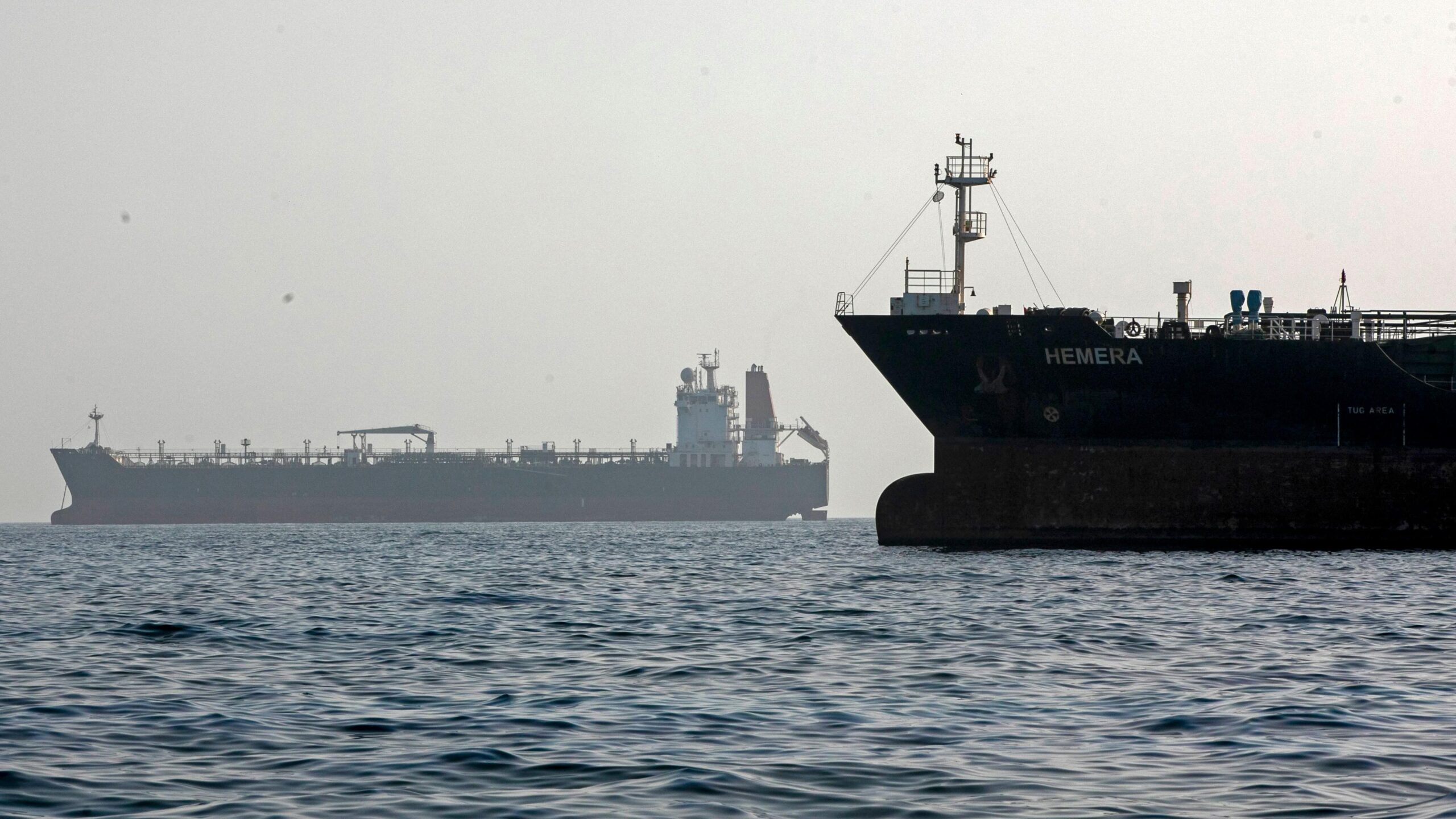

The United States and Iran have engaged in a significant military escalation around the Strait of Hormuz, marking the third major clash in just one week. While U.S. forces claim to have conducted defensive strikes against Iranian military infrastructure, Tehran has retaliated by targeting a base used by American troops, heightening concerns over regional stability.
U.S. Central Command (Centcom) officially characterized its recent operations as “defensive strikes” in response to “aggressive Iranian actions,” which included the downing of a U.S. drone over international waters. According to military reports, American fighter jets successfully targeted Iranian air defense systems, a ground control station, and two drones that were deemed an immediate threat to regional maritime traffic. These operations were centered in the city of Goruk, near the southern Iranian coast, and on Qeshm island in the Strait of Hormuz.
In response, the Islamic Revolutionary Guard Corps (IRGC) stated that they launched a retaliatory strike against an airbase utilized by U.S. forces, citing it as the launch point for an attack on Iranian communication towers on Sirri Island in the Gulf. Although the IRGC did not disclose the specific location of the base hit, the Iranian news outlet Fars reported that the military is prepared to escalate its response if further aggression occurs.
The conflict has spilled over into neighboring territories, with Kuwait reporting that its air defense systems were forced to intercept “hostile missile and drone attacks.” Though no specific details were provided, the state news agency KUNA confirmed that air raid sirens were activated across the country as a precautionary measure.
Amidst the growing violence, Donald Trump addressed the situation via a Truth Social post on Monday, urging critics to remain calm and expressing confidence that the outcome would be favorable. The former president insisted that Iran is eager to reach an agreement, suggesting that a beneficial deal for the U.S. remains within reach.
These hostilities follow the breakdown of negotiations over the weekend, which aimed to secure a lasting end to the months-long conflict. According to reports from CBS News, the impasse was largely driven by President Trump’s sudden demand for amendments to the proposed terms. The revised conditions reportedly focus on regulating shipping lanes in the Strait of Hormuz and the mandatory removal of high-grade enriched uranium. The White House has not yet commented on these reports, while Iranian lead negotiators maintain that no deal will be signed unless Iran’s sovereign rights are fully guaranteed.
The uncertainty surrounding these negotiations has kept global markets on edge. With roughly one-fifth of the world’s oil and liquefied natural gas (LNG) passing through the Strait of Hormuz, the current de facto trade embargo has triggered a sharp rise in fuel prices globally. Despite a tentative ceasefire that took effect on April 8, the path to a permanent resolution remains obstructed by shifting demands and ongoing military skirmishes.
As both nations remain locked in this cycle of retaliation, the international community continues to monitor the situation closely, particularly regarding the potential for further military engagements and the stalled diplomatic framework intended to address Iran’s nuclear program and regional security.
- U.S. strikes Iranian targets for the second time in three days; Tehran denounces actions as a serious violation of the ceasefire.
- The Iranian ‘mosquito fleet’ continues to challenge the U.S. Navy in the Strait of Hormuz.
- Surging living costs as a result of the U.S.-Iran conflict are contrasted by windfall profits for specific global corporations.
- Analyzing the enigma of former Iranian President Ahmadinejad’s role in the current conflict.
- Widespread relief among Iranian citizens following the restoration of internet access.
Summary
The United States and Iran are embroiled in a significant military escalation around the Strait of Hormuz, marking the third major clash in a week. U.S. Central Command conducted “defensive strikes” against Iranian air defense systems and drones in response to “aggressive Iranian actions,” including the downing of a U.S. drone. In retaliation, Iran’s Revolutionary Guard Corps struck a U.S.-utilized airbase. This conflict also saw Kuwait report “hostile missile and drone attacks” intercepted by its air defense systems.
These hostilities follow a breakdown in negotiations aimed at a lasting end to the conflict, reportedly due to new U.S. demands regarding shipping lanes and uranium. Iran insists on full guarantees of its sovereign rights before any deal. The ongoing conflict and de facto trade embargo in the Strait of Hormuz, a critical oil and LNG route, have led to a sharp rise in global fuel prices. A permanent resolution remains elusive amidst shifting demands and military skirmishes.
