
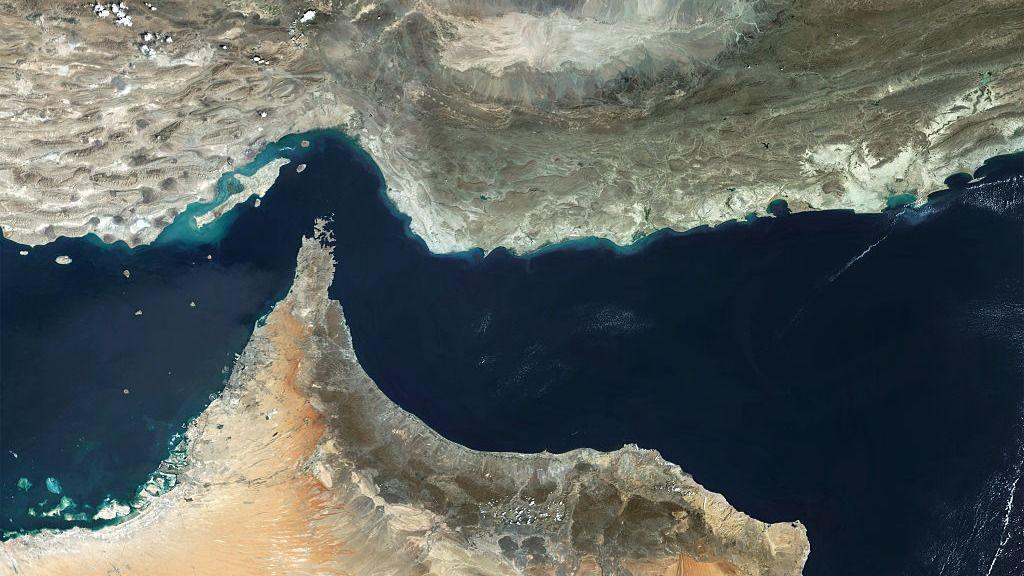

US President Donald Trump has issued a stark 48-hour ultimatum to Iran: reopen the Strait of Hormuz, or face devastating consequences. Trump warned that failure to comply would result in Washington “destroying” various Iranian power plants.
The full statement from the former President leaves no room for ambiguity:
“If Iran does not COMPLETELY OPEN, WITHOUT THREATS, the Strait of Hormuz within 48 HOURS from now, the United States will attack and destroy their POWER PLANTS, STARTING WITH THE LARGEST!“
This provocative message was published on March 21 at 23:44 GMT, giving Iran a precise deadline: by 23:44 GMT on March 23. This translates to 03:14 Tehran time on March 24, underscoring the immediate nature of the threat.
How important is the Strait of Hormuz?
The Strait of Hormuz is a narrow, vital waterway bordered by Iran to the north and Oman and the United Arab Emirates (UAE) to the south. This strategic corridor, roughly 50 km wide at its entrances and narrowing to about 33 km at its most constricted point, serves as the critical link connecting the Persian Gulf with the Arabian Sea.

Deep enough to accommodate the world’s largest crude oil tankers, the Strait of Hormuz is the primary conduit for Middle Eastern oil and Liquefied Natural Gas (LNG) producers, as well as their vast network of international customers. Its geopolitical importance cannot be overstated.
By 2025, an estimated 20 million barrels of oil and refined products are projected to traverse the Strait of Hormuz daily, according to figures from the US Energy Information Administration (EIA). The sheer volume of energy trade passing through this chokepoint is staggering, valued at nearly US$600 billion (equivalent to Rp10,173 trillion) annually.
The oil flowing through the Strait doesn’t originate solely from Iran. It includes crucial exports from other major Gulf states such as Iraq, Kuwait, Qatar, Saudi Arabia, and the UAE, highlighting its indispensable role for regional and global energy security.

Beyond crude oil, approximately 20% of the world’s LNG supply is also shipped through the Strait, predominantly from Qatar. In 2024, Qatar exported around 9.3 billion cubic feet per day (Bcf/d) of LNG via Hormuz, while the UAE contributed about 0.7 Bcf/d, as per US government data. LNG, or liquefied natural gas, is gas super-cooled to reduce its volume by up to 600 times, making it economically viable for long-distance transport before being re-gasified at its destination for heating, cooking, and electricity generation.
The Strait of Hormuz also serves as an essential route for fertilizer exports from the Middle East, accounting for roughly a third of global fertilizer trade. Conversely, it is a vital entry point for essential imports into the Middle East, including food, medicine, and critical technology supplies, underlining its multifaceted role in sustaining regional economies and populations.
Which ships can still cross the Strait of Hormuz?
The escalating tensions have severely impacted maritime traffic. According to an AFP tally on March 18, at least 21 vessels have been attacked, targeted, or reported attempted attacks since the conflict began. One tragic incident involved an explosion on a vessel carrying four Indonesian crew members, three of whom remain missing.
Despite these dangers, a limited number of vessels continue to navigate the Strait of Hormuz. Analysis of Kpler shipping data reveals that only 99 vessels traversed the narrow waterway this month, averaging just five to six ships per day.
- Which ships can still cross the Strait of Hormuz?
- US-Israel vs Iran war threatens food, pharma, and mining – Indonesian nickel production disrupted
- New Iranian leader Mojtaba Khamenei vows to close Strait of Hormuz
Approximately one-third of the recent sailings through the Strait of Hormuz have connections to Iran. This includes 14 vessels sailing under the Iranian flag, along with several other ships subject to sanctions due to their alleged involvement in Tehran’s oil trade.
Before the recent hostilities, the Strait was a bustling artery, with approximately 138 vessels passing through daily, according to data from the Joint Maritime Information Centre. These ships were responsible for transporting one-fifth of the world’s oil supply, highlighting the dramatic reduction in traffic.

“Ships can be attacked, and shipowners either cannot obtain insurance or the costs become prohibitively expensive. Consequently, vessels are forced to wait until the situation becomes safe again,” explained Arne Lohmann Rasmussen, a chief analyst at Global Risk Management, an energy market analysis provider and BBC’s partner, CBS News. He added, “Even without a physical blockade, the palpable threat from Iran, compounded by drone and missile attacks, is effectively deterring tankers from crossing the Strait.”
The global energy market has reacted sharply to the conflict, with fuel prices soaring. Crude oil prices have surged past US$100 per barrel, representing an almost 70% increase year-to-date and nearly 50% compared to the previous year, demonstrating the profound economic ripple effects of the instability.
Has the US tried to open the Strait of Hormuz?
Thus far, the United States has refrained from deploying its warships directly into the Strait of Hormuz. American military action has been largely limited to targeted airstrikes, including those against Iranian naval vessels to counter threats.
For instance, on March 18, the US military reported that it had bombed Iranian anti-ship cruise missile launch sites situated along the vital waterway, aiming to degrade Iran’s ability to threaten shipping.

President Donald Trump has vociferously called upon allied nations to send warships to the Strait of Hormuz, urging them to protect commercial vessels and help restore the disrupted global oil supply. However, his pleas have largely been met with rejections from key international partners.
Among the nations that have explicitly declined to send ships into the conflict against Iran are the UK, Germany, Australia, Spain, and Japan. Their reluctance underscores a broader international hesitation to become directly entangled in the escalating confrontation.
In a particularly blunt refusal, German Defense Minister Boris Pistorius questioned Trump’s request, stating, “What does Trump expect a handful of European frigates to do that the powerful US Navy can’t?” He firmly reiterated his country’s stance, adding, “This is not our war. We didn’t start it.”
Responding to these rejections, Trump dismissively declared that the US did not, in fact, need their assistance, suggesting a unilateral approach to the crisis.

Historically, the US has demonstrated a willingness to use its military might to ensure unimpeded maritime traffic through the Strait. This precedent provides context for current considerations.

During the intense, eight-year Iran-Iraq War in the late 1980s, attacks on oil facilities escalated into what became known as the “Tanker War.” Both nations aggressively targeted neutral vessels in an attempt to cripple each other’s economies. Kuwaiti tankers, which were transporting Iraqi oil, became particularly vulnerable targets in this brutal maritime conflict.
Ultimately, US warships initiated convoy operations, escorting tankers through the Gulf. This significant intervention developed into one of the largest naval engagements since World War II, according to the US Naval Institute, highlighting the lengths to which international powers have gone to secure the Strait.
Can energy exporters avoid the Strait of Hormuz?
The persistent threat of the Strait of Hormuz’s closure over the years has spurred Gulf oil-exporting nations to develop alternative land-based routes. These strategic pipelines offer a degree of bypass capacity, though not without limitations.
Saudi Arabia operates the 1,200 km East–West crude oil pipeline, which boasts the capacity to transport up to five million barrels of oil per day, according to the US government. This pipeline provides a significant alternative route, bypassing the Strait entirely.

In past emergencies, the Kingdom has even temporarily re-purposed natural gas pipelines for crude oil transportation, demonstrating its flexibility in managing energy flows under duress.
Similarly, the UAE has established a network of pipelines connecting its inland oil fields directly to Fujairah Port on the Gulf of Oman. This infrastructure has a capacity of at least 1.5 million barrels per day, offering another vital alternative for oil exports outside the Strait.
While oil could theoretically be rerouted via these alternative infrastructures to circumvent the Strait of Hormuz, such a move would still result in a substantial reduction in global supply—approximately 8–10 million barrels per day, according to Reuters. Furthermore, even these alternative routes are not entirely immune; loading activities at Fujairah have also been disrupted by drone attacks, underscoring the pervasive nature of the regional insecurity.
- ‘Nowhere to hide on a ship’ – The story of crew members trapped in Strait of Hormuz waters
- US-Israel vs Iran war: Indonesians anxious about potential fuel price hikes – ‘Life will be harder’
- Iran attacked US military bases causing Rp13.5 trillion damage, according to latest analysis