
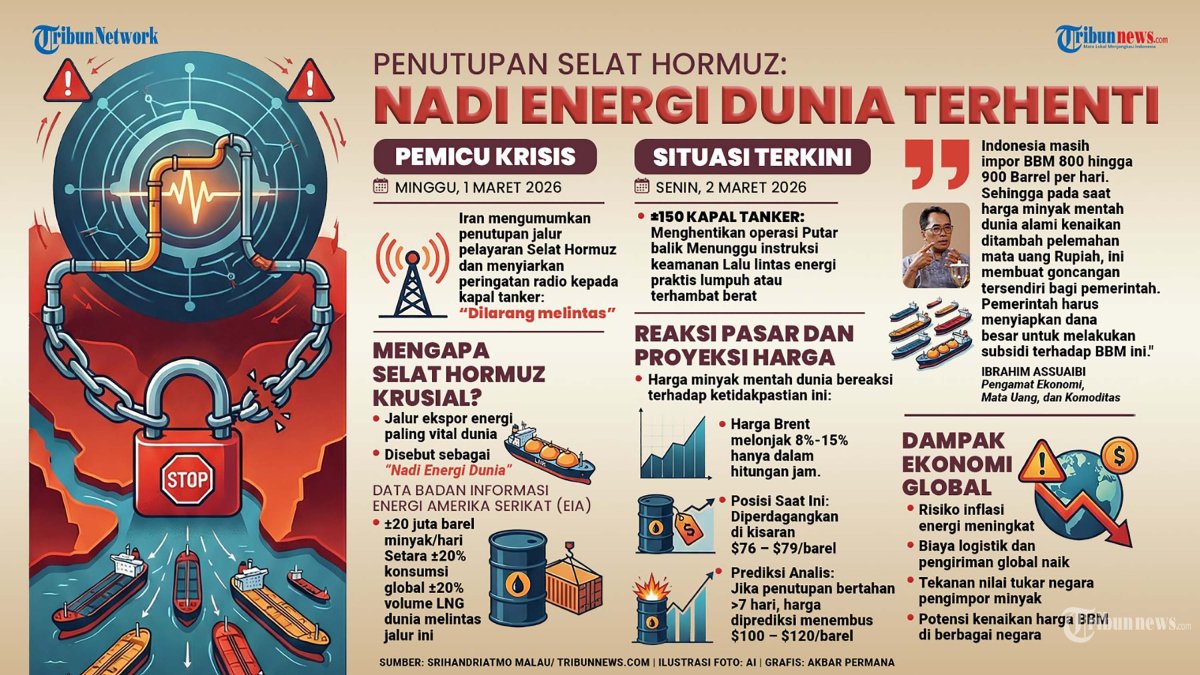
Amid rapidly escalating tensions in the Middle East, a critical development has unfolded: US President Donald Trump has announced a naval blockade of the Strait of Hormuz, a vital global shipping lane for oil traffic. This drastic measure follows the collapse of peace negotiations with Iran, threatening to ignite a more profound regional crisis and further destabilize the world economy.
The US Navy is poised to initiate the blockade on Monday at 10 AM US time. This restriction will specifically target vessels traveling to and from Iran, a move Tehran has vehemently condemned, vowing retaliation against any military ships in the strait. President Trump took to Truth Social on Sunday morning to declare, “Effective immediately, the United States Navy, the Best in the world, will begin the process of BLOCKING all ships attempting to enter or exit from the Strait of Hormuz.” He added, “At some point, we’ll get to ‘ALL IN, ALL OUT’ status, but Iran hasn’t allowed that to happen.”
The immediate economic fallout is stark. Oil prices soared once again, breaking the $100 per barrel mark on Sunday. Brent crude, the international benchmark, surged by 8 percent, a clear indication of the market’s anxiety. This “domino effect” poses a significant threat to an already fragile global economy, ensuring elevated gasoline prices worldwide.
Beyond the direct military confrontation, diplomatic efforts have faltered. Yesterday, US and Iranian negotiators concluded 21 hours of talks in Islamabad without reaching an agreement, leaving the fate of a fragile two-week ceasefire hanging in the balance. Meanwhile, separate discussions between Israeli and Lebanese diplomats are scheduled for this week, even as Israeli strikes targeting Hezbollah continued overnight, resulting in casualties and exacerbating regional instability.
At the heart of Trump’s decision to blockade the Strait of Hormuz lies a strategic aim to cripple Iran’s financial lifelines. Historically, Iran has intermittently allowed some tankers to pass through the strait in exchange for fees of up to $2 million per vessel. Crucially, Iran has also ensured the passage of its own oil shipments during the conflict, successfully exporting an average of 1.85 million barrels of crude oil per day until March—approximately 100,000 barrels per day more than the preceding three months, according to data from Kpler. By sealing off the strait, Trump seeks to sever this primary source of funding for the Iranian government and its military operations.
This strategic move, however, unfolds against a backdrop of complex and often contradictory policies regarding Iranian oil sanctions. The United States has periodically imposed sanctions on Iranian oil for decades, with the Trump administration having previously blocked the country’s crude sales after withdrawing from the 2018 Iran nuclear deal. Paradoxically, in March, the US granted a temporary permit for Iran to sell its stored oil. This one-month waiver inadvertently released a substantial 140 million barrels of crude—enough to meet global oil demand for approximately a day and a half, as reported by the US Energy Information Administration.
The impact of this temporary lifting of sanctions was detrimental to US interests. It inadvertently empowered Iran to sell sanctioned oil, which was then used to finance its war against the United States and its allies. Iran reaped significant profits, selling its oil at a premium, several dollars above the international Brent crude benchmark. Public outrage over soaring gas prices had previously pressured the Trump administration to seek an end to the conflict with Iran, and the release of hundreds of millions of barrels of oil may have offered a brief respite. Furthermore, by lifting the sanctions, Iran gained the ability to sell oil to Western nations, not solely to China, its largest customer. The administration has exhausted various avenues to keep oil prices in check during the war, including coordinating the historic release of global emergency oil reserves and lifting sanctions on hundreds of millions of barrels of Russian oil last month. Now, Trump is deliberately risking even higher oil and gas prices in a bid to maximize leverage over Iran and force an end to the conflict.
The international community has reacted with calls for de-escalation. Australian Prime Minister Anthony Albanese urged for the Strait of Hormuz to remain open, clarifying that the United States had not sought Australia’s assistance in enforcing the blockade. Speaking to Nine Network on Monday, Albanese stated, “We haven’t received any request, and they made this announcement abruptly and they did it unilaterally. And we haven’t been asked to participate.” He further emphasized, “What we want to see is negotiations continue and resume. We want to see this conflict end. We want to see the Strait of Hormuz opened for all. We also want to see freedom of navigation as required by international law.”
Source: CNN/AP