
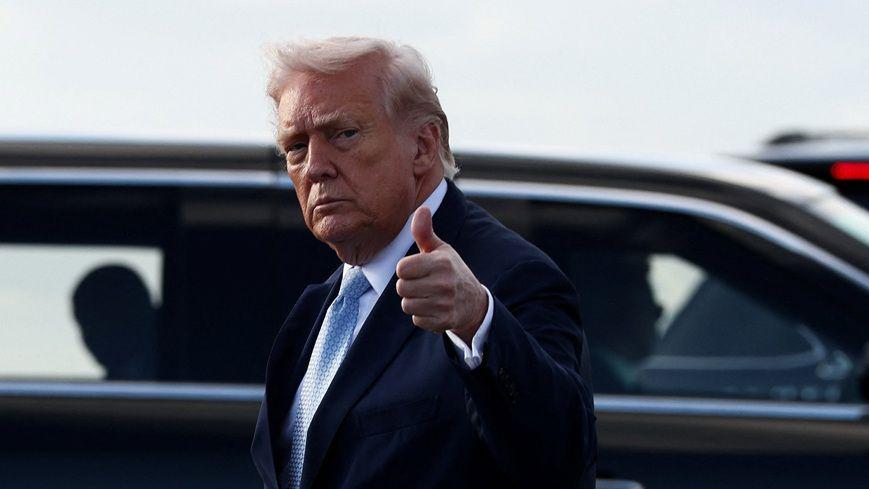

United States President Donald Trump has announced that the U.S. has engaged in “productive talks” with Iran, aiming for a “complete and total settlement” of the protracted conflict in the Middle East. This surprising revelation signals a potential shift in the region’s volatile dynamics.
Following these discussions, Trump declared a five-day moratorium on any potential attacks targeting Iran’s vital power plants and energy infrastructure. This temporary halt suggests a period of de-escalation as diplomatic efforts unfold.
In a detailed post shared on his TruthSocial platform, Trump elaborated on the nature of these engagements, stating:
“I AM PLEASED TO REPORT THAT THE UNITED STATES, AND THE NATION OF IRAN, HAVE FOR THE PAST TWO DAYS CONDUCTED VERY GOOD AND PRODUCTIVE TALKS REGARDING A COMPLETE AND TOTAL SETTLEMENT OF OUR HOSTILITIES IN THE MIDDLE EAST.
“BASED ON THE ATMOSPHERE AND TONE OF THESE DEEP, DETAILED, AND CONSTRUCTIVE DISCUSSIONS, WHICH WILL CONTINUE THROUGHOUT THE WEEK, I HAVE ORDERED THE WAR DEPARTMENT TO POSTPONE ALL MILITARY ATTACKS AGAINST IRAN’S POWER PLANTS AND ENERGY INFRASTRUCTURE FOR A PERIOD OF FIVE DAYS, DEPENDING ON THE SUCCESS OF ONGOING MEETINGS AND DISCUSSIONS. THANK YOU FOR YOUR ATTENTION TO THIS MATTER! PRESIDENT DONALD J. TRUMP”
This conciliatory tone marks a significant departure from previous stances. Just weeks prior, on March 21, Trump had issued a stark ultimatum to Iran, demanding the reopening of the crucial Strait of Hormuz within 48 hours. He had warned that failure to comply would result in Washington “destroying” various Iranian power facilities, underscoring the high tensions that have characterized the relationship.
The announcement of these talks and the temporary cessation of threats were met with an immediate positive reaction across global financial markets.
Brent crude oil prices experienced a notable downturn, dropping by 13% to approximately US$96 per barrel. Concurrently, the FTSE 100 index, which had initially fallen by more than 2%, saw a rebound, climbing 0.5% in response to the news, reflecting investor optimism for de-escalation.
Leaving Several Questions Unanswered
Despite the market’s positive reception, Trump’s sudden statement has also generated a multitude of critical questions, as highlighted by Bernd Debusmann Jr., a BBC correspondent stationed at the White House.
Crucially, while Trump has publicly affirmed “very good and productive” discussions with Iran, there has been no corresponding confirmation or statement from the Iranian side. Furthermore, Trump’s recent diplomatic overture stands in stark contrast to the aggressive rhetoric frequently exchanged by both warring parties over the preceding weekend, adding to the ambiguity.
The specific agenda or focus of these reported talks remains largely undefined. Potential topics could range from Iran’s controversial ballistic missile program or its nuclear enrichment activities to simply a ceasefire — a prospect Trump himself had previously dismissed as improbable last Friday.
It is also plausible that Trump’s statement pertains to the highly strategic Strait of Hormuz. However, Iran has not yet publicly committed to reopening this vital shipping lane, which it controls and uses as significant leverage in the ongoing conflict.
Indeed, most experts view the full reopening of the Strait of Hormuz as unlikely at this juncture, given its critical importance as a bargaining chip for Iran in the broader geopolitical struggle.
Consequently, many nations worldwide are now keenly awaiting further developments and concrete details regarding these purported US-Iran discussions and what the subsequent steps might entail for regional stability.
This article will be updated regularly
- Trump’s ultimatum to Iran: Open the Strait of Hormuz within 48 hours or the U.S. will destroy power plants
- Iranian missiles breach Israeli air defense: Striking two cities near nuclear facilities
- Iran struck U.S. military bases: Causing damage valued at IDR 13.5 trillion, according to a recent analysis
Summary
United States President Donald Trump announced that the US has engaged in “productive talks” with Iran, aiming for a “complete and total settlement” of the Middle East conflict. Following these discussions, Trump ordered a five-day postponement of potential military attacks on Iran’s power plants and energy infrastructure. This move signifies a shift from his prior ultimatum for Iran to reopen the Strait of Hormuz. The announcement led to a positive reaction in global financial markets, with Brent crude oil prices experiencing a notable downturn.
Despite Trump’s claims of “very good and productive” discussions, there has been no corresponding confirmation or statement from the Iranian side, and the specific agenda remains undefined. This diplomatic overture also contrasts sharply with the aggressive rhetoric recently exchanged by both parties. Crucial questions regarding topics like Iran’s ballistic missile program, nuclear enrichment, or the Strait of Hormuz remain unanswered. Consequently, many nations are now keenly awaiting further details on these purported US-Iran talks.