
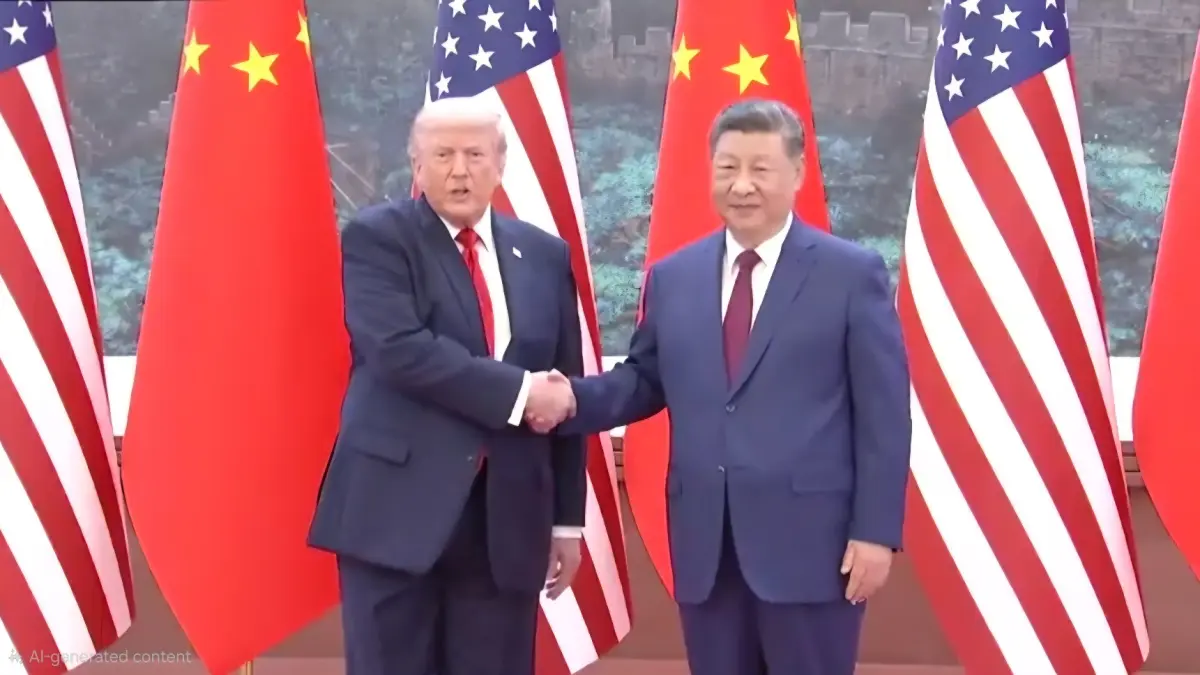

The highly anticipated meeting between United States President Donald Trump and Chinese President Xi Jinping in Beijing sent a strong signal that both nations are committed to preserving stability in their trade relations and averting new conflicts amidst escalating global uncertainties. The summit aimed to foster a constructive dialogue that could de-escalate tensions and pave the way for future cooperation.
During their bilateral talks held at the Great Hall of the People on Thursday, May 14th, President Trump and President Xi engaged in extensive discussions covering a spectrum of critical issues. Key topics on the agenda included contentious trade imbalances, the escalating situation in Iran, the future of semiconductor technology, and the sensitive issue of Taiwan.
President Xi Jinping underscored the paramount importance of stable relations between the U.S. and China, not just for their respective countries, but for the international community at large. “Stable bilateral relations are good for the world. We should be partners, not rivals,” Xi asserted, highlighting a vision of collaborative engagement over competitive confrontation.
President Trump reciprocated this sentiment with a notably warmer approach towards Beijing. In a display of personal diplomacy, he lauded President Xi as both a great leader and a friend. This positive exchange, including a significant handshake moment between the two leaders, signaled a potential shift in the tenor of US-China relations. “You are a great leader. It is an honor to be your friend,” Trump remarked, expressing confidence that the relationship between the two global powers would improve further. He optimistically declared, “Relations between China and the U.S. will be better than ever.”
Focus on Trade and Technology
According to reports from CBC, trade negotiations formed the core agenda of the summit. Washington’s primary objective was to expand the sale of American products, including Boeing aircraft, energy resources, and agricultural goods, into the vast Chinese market. This strategic move is aimed at significantly reducing the long-standing trade deficit that President Trump has frequently criticized.
Conversely, Beijing actively pressed the United States to ease its export restrictions on advanced chip and semiconductor technology, a critical component for China’s technological development. Beyond these immediate concerns, both nations also reportedly discussed the establishment of new forums designed to foster investment and trade, including a dedicated dialogue on artificial intelligence (AI).
This pivotal meeting occurred against the backdrop of ongoing efforts to maintain the fragile trade war truce achieved last October. At that time, President Trump had suspended punitive tariffs on Chinese products, while Beijing reciprocated by easing restrictions on the export of rare earth minerals, which are indispensable for industries ranging from electric vehicles to defense systems.
Iran and Taiwan Also Discussed
Beyond commercial interests, the complex conflict in Iran also became a significant point of discussion between President Trump and President Xi. The U.S. government expressed its hope that China could leverage its influence to persuade Tehran to reach a new agreement with Washington, thereby de-escalating the regional conflict.
However, many analysts believe that President Xi Jinping is unlikely to exert substantial pressure on Iran. This assessment stems from Iran’s critical role in Beijing’s broader strategic interests, suggesting that China may prioritize its own geopolitical considerations over direct U.S. requests regarding Tehran.
The perennial issue of Taiwan also cast a long shadow over the leaders’ discussions. The continued sale of U.S. weaponry to Taiwan remains a persistent source of tension between Washington and Beijing, highlighting enduring geopolitical fault lines despite the cordial atmosphere of the summit.
This visit by President Trump to Beijing was perceived differently compared to his 2017 visit. While China had previously actively demonstrated a warm approach and committed to large-scale purchases of American products, Washington’s current bargaining position is considered less robust. Domestically, Trump faces mounting political pressure stemming from the Iran conflict and economic challenges within the U.S., whereas President Xi Jinping is widely seen as operating from a more stable political position.
Despite these shifting dynamics, both nations appeared to share a mutual interest in maintaining constructive relations, recognizing their collective importance for global economic stability. Reinforcing the strategic value of the Chinese market, several prominent U.S. technology company leaders accompanied President Trump to Beijing, including Elon Musk, Nvidia CEO Jensen Huang, and Apple CEO Tim Cook. Their presence underscored China’s indispensable role for American business and technological advancement.
Summary
The meeting between US President Donald Trump and Chinese President Xi Jinping in
