
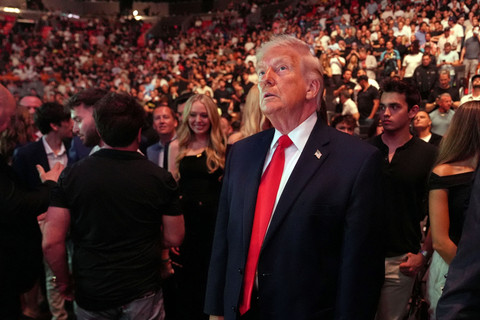

President Donald Trump’s plan to implement a full blockade of the Strait of Hormuz is significantly escalating the ongoing crisis in the Middle East, threatening to deepen regional instability and broader economic repercussions.
The Strait of Hormuz has been a focal point in the escalating conflict between the US-Israel axis and Iran, a confrontation that began six weeks ago. Iran has been actively asserting its control over this crucial maritime choke point, previously hindering passage. A full US blockade now threatens to halt any remaining traffic, potentially crippling economies far beyond the Middle East.
According to a Bloomberg report on Monday (April 13), daily ship transits through the strait have already decreased significantly from approximately 135 vessels before the conflict began. A US Navy blockade, similar to the one implemented off Venezuela’s coast late last year, could reduce this number to zero. While this move aims to pressure Iran, it simultaneously jeopardizes vital oil supplies for numerous Asian nations.
However, the precise implementation of this potential blockade remains unclear, as does Washington’s readiness to bear all associated risks. This raises critical questions about its full impact on Iran and the various Asian countries heavily reliant on oil imports from the Middle East.
A Brief Explanation of the US Blockade Threat
Hours after peace talks in Islamabad, Pakistan, failed to reach a resolution on Sunday (April 12), Trump took to social media to announce that the US Navy would soon impose a blockade on all vessels attempting to enter or exit the Strait of Hormuz.
He further stated that other nations would participate in this operation, though he did not specify which countries.
Trump also issued a stern warning, threatening to intercept any vessel in international waters that had paid tariffs to Iran. This statement implied a far-reaching blockade, extending well beyond the immediate vicinity of the Strait of Hormuz and even into the waters of the Gulf of Oman, signaling a potentially expansive maritime interdiction.
In contrast, the US military released a more narrowly defined interpretation, setting the start of the blockade for Monday at 10:00 AM local time. This measure would apply to all ships entering or departing from Iranian ports and coastal areas. Crucially, the military also affirmed that freedom of navigation through the corridor itself would not be impeded, creating a nuanced and potentially confusing operational framework.

Mariners were advised to closely monitor official broadcasts and to establish contact with US Navy forces when in the Gulf of Oman and as they approached the Strait of Hormuz.
While the exact form of the blockade remains ambiguous, it is anticipated to involve rigorous inspections and the interception of certain vessels, possibly even leading to the seizure of ships with direct ties to Tehran.
Responding to Trump’s declaration, Iran’s Islamic Revolutionary Guard Corps (IRGC) swiftly stated that any military vessel attempting to approach the Strait of Hormuz under any pretext would be considered a violation of the existing ceasefire agreement, further ratcheting up tensions.
Why Does the US Want to Blockade the Strait of Hormuz?
The potential closure of the Strait of Hormuz has proven to be an effective asymmetrical weapon for Iran, capable of inflicting significant financial losses that Washington finds challenging to counter. The primary objective of such a US blockade is to severely disrupt Iran’s oil exports, effectively cutting off a vital financial lifeline for the nation.
However, Iran has demonstrated its considerable capability to impede other parties while simultaneously ensuring the smooth flow of its own oil shipments. This strategic maneuver has not only bolstered Iran’s oil revenues but has also contributed to a noticeable increase in global oil prices.
The blockade option has previously been employed by the Trump administration in Venezuela, aimed at suffocating its sanctions-stricken economy and destabilizing its leadership. Yet, the Latin American oil producer is considerably smaller, relies on a far more limited fleet of vessels, and holds less significance for the world’s largest oil importer, China.
“This new escalation is more likely to trigger further escalation than to foster reconciliation. The threat is likely enough to deter legitimate international shipments out of the Persian Gulf,” warned John Bradford, a former US Navy officer and co-founder of the Yokosuka Council on Asia-Pacific Studies. His comments underscore the inherent risks of such a move.
What Does This Blockade Mean for Iran?

Should the US blockade prove successful, Iran would face devastating economic consequences due to its profound reliance on oil exports for national revenue.
In recent weeks, Iran has actually benefited from rising prices and a shift in its cargo sales. Previously sold at a discount, Iranian crude has commanded a premium this month compared to global Brent benchmarks, thanks to specific US exceptions that permitted the purchase of previously sanctioned cargo to boost supply.
Notably, India appears to have acquired two cargoes under these exceptions, marking its first such purchases since 2019.
Such higher selling prices for each barrel are critically important for Iran, which has suffered substantial losses from US and Israeli air strikes and requires significant investment to rebuild and stabilize its battered economy. A blockade would directly undermine this crucial revenue stream.
What is the Impact on Asia?
Asia already bears the heaviest burden of the ongoing energy crisis, and any further restrictions on maritime traffic through the Strait of Hormuz could severely exacerbate the region’s plight.
The US exceptions regarding Iranian oil, which previously allowed some purchases, now appear to be effectively nullified by the proposed blockade—a sharp policy reversal. Consequently, nations that had been pursuing bilateral agreements with Iran may now be increasingly wary of inviting conflict with the US, further limiting their options for securing vital fuel and crude oil supplies.
“They are so focused on Iran that they lose sight of what they are causing the world,” stated Jorge Montepeque, managing director at Onyx Capital Group, in an interview with Bloomberg. “And the suffering is in Asia, the suffering is in the South Pacific, the suffering is for anyone who depends on oil,” he concluded, highlighting the broad and severe repercussions for energy-dependent regions worldwide.
Summary
President Donald Trump has announced plans for a full U.S
