
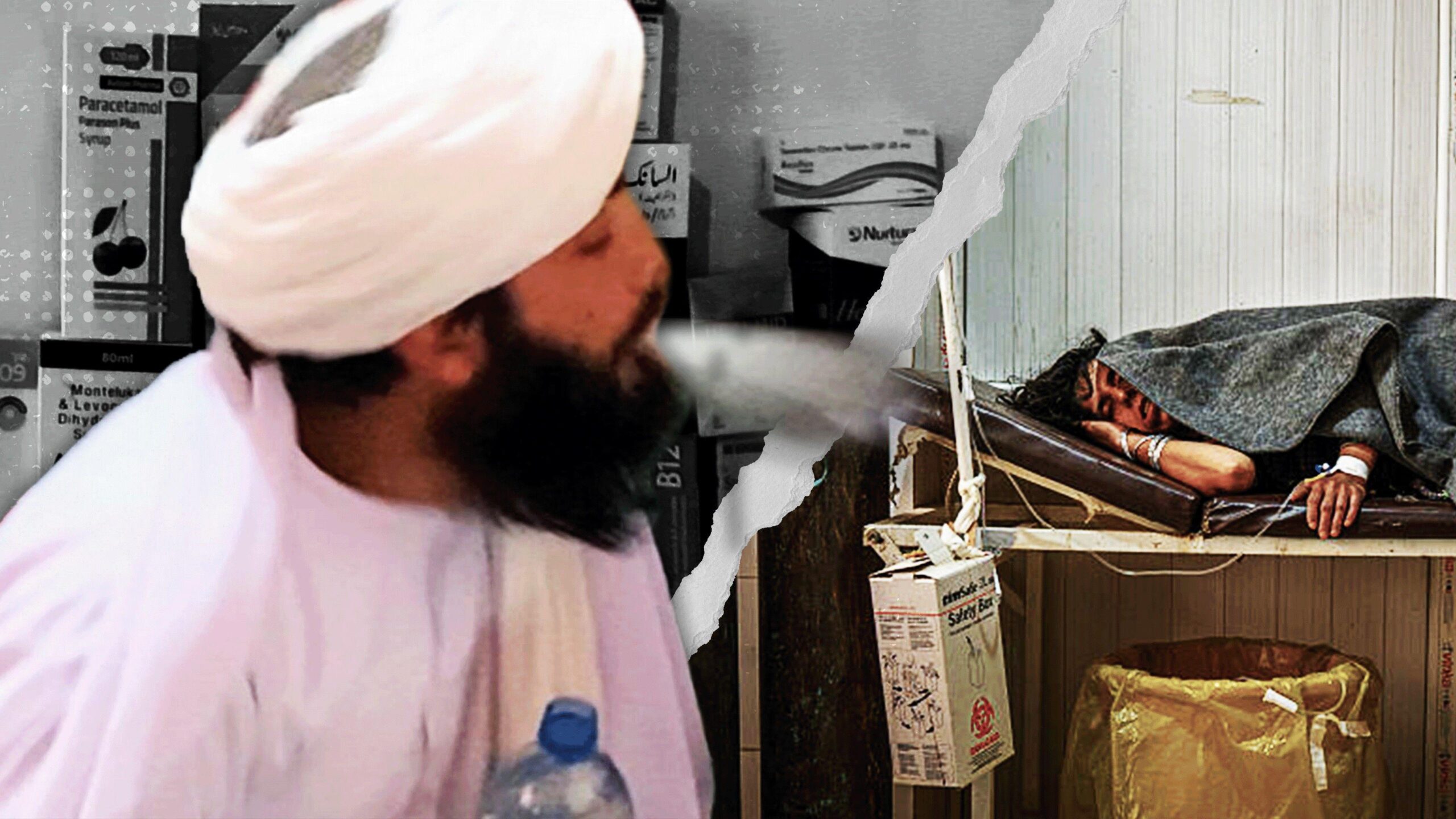

On the outskirts of Kandahar in southern Afghanistan, dozens of people gather daily outside a modest home. They are not waiting for a doctor; they are seeking a miracle. Among them are patients suffering from life-threatening illnesses, including cancer, who have arrived in search of a spiritual cure.
Inside a room with brightly painted walls, a crowd of sick individuals—men, women, and children—sit or lie in wait. In the corner sits Neda Mohammad Qadri, a man distinguished by his white turban and long black beard. As desperate patients queue for his attention, Qadri performs his ritual: he takes a sip of water, then sprays it onto the person before him.
Qadri claims he is a vessel for divine intervention, capable of alleviating suffering for those battling cancer and thalassemia. Yet, his credentials are far from medical. A former cook with no formal religious training or healthcare background, Qadri began his career in “spiritual healing” after claiming that people started seeking amulets from him years ago. Emboldened by anecdotal reports of improvement among his visitors, his following—and his influence—has grown significantly.

The rise of such figures is a symptom of a much deeper crisis within the Afghan healthcare system. According to the World Health Organization (WHO), more than 24,000 people are diagnosed with cancer in Afghanistan annually, resulting in nearly 17,000 deaths. Experts warn that the true figures are likely much higher, as a severe shortage of hospitals, specialized clinics, and trained medical staff leaves many patients undiagnosed and untreated.
The situation reached a breaking point following the Taliban takeover in 2021, which led to a drastic reduction in international aid. Critical medical infrastructure, such as the Mirwais Hospital in Kandahar, lost essential funding, forcing the International Committee of the Red Cross (ICRC) to withdraw its support. Even when facilities exist, such as the newly constructed cancer center in Kabul, the costs of treatment remain prohibitively expensive for most families.

This medical vacuum is exacerbated by lifestyle factors contributing to high cancer prevalence in the region, including high salt intake, the use of naswar (a smokeless tobacco), and dangerous levels of pollution. For many, the road to treatment involves exhausting all resources, often traveling long distances with their own basic medical supplies, only to find empty hands.
Previously, families in southern Afghanistan could cross into Pakistan for affordable medical care without a visa. However, that lifeline has been severed. Border closures at the Chaman-Spin Boldak crossing, combined with strict new restrictions on the cross-border flow of medicine, have left the Afghan healthcare system isolated and failing.

For Nazir Ahmad Maiwandwal, the struggle ended in tragedy. His 24-year-old wife, Shukriya, suffered from a brain tumor. After a successful surgery in Pakistan, her condition eventually declined, and the couple found themselves trapped by the sudden border closures. “I applied for a Pakistani visa three times, but was rejected,” Maiwandwal recalls. “I went to Kabul, but the cancer center there lacked radiotherapy. I returned home in despair.”
Desperation has driven many, like Maiwandwal, to place their faith in spiritual healers. Qadri claims he sees between 250 and 400 patients daily. However, the outcomes are often devastating. Habibullah, a father seeking help for his son, Assad, reached out to Qadri after conventional doctors in Pakistan suggested they return home for comfort care. Qadri promised that within ten days, Assad’s condition would transform. Instead, Assad died on the way to the hospital.
“I lost my son. I was deceived by empty promises,” Habibullah says. He alleges that Qadri demanded large sums of money as “offerings” and forced families to provide livestock, labeling the practice as exploitation.

Another resident, who requested anonymity, visited Qadri for skin cancer treatment. Instead of a cure, he was given potent antibiotics like ceftriaxone and augmentin, which are not intended for cancer treatment. After seeing no improvement and realizing the risk of further illness, he finally sought proper medical care at the Shaukat Khanum Hospital in Lahore, where he eventually recovered.

Medical experts warn that the misuse of antibiotics is dangerous, potentially leading to drug resistance and secondary health complications. When confronted, Qadri denies charging for his services, claiming that any money he receives is a voluntary gift from grateful patients. He also insists he does not discourage people from seeking conventional medicine.
Yet, the reality remains that for many families, the appeal of spiritual healing is not a choice, but a byproduct of a broken system. While experts emphasize that faith can provide comfort, they maintain that it is no substitute for clinical intervention. As the healthcare crisis in Afghanistan persists, patients like those waiting outside Qadri’s door continue to cling to any available hope, even when the promise of a miracle comes at a fatal cost.

Summary
In Afghanistan, a severe health crisis and a lack of medical access—exacerbated by the withdrawal of international aid—have driven many desperate cancer patients to seek treatment from a spiritual healer named Neda Mohammad Qadri. Despite having no medical background, Qadri exploits the suffering of patients through clinically unproven rituals and the improper administration of antibiotics. Many families have already spent significant sums of money and delayed proper medical care, ultimately leading to tragic outcomes, including the deaths of patients.
This phenomenon reflects the collapse of Afghanistan’s healthcare system following the Taliban takeover and the closure of borders, which has cut off access to medical treatment abroad. Although medical experts have warned of the dangers of such practices, the limitations of hospital infrastructure and the high cost of care remain major barriers for the public. For many citizens, turning to a spiritual healer is not a choice, but a desperate act in the face of vanishing hope for formal healthcare services.
