
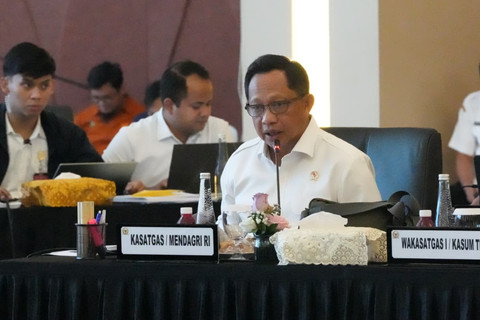

Muhammad Tito Karnavian, Chairman of the Task Force for the Acceleration of Post-Disaster Rehabilitation and Reconstruction (PRR) in Sumatra, has expressed profound appreciation for the crucial support from the DPR RI’s Post-Disaster Recovery Task Force. Karnavian underscored that this collaborative effort is paramount to ensuring the optimal rehabilitation and reconstruction processes in Sumatra following recent disasters. His remarks were made during a significant Coordination and Evaluation Meeting held with both the DPR RI Post-Disaster Recovery Task Force and the Government’s Post-Disaster PRR Task Force on Wednesday, February 18, 2026, at the Nusantara IV Building within the DPR RI Parliamentary Complex in Senayan, Jakarta.
During the meeting, Karnavian presented a detailed overview of the current progress in Sumatra’s post-disaster recovery efforts. Encouragingly, data from the National Disaster Management Agency (BNPB) as of February 17, 2026, revealed a significant and continuous reduction in the number of displaced individuals. Specifically, in Aceh Province, the count dropped dramatically from an initial 1,418,872 evacuees to just 12,144. Similarly, North Sumatra Province saw its evacuee population decrease from 53,523 to 850. For West Sumatra, the progress was even more remarkable, with the evacuee count now at zero, down from an initial 16,164. “Those who have returned home have received assistance and stimulus for lightly or moderately damaged houses, while those with severely damaged or lost homes are residing in temporary shelters or receiving housing waiting funds,” Tito explained, highlighting the comprehensive support system in place.
Beyond immediate shelter and aid, the government, in collaboration with various stakeholders, is relentlessly working to accelerate broader recovery efforts, particularly concerning critical infrastructure. This encompasses the restoration of vital bridges, damaged roads, and other essential public facilities. Karnavian further elaborated on the diverse and challenging characteristics of the disaster-affected regions across Sumatra. For instance, highland areas frequently experience landslides, which often result in blocked roads and destroyed bridges, isolating communities. “These areas were cut off, causing significant logistical difficulties in the initial stages [of the disaster response]. These mountainous regions had not experienced such widespread disasters in decades, meaning their existing logistics systems could perhaps only sustain them for about three days,” he added, underscoring the unique obstacles faced.
To effectively address these intricate logistical challenges and prevent potential food shortages, Karnavian revealed that his task force has been in close coordination with key national figures. This includes collaboration with the Minister of Agriculture, who also serves as the Head of the National Food Agency (Bapanas), and Perum Bulog, the state-owned logistics agency. Such strategic coordination is pivotal in ensuring that adequate supplies of food and other essential logistics are consistently available and distributed to all disaster-affected areas.
 The high-level importance of this meeting was further emphasized by the distinguished presence of several key officials. Attendees included DPR RI Deputy Speakers Sufmi Dasco Ahmad, Sari Yuliati, Saan Mustopa, and Cucun Ahmad Syamsurijal, alongside other leaders of the DPR RI. Also present were Minister of State Secretary Prasetyo Hadi, Minister of Finance Purbaya Yudhi Sadewa, and various other relevant ministers from the Merah Putih Cabinet, showcasing a unified government approach to post-disaster recovery.