
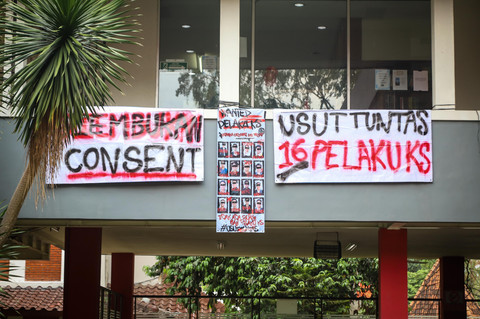

The alleged sexual harassment case involving 16 Faculty of Law University of Indonesia (FH UI) students in a group chat has cast a stark light on the dark underbelly of collective behavior within closed digital spaces. Psychologist Alvieni Angelica posits that an “empathy circuit shutdown” occurred in this incident, a phenomenon she explains through the lenses of neurobiology, Philip Zimbardo’s Lucifer Effect theory, and John Suller’s Online Disinhibition Effect theory.
Angelica elaborates that within the confines of private digital chat rooms, such as WhatsApp groups, individuals often perceive interactions as opportunities to build social status. Offensive or harassing jokes, in this context, can be misconstrued as a means to gain validation and recognition from other group members.
When these behaviors are met with positive reinforcement, such as laughter or support, the brain responds by releasing dopamine. This neurological reward mechanism strongly reinforces the actions, compelling perpetrators to repeat them.
This phenomenon can also be understood through the Lucifer Effect theory, popularized by psychologist Philip Zimbardo. This psychological concept explains how individuals, who are otherwise normal and well-adjusted, can engage in deviant actions when placed within specific systems or conditions that foster such behavior.
“Psychologically, when linked to Philip Zimbardo’s Lucifer Effect theory, those who possess power and feel protected – particularly within a seemingly anonymous, closed WhatsApp group – experience a breakdown of moral control. This new environment, the WhatsApp group, effectively establishes its own norms, which are then perceived as symbols of membership,” states Alvieni Angelica, M.Psi., Psychologist.
From the perspective of other theories, Angelica further highlights the presence of identity dissociation in digital spaces. Perpetrators, she notes, do not fully perceive their actions in these online environments as reflective of their true selves in the real world.
This detachment is exacerbated by the absence of an immediate response from victims. Consequently, feelings of guilt become dulled, allowing the harmful behavior to persist over an extended period.
“They cannot directly observe the victim’s facial reactions while typing, which means the empathy circuits in the brain are not triggered, thus preventing the emergence of guilt. This is precisely why such situations tend to endure for a considerable duration,” Angelica explained to kumparan on Wednesday (15/4).

Furthermore, exposure to pornographic content and negative social environments can significantly reinforce these detrimental behavioral tendencies. Information absorbed through the senses is processed and stored within the brain’s emotional system.
When this part of the brain is activated, particularly the amygdala, an individual’s capacity for logical thought can be severely impaired. This leads to increased impulsivity and a greater susceptibility to emotional urges.
“The result is that people tend to follow their emotions, especially in the aforementioned digital environments where group validation is present,” she added.
To prevent similar occurrences of sexual harassment among FH UI students, Angelica emphasizes the critical importance of strict and permanent sanctions, including potential expulsion (drop out) as a deterrent. Beyond punishment, she advocates for universities to proactively equip students with assertive communication skills and provide training to recognize and halt conversations that foster toxic behavior in digital spaces.
Other crucial steps include educating students about various forms of violence and their profound impacts. Campuses should also implement psychological evaluations for student organization leaders, specifically assessing their levels of empathy, manipulative tendencies, and excessive need for validation (narcissism).
“Universities can also establish a secure reporting system managed by an independent third party, not fellow students, to ensure that victims or witnesses can report incidents promptly and safely,” Angelica concluded.
Background on the FH UI Student Sexual Harassment Case
The case revolves around allegations that 16 FH UI students engaged in verbal sexual harassment targeting several female students and lecturers via a group chat.
This disturbing case quickly went viral across social media platforms, leading to the alleged perpetrators being collectively tried and confronted on the UI campus from Monday (13/4) until early Tuesday morning (14/4). The students were brought to the UI Auditorium, underwent questioning, and were subsequently made to apologize.

The victims’ legal counsel, Timotius Rajagukguk, disclosed that the total number of victims in this case stands at 27 individuals, comprising 20 female students and 7 female lecturers.
University of Indonesia (UI) authorities have affirmed their commitment to thoroughly investigate the incident. This investigation is being carried out by the UI Sexual Violence Handling Task Force (Satgas PPKS UI).
“UI views the reports of alleged verbal sexual harassment involving several students within the Faculty of Law UI environment, as discussed in the public sphere, with utmost seriousness and declares a firm stance against such acts,” stated UI officials, as quoted on Tuesday (14/4).
“Should violations be proven during the investigation process, the university will impose sanctions in accordance with applicable regulations — ranging from academic penalties to permanent expulsion as a student. Furthermore, the university does not rule out further coordination with law enforcement agencies if criminal elements are identified,” the statement added.
Meanwhile, the UI Student Executive Board (BEM UI) has urged the campus administration to promptly convene an ethics trial and impose severe sanctions, specifically demanding the immediate expulsion (DO) of the 16 students involved.
Summary
The alleged sexual harassment case involving 16 Faculty of Law University of Indonesia (FH UI) students in a group chat, targeting 27 female students and lecturers, has highlighted the dangers of collective behavior in digital spaces. Psychologist Alvieni Angelica attributes this to an “empathy circuit shutdown,” explaining it through theories like the Lucifer Effect and Online Disinhibition Effect. These theories suggest individuals can engage in deviant acts in closed online environments where moral control is diminished, and a lack of immediate victim reaction dulls guilt, often reinforced by seeking social validation and dopamine release.
To prevent similar incidents, Angelica recommends strict and permanent sanctions, including expulsion, alongside training in assertive communication and recognizing toxic online behaviors. She also advocates for psychological evaluations for student leaders and an independent reporting system. The University of Indonesia is seriously investigating the matter through its Sexual Violence Handling Task Force, pledging severe sanctions up to permanent expulsion and potential law enforcement involvement if violations are proven.
