
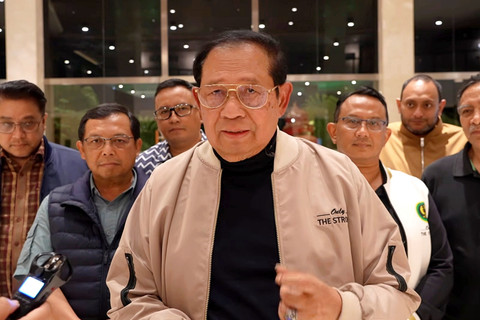

Indonesia’s 6th President, Susilo Bambang Yudhoyono (SBY), has weighed in on the complex situation in Iran, following reported attacks by Israel and the United States (US). SBY cautioned that if the ultimate goal of Israel and the US is regime change in Iran, such an endeavor would be far from straightforward.
Reflecting on Iran’s history, SBY recounted the significant political transition from Shah Mohammad Reza Pahlavi to Ayatollah Ali Khamenei. He emphasized that this profound shift was achieved by Iranian figures themselves, emerging from internal dynamics rather than being imposed by external powers. “Indeed, it was a regime change from one Iranian figure to another Iranian figure. So, it was not enforced by any external power or another country,” SBY stated, as quoted from his YouTube account on Tuesday (March 3).
SBY raised a critical question regarding contemporary calls for a shift in power. He questioned the feasibility of such a movement if, as he noted, figures like Trump and Netanyahu are currently urging the Iranian people to take control. “My question is, is it that simple? Back then, there was Ayatollah Ali Khamenei; now, who is the figure?” SBY pondered, highlighting the crucial need for identifiable leadership in any successful revolutionary movement.
However, SBY also acknowledged instances where a singular revolutionary figure isn’t immediately apparent for a regime change to occur. He cited the “Arab Spring” as an example, where regime changes transpired in Egypt with the ousting of Hosni Mubarak, in Libya with Muammar Gaddafi, in Tunisia with Zine El Abidine Ben Ali, and in Yemen with Ali Abdullah Saleh. These were often termed “leaderless revolutions.” Yet, he made a crucial distinction, adding, “But that was the Arab Spring. It’s not guaranteed that other situations can follow the same path.”
Through these observations, SBY aimed to underscore the profound challenges inherent in orchestrating a regime change. He further elaborated, “I am illustrating that regime change is indeed not that simple. We saw that some time ago there were large protests in Iran, and the casualties were also significant. Does that automatically represent the embryo of a force for change? Remains to be seen. We will observe the unfolding developments in the days ahead.”
Summary
Former Indonesian President Susilo Bambang Yudhoyono (SBY) has cautioned that a regime change in Iran, potentially sought by Israel and the the United States, would be far from straightforward. He highlighted Iran’s historical transition from Shah Mohammad Reza Pahlavi to Ayatollah Ali Khamenei, emphasizing that this profound shift was achieved internally by Iranian figures, not enforced by external powers. SBY questioned the feasibility of current calls for a power shift if there isn’t an identifiable internal leader comparable to Khamenei.
SBY acknowledged instances like the “Arab Spring,” where regime changes occurred in several countries through “leaderless revolutions,” but he stressed that not all situations can follow the same path. He underscored the inherent challenges of orchestrating a regime change, noting that past large protests in Iran with significant casualties do not automatically represent an immediate force for change. SBY concluded that the unfolding developments in Iran “remain to be seen.”