
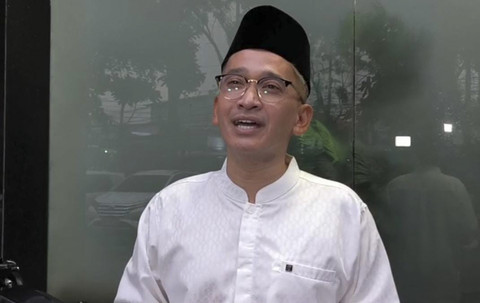

Prominent Indonesian personality Ruben Onsu has publicly acknowledged claims from Sarwendah’s legal team, confirming that he has ceased providing child support since late 2025. This admission highlights a significant development in their ongoing family dispute, as Sarwendah has reportedly been solely responsible for financially supporting their children for approximately the past six months.
Ruben Onsu expressed considerable bewilderment regarding Sarwendah’s apparent reluctance to financially support their children, especially given that this new arrangement has only been in place for a brief six-month period. Speaking via video call on Sunday, May 31, Onsu emotionally questioned the focus on this recent lapse in child support, stating, “If we are going to discuss child support again, and it’s only been 6 months of me not providing, then where was all my effort, my sweat, my exhaustion before? Where were all of you then?”
Onsu conveyed his surprise that Sarwendah’s representatives were solely emphasizing his actions concerning child support over the past six months, asserting that he had consistently striven to meet his children’s needs prior to this period. In a bold move, Ruben Onsu declared that if Sarwendah found the responsibility of sole provision overwhelming, he would be willing to take full custody. “I am only being judged by the last six months,” he remarked. “Well, if I am deemed incapable, then just hand them over to me; I will raise them myself.”
 The Reason Ruben Onsu Stopped Child Support
Shedding light on the controversial decision, Ruben Onsu’s legal counsel, Minola Sebayang, explained that his client had specific justifications for discontinuing child support payments. Sebayang underscored that, for a considerable time, Ruben Onsu had consistently provided for his children’s needs, extending financial assistance even to his ex-wife’s household expenses.
Minola recalled previous statements, asserting, “If we flash back to my press conference, it proved and showed that Ruben provided Rp 200 million every month—hundreds of millions, yes. This included even miscellaneous household expenses.” However, this consistent financial provision eventually reached a breaking point for Ruben Onsu in their family dispute.
Ruben’s decision to halt child support stemmed from a growing frustration over increasingly being obstructed from seeing his children. He reportedly felt a profound imbalance, thinking, “My obligations are continuously fulfilled, even exceeding what is required, yet I am denied my rights.” Minola further elaborated on Onsu’s motivation, revealing, “He also wanted to demonstrate his protest. ‘I, too, can choose not to fulfill my obligations’.”
Minola Sebayang also expressed his bewilderment that Sarwendah seemingly found providing for her children burdensome. He voiced regret over Sarwendah’s perceived attitude, which appeared to diminish Ruben Onsu’s significant role as a father and provider throughout their relationship. Concluding his remarks, Sebayang highlighted the broader context of divorced parents: “Let’s not feel like after just six months, we’ve become a hero. There are many divorced individuals whose husbands never provide child support, not even for a single day.” This statement underscores the lawyer’s perspective on the magnitude of Onsu’s previous contributions compared to the relatively short period under contention in the ongoing custody battle.
Summary
Ruben Onsu has confirmed that he ceased providing child support to Sarwendah six months ago, sparking a public dispute over their family responsibilities. He expressed frustration that his long-term history of generous financial support is being overlooked, noting that he had previously covered all household and child-related expenses. In response to the criticism, Ruben challenged Sarwendah by offering to take full custody if she feels overwhelmed by the burden of providing for the children alone.
According to his legal counsel, Minola Sebayang, the decision to stop payments serves as a form of protest against being restricted from seeing his children. Ruben felt that his parental rights were being denied despite his consistent and substantial financial contributions over the years. His legal team emphasized that this six-month lapse should be viewed in the context of his long-standing commitment as a father rather than being used to characterize him as an absent provider.
