
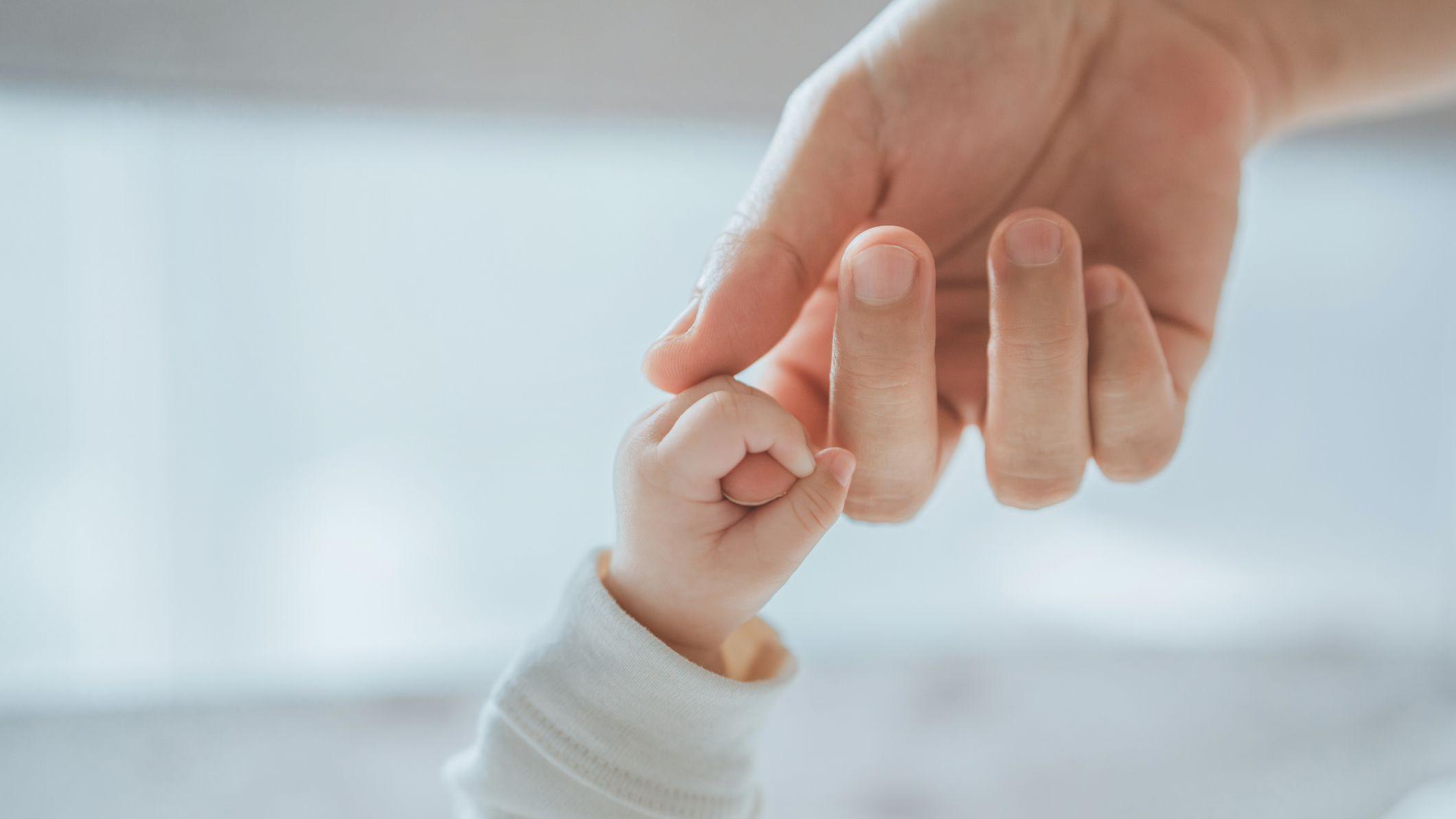

Carmen deeply loves her 10-year-old son, Teo. Yet, if she could turn back time, she admits she would never have become a mother.
“Motherhood has robbed me of my health, time, money, energy, and body,” she reveals. “The cost is simply too high, and it’s a price that lasts forever.”
The 40-something teacher is one among a hidden community of women who privately grapple with regretting the decision to become a mother.
Such profound regrets are rarely voiced publicly. Women who share their stories do so only under strict anonymity, fearing judgment from society and the disapproval of their own families who remain unaware of their true feelings.
Years ago, Carmen briefly articulated her regrets in an online parenting forum. While some responses offered empathy, others reacted as if she were “horrible” and a “monster.”
The immense pressures and profound sacrifices often inherent in motherhood recently gained spotlight through the Oscar-nominated film If I Had Legs I’d Kick You.
Actress Rose Byrne delivers a poignant portrayal of a mother stretched to her limits, feeling utterly isolated in her struggle to meet her child’s needs while simultaneously sustaining her family’s life.

Carmen felt an intense resonance with the film’s central themes.
“Motherhood is an endless task that you must perform even when you don’t want to, simply because a small child depends on you… it feels like an inescapable trap,” she explains.
She speaks candidly about how “devastating” the experience of being a mother has been. However, her tone visibly brightens when the conversation shifts to Teo.
“Teo has absolutely nothing to do with my regrets; he is a fantastic, adorable child, and I love him very much,” Carmen affirms.
“I would give my life for him without hesitation. He is kind, sociable, and a brilliant student.”
Psychotherapist Anna Mathur sheds light on this distinction, explaining, “often when women feel safe enough to discuss regretting motherhood, what emerges isn’t a lack of love, but rather feelings of isolation, exhaustion, or a profound loss of identity.”

For Carmen, a self-confessed perfectionist, the heaviest burden has been the immense responsibility of raising a “good human being, a kind and happy person.”
She vowed that Teo would never experience a childhood like her own, which was spent in a poor and dysfunctional family “where violence was the primary language” and she never felt truly loved.
Initially, becoming a mother brought “happiness,” she recalls. Teo slept soundly, and she cherished her days caring for her baby during maternity leave. However, circumstances changed dramatically when Teo began exhibiting serious developmental delays. “Every simple moment transformed into observation and worry,” Carmen reveals.
“I felt an immense sense of guilt,” she adds, “and I was terrified his life would be a constant struggle.”
Fortunately, Teo was not diagnosed with the conditions Carmen feared and is now developing well. Nevertheless, she attributes the relentless stress and anxiety to her subsequent diagnosis of an autoimmune disease.

According to sociologist Orna Donath, author of Regretting Motherhood: A Study, linking parental regret with a lack of love or poor nurturing is a reckless assumption.
Donath interviewed 23 mothers, each emphasizing the clear distinction between regretting the experience of motherhood itself and their profound feelings for their children. Some reported feeling “deceived” by the idealized concept of motherhood, as the reality starkly diverged from societal expectations.
“I regret having children and becoming a mother, but I love the children I have… I don’t want them not to exist, I just don’t want to be a mother,” shared one participant, a mother of two teenagers.
Limited data suggests that these feelings are far from rare. A 2023 study in Poland estimated that between 5% and 14% of parents regret the decision to have children and would choose a child-free life if they could go back in time.
While these sentiments are seldom openly expressed, online communities have provided invaluable platforms for parents to share their experiences in a safe space.
Read also:
- ‘Child-free’ increasingly popular: People living lives without children
- Confessions of couples who decided to be ‘childfree’ in Indonesia
Carmen realized she was not alone after joining the Facebook group I Regret Having Children, which boasts 96,000 members from across the globe.
“Motherhood is full of sweet moments, but they just don’t outweigh the freedom I could have had,” says an Australian mother with a five-year-old child.
“I’m good at putting on my ‘mask’ in front of my daughter, but as soon as she’s asleep and I have a little time with my husband, the mask comes off, and I’d much rather be alone.”
Having children has created tight financial constraints, forcing all her previous goals and ambitions—traveling the world, building a business, cultivating an investment portfolio—to be indefinitely postponed.
“I’ve lost all motivation, except for trying to raise a decent human in this chaotic world,” she laments.
Another mother in the UK expressed feeling “demeaned” when people automatically assume that an unhappy mother must be experiencing postpartum depression.
“People are more comfortable labeling it that way—yet my children are grown adults, and I’m still grieving the life I never lived. Now I’m worried about having to look after grandchildren in the future—the caregiving duties never truly end.”

The Facebook group I Regret Having Children was founded in 2007. Its content comes directly from parents—predominantly women—who submit their personal stories privately to be published anonymously.
The group’s moderator, Gianina (44), a laboratory scientist from the U.S., emphasizes that “its purpose is not to shame parents or promote a particular lifestyle.”
“It’s more about documenting a cultural phenomenon that rarely gets space in mainstream conversation,” she explains.
“This community is large and active because so many people are quietly grappling with feelings that have long been deemed inappropriate to have.”
Gianina herself had harbored doubts about having children, and reading the stories in the forum profoundly influenced her decision not to have any.
Read also:
- More people worldwide are refusing to have more children – ‘Limited money is the main reason in Indonesia’
- Sex recession: Is Indonesia lacking babies?
- ‘Why I don’t want to have children’, confessions of women in South Korea
According to Irish counselor and psychotherapist Margaret O’Connor, younger generations are now approaching the decision to have children differently compared to previous ones.
“The awareness that this is a genuine choice is becoming increasingly apparent,” she states. “It’s no longer something that is automatically expected.”
She adds that many of her clients in their 20s and 30s arrive already certain they want children, yet still harbor anxieties and seek support to navigate the journey.
However, O’Connor stresses that it is challenging to identify definitive signs that a woman will regret becoming a mother, as each individual’s experience is unique.
“You must be absolutely confident in this significant decision and undertake it for personal reasons, not due to pressure from a partner or parents,” she advises.
She also warns against overly relying on the notion of “collective child-rearing” or the promise of siblings assisting with childcare.
“The message we often hear is, ‘We’ll all be there to help look after the baby,’ but the reality is often quite different—it’s your baby, and you are ultimately responsible.”
O’Connor deems it natural for parents to experience regret, considering the immense and demanding nature of the role. She suggests seeking therapy to explore the roots of this regret in a safe, non-judgmental environment.
Psychotherapist Anna Mathur further elaborates that parental regret may not always disappear entirely.
“For some women, those feelings can soften or significantly transform with support, rest, time, and changes in circumstances. However, for others, some of those feelings might persist, and it’s crucial to allow space for that honesty without shame.”

Orna Donath’s study also revealed that for some women, the regret of motherhood is a feeling that never truly dissipates.
“All the women I spoke with strive to do their best despite their regrets,” she observes.
“Several years ago, I received a letter from a woman who regretted being a mother. She wrote that what helped her was not hoping the feeling would one day disappear… she chose to embrace acceptance rather than fight it and be crushed every time she realized the feeling wouldn’t leave.”
In Carmen’s case, she feels the regret is permanent, “because the sacrifices are forever.” Nevertheless, she has undergone therapy for several years and states that it has helped her accept herself and her complex feelings towards motherhood.
“I no longer live with bitterness,” she shares.
Today, Carmen carves out time for herself, visiting the gym, meeting friends, and consciously giving herself permission not to constantly strive for perfection.
“I can finally say, ‘No, sorry, I’m tired and going to bed early. Dinner is up to dad.'”
She has learned that when she does this, the world doesn’t collapse.
“Teo sees that I am human, that I am not perfect, and he is perfectly fine with that.”
When asked about her happiest moments with her son, Carmen describes their ritual every night before Teo sleeps: they lie together in the same bed, sharing stories about their day. Teo snuggles warmly under the covers and embraces his mother.
“That’s when I truly connect with Teo and see the person I love most in the world,” she says, her voice tender.
“I no longer feel like a monster.”
- ‘I nearly took my own life, now I help other mothers cope with postpartum depression’
- Myths and stigma surrounding vasectomy in Indonesia – Is it true that ‘sex becomes bland’ and ‘risks prostate cancer’?
- Children’s mental health – ‘The condition of children and adolescents in Indonesia is not doing well’
Summary
Many women, like Carmen, privately express regret about the