

India is embarking on an ambitious plan to construct one of the world’s largest solar power plants in the disputed, cold desert region of the Himalayas. This monumental project targets the high-altitude Changthang Plateau in Ladakh, a part of Indian-administered Kashmir, an area teeming with both ecological significance and deep-rooted cultural heritage.
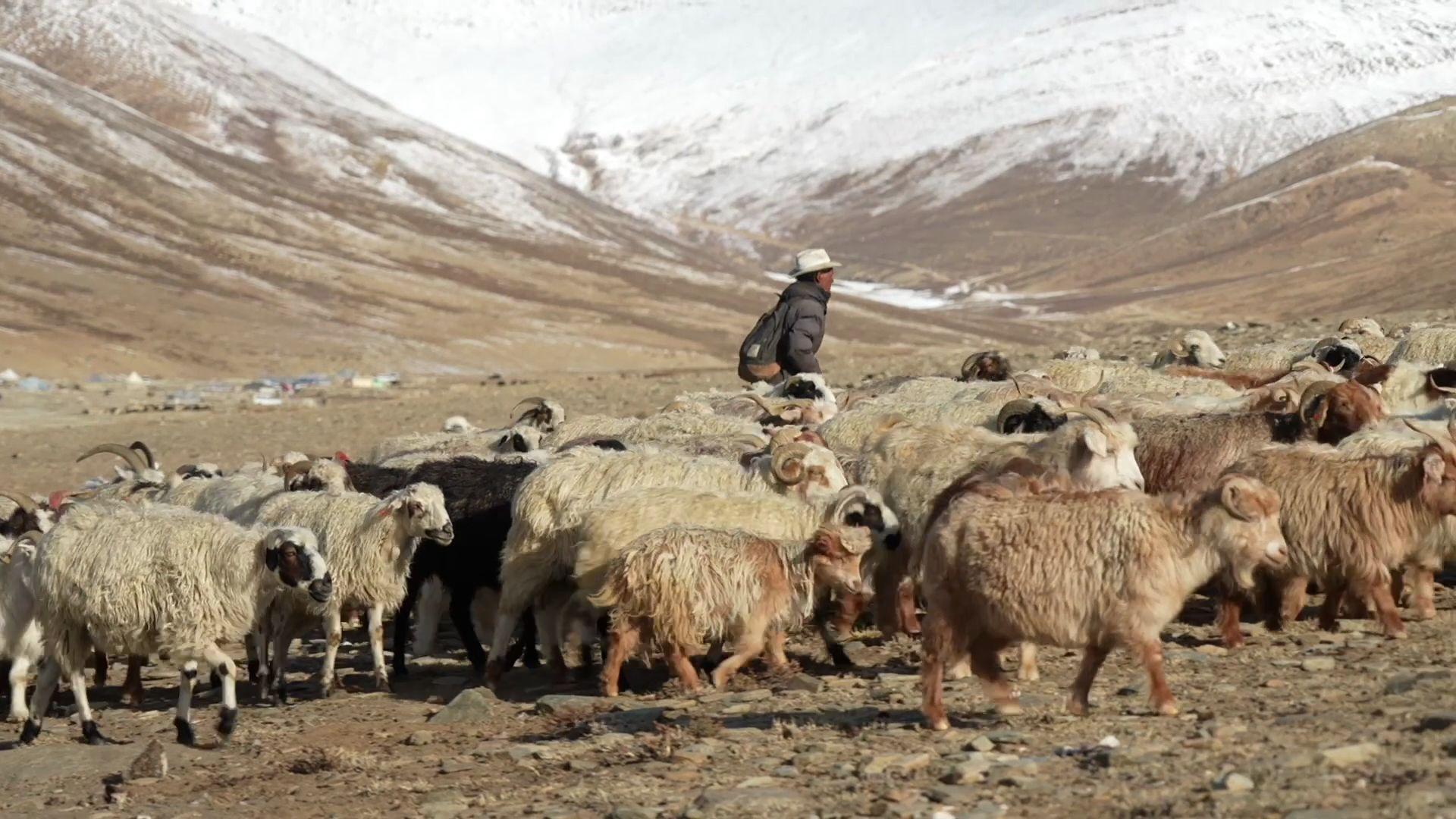
However, this vast expanse of land is not merely an empty canvas for renewable energy. It serves as the vital habitat for the Changra goats, also famously known as Pashmina goats, whose fine wool is globally renowned for producing exquisite cashmere. The proposed solar power plant, while intended to generate low-carbon energy crucial for India’s burgeoning electricity demands, casts a long shadow over this delicate ecosystem.
Moreover, these very pastures are the lifeblood for the Changpa nomadic pastoralists, who have traversed this region with their livestock for centuries, maintaining a traditional way of life. Their precarious existence is already challenged by decades of shrinking pastures due to climate change, a phenomenon that has tragically led to the death of their sheep and goats.

These pastoral communities express profound concern over the potential cascading effects of such a large-scale project on a landscape already grappling with environmental stress. Tsering Stobdan, a local resident, articulates the gravity of the situation: “Life here is very difficult. Many pastoralists have already abandoned this work. If this land is lost, those who remain will also leave.”
What is India’s goal with the solar power plant in Ladakh?
India stands as the world’s third-largest solar energy producer, trailing only China and the United States, according to the think tank Ember. The Indian government has dramatically expanded its solar capacity from a mere 3 gigawatts (GW) in 2014 to an anticipated 135 GW by the end of 2025. This rapid growth is a stepping stone towards a much larger goal: achieving 500 GW of non-fossil fuel electricity generation capacity by 2030, with solar power alone targeted to reach 280 GW.
The proposed 11 GW solar and battery storage project in Ladakh is therefore a cornerstone of India’s ambitious clean energy strategy. Geographically, this high-mountainous region presents an ideal location for a large-scale solar project, boasting a thin atmosphere, expansive open spaces, and over 300 sunny days each year, ensuring optimal energy generation.

Envisioned to span an area of 250 square kilometers – an expanse larger than Malaysia’s capital, Kuala Lumpur – the project echoes the scale of China’s monumental Talatan Solar Park in Qinghai province on the Tibetan Plateau. The Talatan park, the world’s largest in terms of capacity at approximately 17 GW, covers over 600 square kilometers, with Chinese authorities claiming that animals can still graze there.
A significant hurdle for the Ladakh solar plant lies in energy transmission. Transporting power from these remote mountains will necessitate the construction of a colossal 713-kilometer-long “Green Energy Corridor.” This ambitious transmission line is projected to cost around US$2.28 billion (approximately 38 trillion Indonesian Rupiah) due to the region’s extreme conditions. Challenges include temperatures plummeting to -45° Celsius, heavy snowfall, and avalanche-prone zones, requiring the corridor to be built with specialized steel.
The idea for this massive solar project was first floated in 2020, a year after the Indian government revoked Kashmir’s special autonomous status, aiming to fully integrate it into Indian administration. The wider Kashmir region has long been a flashpoint of dispute between India and Pakistan, with China also asserting control and claims over parts of the territory.

‘Our lives depend on these pastures’
Anxiety hangs heavy in the villages situated within the boundaries of the planned solar project. Despite their profound concerns, many pastoralists are reluctant to speak out publicly. “If we speak, there will be many problems,” confided one shepherd, reflecting a pervasive fear.
Without formal legal documents to claim their ancestral lands, many fear being displaced without adequate compensation. An anonymous pastoralist in his 60s, who cares for over 600 animals, lamented, “What will we do? We will sell the sheep and goats, but what will we do after that?” A younger shepherd, while guiding his flock up a mountain, echoed this sentiment: “We have been doing this for centuries, and we know nothing else.”

Tsering Angchuk, a pastoralist with over a thousand animals, asserted, “Our lives depend on these pastures.” He added a clear warning: “If the government accepts all our demands, we will not object. But if we are moved from these traditional lands without compensation, we will protest and will not allow this project to proceed.”
The local council has already allocated approximately 19,424 hectares of land to the Indian agency responsible for implementing this renewable energy project. However, the specifics of this land transfer agreement have not been made public. The BBC has reached out to the council for comment but has yet to receive a response.

What do the Indian government and company claim?
An international report by the German political foundation Heinrich Böll Siftung has highlighted how large-scale renewable energy projects in Africa, Asia, and Latin America are often developed “without adequate consultation” with the pastoralist communities whose livelihoods depend on these lands. The Indian government, however, argues that this is not the case in Ladakh.
Government representatives assert that a much smaller-scale pilot project has been launched specifically to meet local energy needs and address the concerns of the pastoralists. As part of this pilot, solar panels have been installed on poles approximately 180 centimeters high. Authorities claim this height allows animals to move freely and graze beneath them, mitigating the impact on pastures.

“The government has taken note of the pastoralists’ concerns,” stated Shri Rudra Goud, Ladakh’s Energy Secretary. He acknowledged that “increasing the height of the solar panel platforms also increases the cost. We are doing all this to protect the grass.” Pawan Kotwal, Chief Secretary of the Ladakh Administration, further added that funds generated from this smaller pilot project would be channeled into local area development.

Yet, a crucial question remains unanswered: will the grass truly survive long-term under the vast expanse of panels once the large-scale project is operational? Tsewang Paljor, Chief Engineer of Ladakh’s Distribution and Generation Division, confirmed that researchers at Ladakh University would conduct studies to determine if installing solar panels on higher poles “can save the grass.”
Despite these assurances, local pastoralists remain unconvinced. Tsering Stobdan voiced the community’s skepticism: “How can we bring our sheep there if such a large solar park is built? Even for them, getting under those panels will not be easy.” The future of Ladakh’s pristine cold desert, its traditional inhabitants, and India’s clean energy ambitions hangs in a delicate balance.