
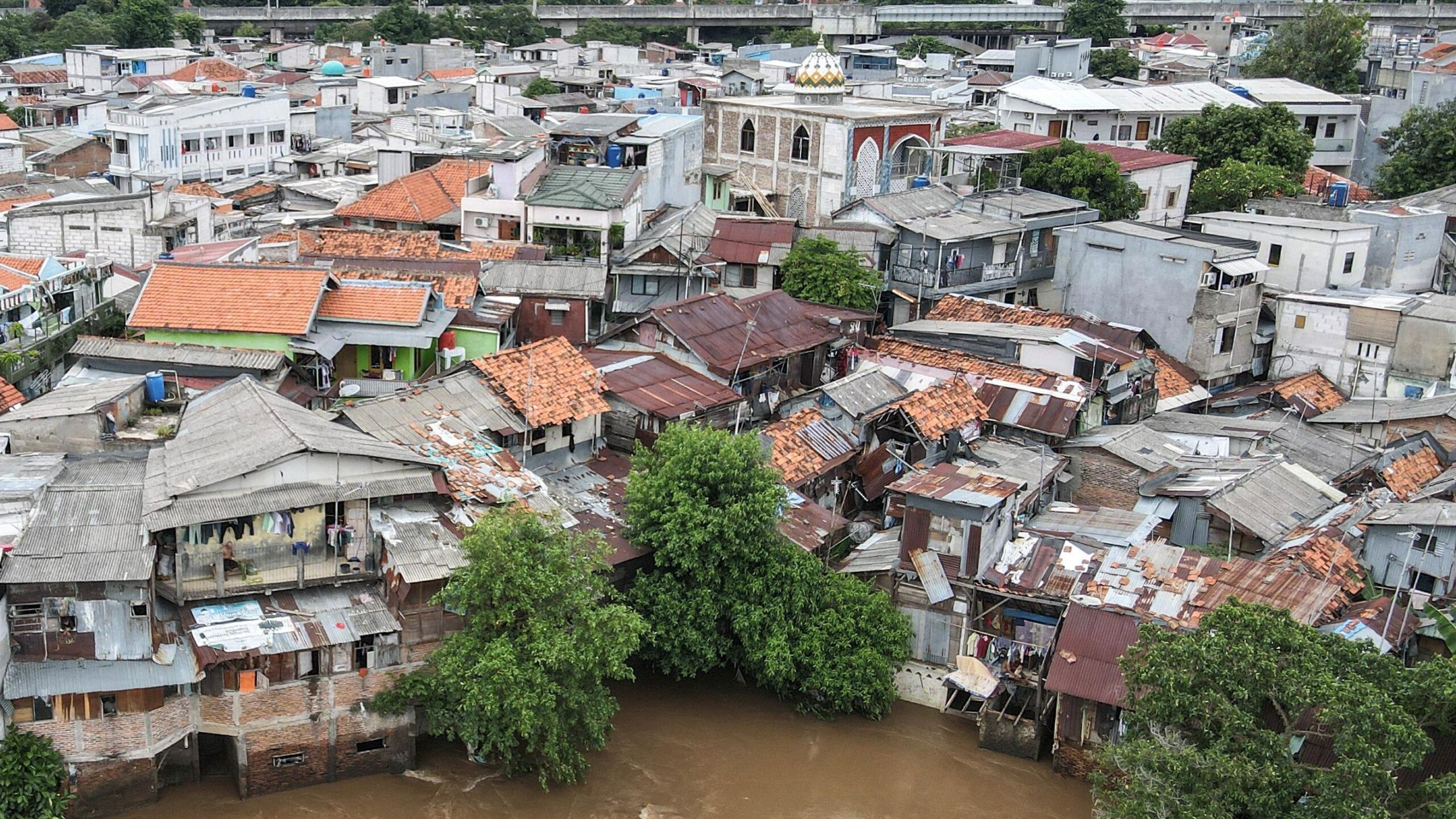

President Prabowo Subianto’s ambitious ‘gentengisasi’ program, aiming to replace zinc roofs nationwide with clay tiles, is facing significant scrutiny. Experts are raising critical concerns spanning disaster resilience, sustainability, and the potential erosion of Indonesia’s diverse architectural heritage. This bold initiative sparks a fundamental question: who truly stands to gain from this sweeping transformation?
The genesis of the ‘gentengisasi’ program can be traced back to January, when President Prabowo Subianto visited temporary shelters in Aceh Tamiang. Observing the zinc roofs, he noted their propensity to absorb heat, making the interiors uncomfortably hot. “These zinc roofs are hot; let’s think about a solution,” he urged during a meeting with ministers. Just a month later, this concern evolved into a national proposal: the ‘gentengisasi’ program. During his address at the 2026 National Coordination Meeting for Central and Regional Governments in Sentul, West Java, on February 2, President Prabowo reiterated his stance, stating, “Zinc is hot for residents, and it rusts. Indonesia cannot be truly beautiful if all roofs are made of zinc.” Echoing this sentiment regarding thermal comfort, Ashar Saputra, a lecturer from the Civil and Environmental Engineering Department at Gadjah Mada University (UGM) in Yogyakarta, affirmed that traditional clay tiles are indeed well-suited for Indonesia’s tropical climate due to their heat-absorbing properties.
However, the suitability of clay tiles shifts dramatically when considering technical aspects, particularly in earthquake-prone regions. Ashar Saputra highlights a critical flaw: individual clay tiles, being heavy and modular, are prone to detachment during seismic events. This not only poses a direct hazard but also significantly increases the load on the roof structure and the building itself. A recent 6.4 magnitude earthquake that struck Bantul and Pacitan on February 6, for instance, damaged four homes, with clay tile roofs among the affected structures, according to BNPB records. While acknowledging that clay tiles can still be used, Ashar stresses the paramount importance of ensuring the roof and building structures are adequately designed to bear the increased weight and seismic forces. Conversely, lighter, sheet-like materials such as zinc are less susceptible to earthquake damage due to their reduced mass, thereby mitigating the overall risk.

Furthermore, a nationwide implementation of the ‘gentengisasi’ program carries the significant risk of pairing heavy clay tiles with existing structures not designed to support such a load. Ashar Saputra illustrates this concern with a harrowing example: the collapse of a classroom at SMKN 1 Gunung Putri, Bogor Regency, in November 2025, which succumbed to heavy rain. The use of lightweight steel trusses in the roof structure was identified as a contributing factor. While lightweight or cold-formed steel is popular for its affordability and quick installation, it becomes vulnerable when supporting heavy tile loads if the construction quality is poor. Ashar emphasizes that many roof collapses are attributed to the inadequate use of lightweight steel in roof construction. Therefore, the ‘gentengisasi’ initiative cannot be solely about the tiles themselves, nor purely about aesthetics. “Addressing the aesthetic issue of rusted zinc, which can make an area appear dilapidated, by simply jumping to replace it with clay tiles is completely disconnected from the underlying structural realities,” Ashar asserts. He advocates for exploring alternative materials like uPVC (un-Plasticized Polyvinyl Chloride) and bitumen roofing, lightweight options made from a blend of cellulose and asphalt. Both materials effectively mitigate heat, addressing President Prabowo’s initial concern, while also offering aesthetic appeal. Crucially, Ashar notes that every roofing material presents its own set of risks, especially given Indonesia’s diverse array of natural disasters.

The ‘Gentengisasi’ Program: Environmental Issues and Diversity Aspects
Beyond the technical considerations, the cultural dimension also demands careful thought within the ‘gentengisasi’ framework, as underscored by Ashar Saputra from UGM. President Prabowo himself, on January 1, 2026, acknowledged the cultural element when proposing a solution for hot zinc roofs in Aceh Tamiang’s temporary shelters: “Perhaps we can use local materials.” Indeed, local materials have historically been central to the diverse roofing styles of Indonesia’s traditional houses, such as the Rumah Gadang in West Sumatra, the Tongkonan in Toraja, or indigenous homes in Nias and Papua. These distinct roof designs often accommodated flexible materials like palm fibers (ijuk) or shingles (sirap), which were easily shaped. Ashar points to the Rumah Gadang as an example; traditionally adorned with local roofing, many now feature zinc roofs due to their ease of maintenance and ability to conform to the curved designs.

The invaluable aspect of local wisdom in roofing material selection must not be overlooked. Minangkabau cultural expert, Viveri Yudi, known as Mak Kari, warns that producing clay tiles involves excavating soil from hillsides, a process he deems “damaging to nature.” He explains to reporter Halbert Chaniago in Padang, West Sumatra, that for the Minangkabau people, zinc roofing represents technological advancement, embraced as long as it doesn’t harm the local environment. Crucially, in an earthquake-prone region, Mak Kari highlights that Minang ancestors understood the necessity of using lightweight materials for their roofs. He emphasizes that Indonesia’s indigenous communities possess unique local wisdom, born from their deep interaction and adaptation with their surroundings, which must be respected and not homogenized. Ashar Saputra concurs, asserting that introducing heavy, rigid clay tiles would not only present significant structural challenges but also risk obliterating the authentic character of traditional buildings.
Who Benefits from ‘Gentengisasi’?
Beyond technical feasibility and cultural significance, the ‘gentengisasi’ program’s sustainability aspect warrants serious consideration. Ashar Saputra points out that the science of building materials dictates evaluating the energy expenditure from production through to usage. A prime example of this challenge lies in West Sumatra, specifically Siberut Island in the Mentawai Islands, where no clay tile manufacturers exist. Many homes in remote, hard-to-reach villages, including Matotonan village nestled deep within Siberut’s jungle and only accessible by small river boats, currently utilize sago palm leaves or zinc for roofing. These traditional wooden stilt houses were often originally topped with dried sago leaves. “Now, many houses have zinc roofs,” states Sabarial, a resident of Matotonan, noting that these zinc roofs were installed as part of local government relief efforts following house constructions in 2006. Sabarial expresses a profound concern: if his home’s zinc roof were to be replaced with heavy clay tiles under the ‘gentengisasi’ program, he and his family would first have to reinforce their wooden house to support the substantial weight. “Even before considering structural integrity, simply transporting those tiles to our village would be an immense challenge,” he adds.

Given these formidable access limitations, Sabarial considers the ‘gentengisasi’ program virtually impossible for his village, unless authorities are willing to make dozens of boat trips, ferrying heavy tiles and other materials on small vessels that can only accommodate about four people. “The fuel costs for boat transport would skyrocket, and that’s just for the river leg,” he laments, “not to mention the preceding challenge of getting those tiles to the island itself, whether from Sumatra or Java.” Clearly, residents like Sabarial, who live in zinc-roofed homes in remote areas, stand to gain nothing from this program. Public policy observer Trubus Rahardiansah contends that ‘gentengisasi’ unequivocally benefits clay tile producers, particularly those located on Java. He posits that an increase in production would naturally lead to significant job creation. Should the program be implemented nationally, it would foster the growth of new producers, generating an industry that ultimately favors large corporations. “Only corporations, or at least those with substantial capital, possess the production capacity to meet the demands of ‘gentengisasi’,” Trubus explains, including the complex logistics of transporting clay tiles from production hubs like Java to other Indonesian regions lacking such facilities.
Trubus Rahardiansah further connects President Prabowo’s emphasis on aesthetics and tidiness in the ‘gentengisasi’ program directly to Indonesia’s tourism ambitions. The President’s February 2 speech positioned ‘gentengisasi’ as an integral component of a broader environmental structuring agenda, encompassing waste management, the regulation of billboards and banners, and the organization of urban cables. A uniform landscape of clay tile roofs could significantly enhance the aesthetic appeal of certain areas, thereby attracting more tourists. Consequently, Trubus concludes, “If this is the case, the beneficiaries would primarily be stakeholders in the tourism industry.”

Currently, the government, through various ministries and relevant institutions, is still formulating the funding scheme for the ‘gentengisasi’ program, as confirmed by State Secretary Prasetyo Hadi. Finance Minister Purbaya Yudhi Sadewa indicated that the initiative would not require a massive budget, targeting homes specifically with zinc roofs, implying it would not be universally applied. Data from the Central Statistics Agency reveals that approximately 31.48%, or 22,232,058 homes across Indonesia, still have zinc roofs. Purbaya estimated the budget would not exceed Rp1 trillion, potentially sourced from existing fiscal reserves. “There’s a possibility it could come from there [MBG], or from other sources,” he stated. Funding, however, might not be solely reliant on the State Budget (APBN), with options open for regional budgets (APBD) and even private sector involvement. Prasetyo Hadi mentioned, “It could involve individuals or private entities, so it won’t entirely depend on the APBN or APBD.” Concurrently, the government is also preparing the technical execution aspects of the program, including advancements in large-scale tile production technology to meet the projected demand.
Despite the ‘gentengisasi’ program’s precise contours remaining somewhat unclear, infrastructure and urban planning observer Yayat Supriatna advises against a mass-scale implementation initially. If the program’s ultimate goal is indeed tourism enhancement, then the focus should be strategically directed towards specific tourist destinations. “Priority tourism areas should be mapped out first, with defined targets,” Yayat suggests. Crucially, he stresses that the program must establish measurable technical and non-technical criteria to prevent it from becoming a “new breeding ground for corruption.”
Also read:
- ‘Expectation versus reality’ – Has Bali become a victim of tourism success?
- Are there affordable urban dwellings in the city center?
- The Mandalika development dilemma – Should Lombok tourism imitate Bali?
Halbert Chaniago, a journalist in Padang, West Sumatra, contributed to this report.
Summary
Program ‘gentengisasi’ Presiden Prabowo Subianto yang bertujuan mengganti atap seng dengan genting tanah liat menghadapi kritik serius. Meskipun genting dianggap lebih baik untuk iklim tropis karena sifat penyerap panasnya, para ahli menyoroti risiko teknis, terutama di daerah rawan gempa. Genting yang berat dan modular rentan lepas saat gempa, serta dapat membebani struktur bangunan yang tidak dirancang untuk menopang beban tersebut, bahkan dikaitkan dengan kasus keruntuhan atap.
Kritik lain mencakup potensi dampak lingkungan dari produksi genting dan pengabaian kearifan lokal serta keragaman arsitektur tradisional. Logistik pengiriman genting ke wilayah terpencil, seperti Siberut, sangat menantang dan mahal, sehingga tidak praktis bagi warga. Program ini juga diyakini lebih menguntungkan produsen genting dan pemangku kepentingan pariwisata. Oleh karena itu, para ahli menyarankan mempertimbangkan material alternatif yang lebih ringan dan sesuai dengan kondisi setempat.