
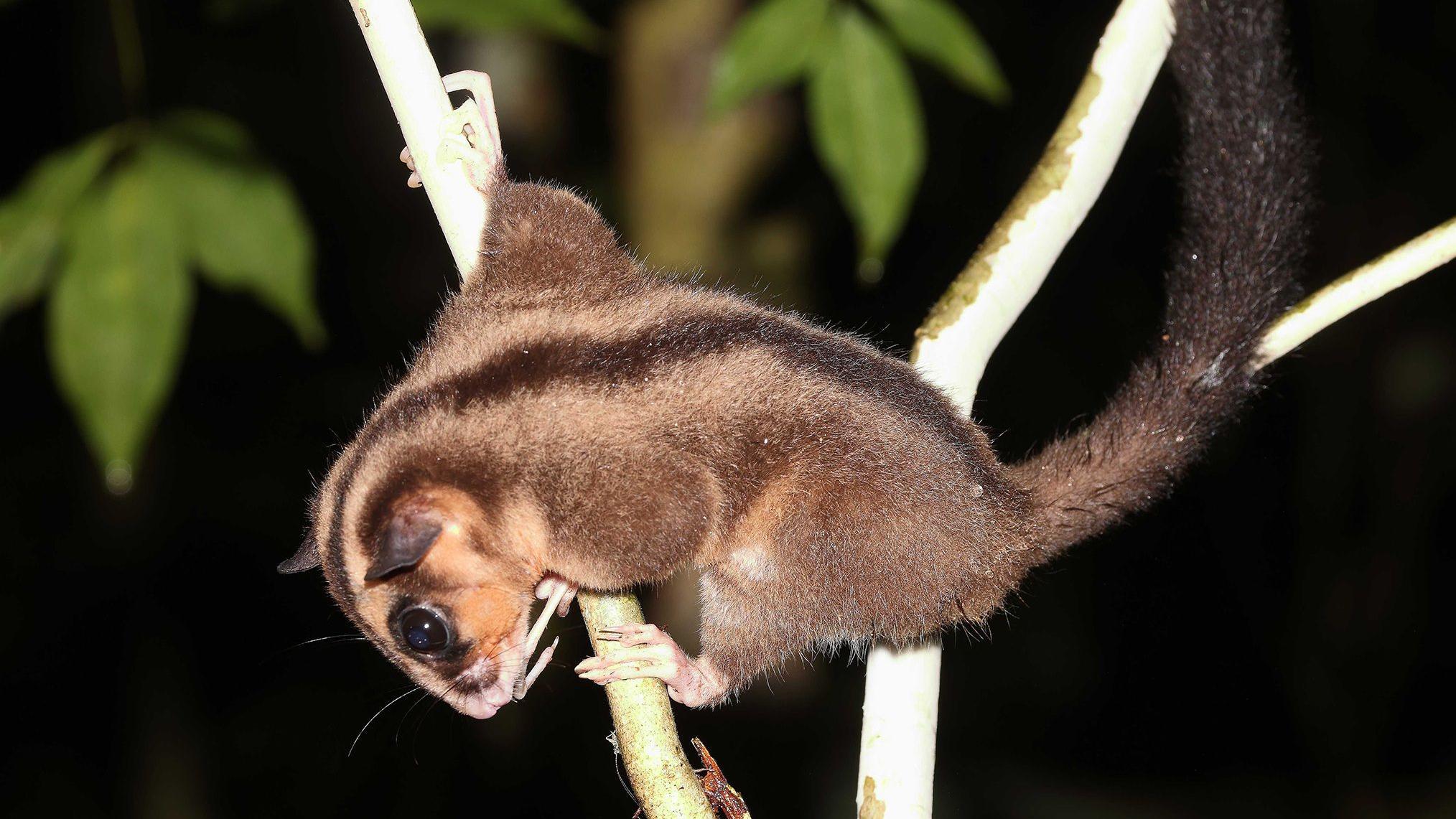

In a truly extraordinary discovery, a tiny possum featuring an exceptionally long digit on each hand and a glider with a prehensile tail have been rediscovered in the remote forests of West Papua. These two species were long believed to have vanished approximately 6,000 years ago, lost to time since the Ice Age.
Finding a species thought to be extinct still alive is a rare occurrence. To uncover two such species simultaneously is nothing short of “astonishing,” according to researchers who published their groundbreaking findings in the journal Records of the Australian Museum on Friday (06/03).
Such remarkable reappearances are scientifically termed a Lazarus taxon, a name inspired by the biblical figure Lazarus, who was brought back from the dead.
“The discovery of one Lazarus taxon… is an amazing find,” stated Professor Tim Flannery, a prominent Australian scientist renowned for his 2005 book The Weather Makers, which addressed climate change. He further emphasized, “But the discovery of two species believed to be extinct for thousands of years is truly astounding.”

The first of the rediscovered creatures is the pygmy long-fingered possum, a striped marsupial weighing a mere 200 grams. This distinctive mammal was thought to have disappeared from Australia since the Ice Age. Its most striking feature is the fourth digit on each hand, which is twice the length of its other fingers. Scientists believe this elongated digit aids the possum in extracting wood-boring insect larvae, its primary food source.
The second incredible find is the ring-tailed glider. This species bears a close resemblance to its Australian relative, the greater glider, and makes its home high in tree hollows, using its tail to expertly grip branches as it navigates the canopy.
The process of rediscovery involved piecing together a complex puzzle. Scientists meticulously examined decades-old fossils, rare photographs, and ancient specimens for clues, eventually leading them to embark on an arduous expedition deep into the remote wilderness of Papua.

Professor Flannery, alongside Professor Kris Helgen and researchers from the University of Papua, engaged in crucial dialogues with local elders from the Tambrauw and Maybrat clans. Rika Korain, a Maybrat woman who contributed to the scientific paper on these discoveries, affirmed that the identification of these species would have been impossible without their invaluable local knowledge and assistance.
“They are very traditional communities,” Flannery added, noting the profound connection these indigenous people have with their environment. The local communities, he explained, consider the glider so sacred that they “not only wouldn’t hunt it, they wouldn’t even speak its name.”
However, the habitat of these precious gliders faces increasing peril from ongoing logging activities in the region, Flannery cautioned. This pressing threat has spurred scientists and wildlife conservation groups to work towards securing indigenous land ownership rights over these forests, ensuring that logging cannot proceed without the express consent of the local communities.
- Mammal species lost for 62 years rediscovered in Papua’s forests
- The New Guinea singing dog, a ‘sacred’ animal believed to have arrived in Papua ‘3,500 years ago’
- Prabowo aims to expand oil palm plantations in Papua – Who stands to lose the most from this policy?
Summary
Two mammal species, a pygmy long-fingered possum and a ring-tailed glider, long believed extinct for approximately 6,000 years, have been rediscovered in West Papua. This “astonishing” find, scientifically termed a Lazarus taxon, involved a tiny possum with an exceptionally long fourth digit and a glider resembling its Australian relative. Researchers published these groundbreaking findings, noting the rarity of uncovering two such species simultaneously.
The rediscovery process included examining decades-old fossils and rare photographs, culminating in an expedition where scientists collaborated with local Tambrauw and Maybrat elders. Local knowledge was crucial for species identification, with indigenous communities considering the glider sacred. However, the habitat faces peril from logging, prompting efforts by scientists and conservation groups to secure indigenous land ownership rights to protect these unique creatures.