
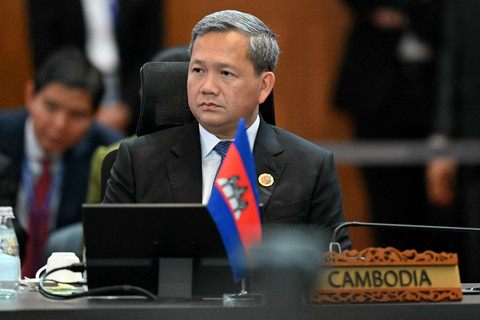

Cambodian Prime Minister Hun Manet has accused Thai forces of occupying several areas within his nation’s territory, reigniting tensions between the Southeast Asian neighbors. This territorial dispute follows significant clashes that erupted between the two countries just last year.
Despite ongoing friction, Cambodia and Thailand had, in fact, signed a peace agreement in October 2025. This accord was brokered by then-United States President Donald Trump during a meeting in Kuala Lumpur, aiming to stabilize the volatile border region.
However, that ceasefire agreement failed to truly halt the sporadic fighting between the two nations. Both Cambodia and Thailand subsequently engaged in mutual accusations, each blaming the other for being the first to violate the terms of the peace deal.

In a recent interview with Reuters news agency, Prime Minister Hun Manet issued a stern warning about the imminent threat of a larger conflict re-erupting between Cambodia and Thailand, underscoring the severity of the current situation.
“Thai forces still occupy Cambodian territory deep within many areas. This is even further than Thailand’s own unilateral claims on the border line,” Hun Manet asserted to Reuters on Tuesday, February 17, emphasizing the perceived extent of the encroachment.
Furthermore, the Cambodian leader alleged that Thai forces have installed barbed wire fences deep inside Cambodian territory. Hun Manet stressed that these actions have directly prevented numerous Cambodian citizens from returning to their homes, highlighting the humanitarian impact of the ongoing military presence.
“This is not an accusation, but a statement based on facts on the ground,” Hun Manet affirmed, underscoring the tangible evidence he claims supports his government’s position.

Hun Manet unequivocally declared that Thailand’s actions constitute a direct violation of Cambodia’s sovereignty and territorial integrity, framing the dispute as a grave breach of international norms.
In response to Cambodia’s serious allegations, Bangkok acknowledged the continued deployment of its troops, but maintained that their presence is solely aimed at de-escalating the conflict. Thailand, however, vehemently denied the accusation of occupying Cambodian territory.
“We adhere to the joint statement agreeing to maintain existing troop deployments. There are no reinforcements,” stated Rear Admiral Surasant Kongsiri, the spokesperson for the Thai Ministry of Defense, reiterating Thailand’s commitment to the established agreements and denying any aggressive expansion.
Summary
Cambodian Prime Minister Hun Manet has accused Thai forces of occupying several areas within his nation’s territory, reigniting tensions despite a peace agreement signed in October 2025. This accord, brokered by then-US President Donald Trump, failed to halt sporadic border fighting, with both nations blaming each other for violations. Manet has warned of an imminent larger conflict, stating Thai forces are deep inside Cambodian territory and have installed fences preventing citizens’ return. He claims these statements are based on facts on the ground, not mere accusations.
Manet unequivocally declared Thailand’s actions a violation of Cambodia’s sovereignty and territorial integrity. In response, Thailand acknowledged its troop deployment but vehemently denied occupying Cambodian territory. The Thai Ministry of Defense stated its forces are present solely to de-escalate the conflict and adhere to existing agreements without reinforcements.