
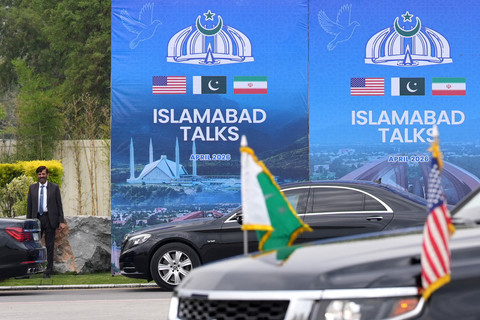
In a pivotal development, US and Iranian officials engaged in rare face-to-face peace negotiations in Pakistan on Saturday, April 11. This crucial meeting, hosted by Pakistan in its capital Islamabad, marks the most significant direct dialogue between the two nations since Iran’s 1979 Islamic Revolution. As these trilateral talks extended late into the night, geopolitical tensions surfaced, with the US Central Command reporting the passage of two warships through the vital Strait of Hormuz. Concurrently, Iranian media accused American negotiators of making excessive demands regarding the strategic waterway, setting a challenging backdrop for the discussions, as reported by a senior White House official to AFP.

The American delegation was notably led by Vice President JD Vance, accompanied by special envoy Steve Witkoff and President Donald Trump’s son-in-law, Jared Kushner. Following the initial two rounds of discussions, a Pakistani official, speaking anonymously, conveyed cautious optimism. “I can say that discussions were positive and the overall atmosphere was friendly,” the official stated, adding that the talks appeared to be “moving in the right direction.” This positive assessment offered a glimpse into the delicate diplomatic efforts underway.

Reflecting the progress, both a second Pakistani official and Iranian state television indicated the strong likelihood of a third round of talks. The robust Iranian delegation, comprising over 70 members, was spearheaded by Parliament Speaker Mohammad Bagher Ghalibaf, joined by Foreign Minister Abbas Araghchi. Iranian media reports detailed that the Iranian contingent had decided to engage in these discussions with the US only after a preliminary meeting with Pakistani Prime Minister Shehbaz Sharif, underscoring Pakistan’s crucial facilitative role.

Prime Minister Sharif’s office voiced optimism, stating, “The Prime Minister expressed hope that these talks would be a stepping stone towards lasting peace in the region.” As negotiations continued in Islamabad, Iranian state television, citing sources close to the negotiating team, anticipated the third round would commence either on Saturday evening or Sunday, April 12, local time. However, the path to peace remains fraught with significant challenges. Iranian news agency Tasnim highlighted that the strategic Strait of Hormuz, a critical global shipping lane through which almost a third of the world’s seaborne oil passes, emerged as a major point of contention, encountering serious disagreements among the delegates.
Summary
US and Iranian officials held rare face-to-face peace negotiations in Islamabad, Pakistan, on Saturday, April 11. This crucial meeting marked the most significant direct dialogue between the two nations since Iran’s 1979 Islamic Revolution. Despite geopolitical tensions, including reports of US warships and accusations of excessive demands regarding the Strait of Hormuz, a Pakistani official described the initial discussions as positive and moving in the right direction.
The American delegation was led by Vice President JD Vance, while Iran’s robust contingent, including Parliament Speaker Mohammad Bagher Ghalibaf and Foreign Minister Abbas Araghchi, engaged after consulting Pakistani Prime Minister Shehbaz Sharif. Both sides indicated the strong likelihood of a third round of talks. However, the strategic Strait of Hormuz, a critical global shipping lane, emerged as a major point of contention during the discussions.