
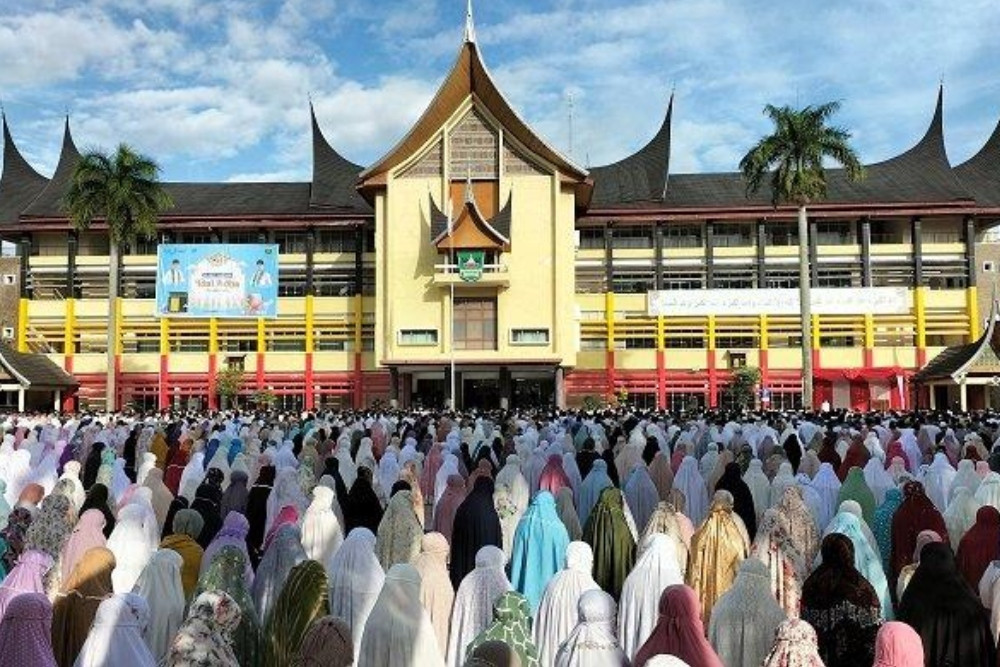
Teknowarta JAKARTA – Muhammadiyah, a prominent Islamic organization in Indonesia, has announced a significant shift in its methodology for determining Eid al-Fitr 1447 Hijriah. According to Muhadjir Effendy, Head of Muhammadiyah’s Economic, Business, and Halal Industry sector, the organization will adopt a new concept based on the Global Unified Hijri Calendar (KHGT).
This groundbreaking approach represents a new phase of renewal, stemming from in-depth studies and research. “For this year, Muhammadiyah is already using a new tajdid, the result of a renewed study which is what we call the Global Unified Hijri Calendar,” Muhadjir stated on Friday, March 20, 2026, from the central Muhammadiyah leadership building in Central Jakarta.
Explaining the core principle of the KHGT, Muhadjir clarified that the sighting of the hilal (new crescent moon) will no longer be confined to specific regional observations. Instead, the determination of Eid will be based on a global standard. This means that if the hilal is observed anywhere in the world, even outside Indonesia, Muhammadiyah will immediately recognize it to mark the start of the holy day.
Citing a pertinent example for the current year, Muhadjir mentioned that the hilal had been sighted in Alaska. Consequently, if the first day of the month appears in Alaska, it will be considered valid for the entire world. This crucial detail underscores the universality of the new calendar system.
Muhadjir further elaborated on the distinction from previous practices: “This is the difference from the old wujudul hilal method, which was limited to Indonesia. Now, the wujudul hilal is applicable globally, and the Global Unified Hijri Calendar has already been ratified by more than 10 countries.” This global ratification highlights a broader consensus and acceptance of the new standard beyond Indonesia’s borders.
Despite the potential for differences in the celebration date with the Indonesian government, Muhammadiyah remains steadfast in its obedience to the state. However, Muhadjir emphasized that adherence to the government does not necessarily mandate identical observance dates for Eid al-Fitr. Muhammadiyah’s stance respects governmental authority while maintaining its own distinct religious methodology.
Muhadjir expressed his understanding of the recurring variations in Eid celebrations and stressed the importance of not debating methodological differences, which could potentially lead to conflict. He urged the public to embrace these variations as a normal part of religious life. “We are accustomed to these differences, and it should not be interpreted that obeying the government means the Eid celebration must be on the same day,” he asserted, aiming to foster mutual respect.
He also addressed a prevalent societal perception that those who do not follow the government’s declared Eid date are seen as disobedient. Muhadjir’s explanation seeks to clarify that religious adherence, especially concerning calendar methodologies, can genuinely differ without implying dissent or insubordination.
For context, the Indonesian government, through the Ministry of Religious Affairs, had already announced that Eid al-Fitr 1447 Hijriah would fall on Saturday, March 21, 2026. This decision was officially confirmed during the *sidang isbat* (confirmation hearing) held on Thursday, March 19, 2026.
Summary
Muhammadiyah will adopt the new Single Global Hij