
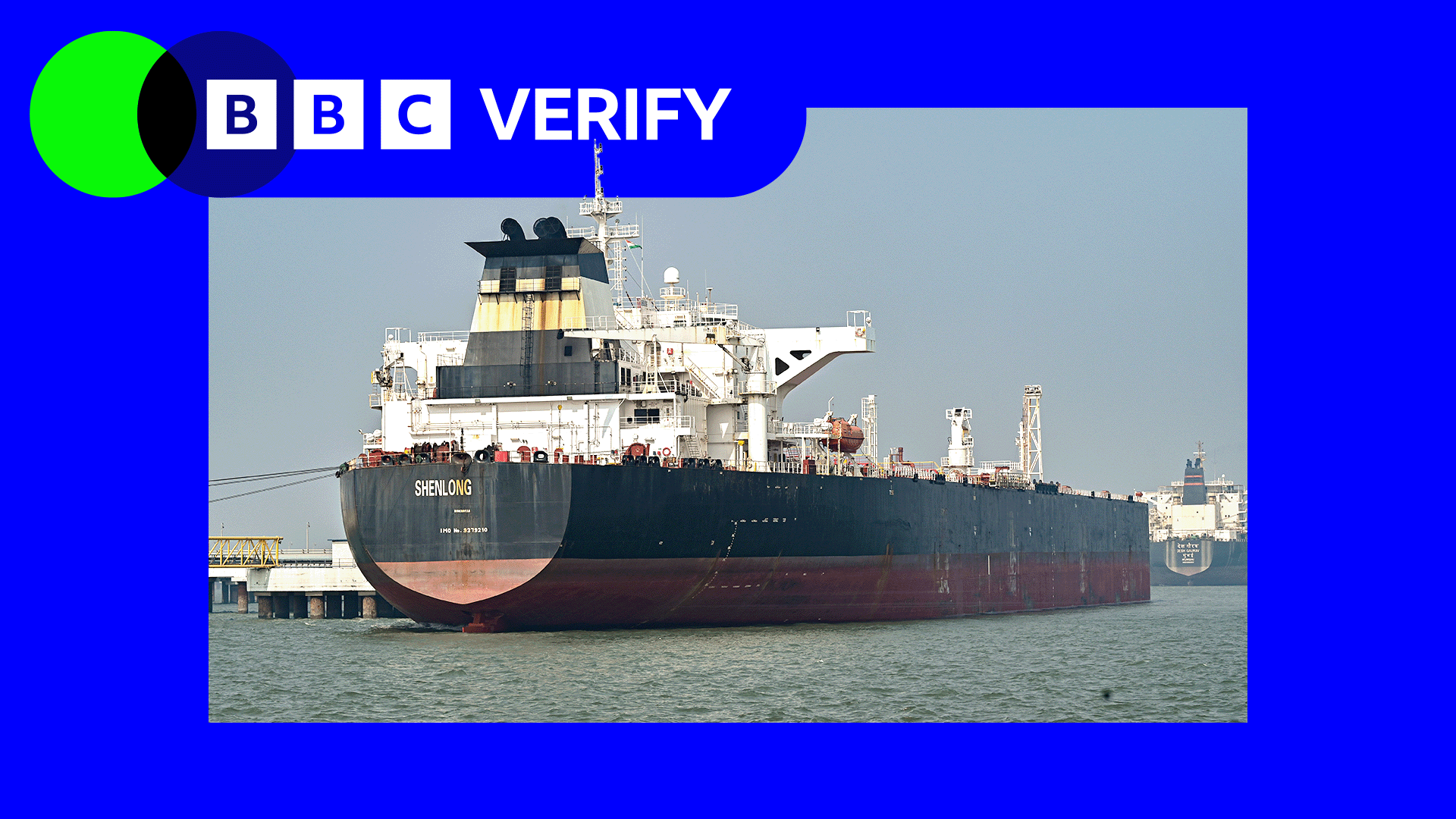

Since the US-Israel attack on Iran on February 28th, fewer than 100 vessels have traversed the Strait of Hormuz, according to compelling data analyzed by BBC Verify. This figure represents a precipitous drop from the pre-conflict period, when approximately 138 ships navigated the critical waterway daily, as reported by the Joint Maritime Information Centre. These vessels are indispensable, carrying a staggering one-fifth of the world’s global oil supply.
While some shipments of energy and essential goods continue to pass through the Strait of Hormuz, daily maritime traffic has plummeted by approximately 95% since the outbreak of hostilities. Shipping analytics firm Kpler’s data reveals that only 99 vessels have managed to transit the narrow strait throughout the current month, averaging a mere five to six ships per day. BBC Verify has meticulously traced the movements of these resilient vessels and the significant risks they now face in this volatile environment.

Our analysis indicates that roughly one-third of the recent voyages through the Strait of Hormuz were undertaken by vessels with discernible ties to Iran. This includes 14 ships sailing under the Iranian flag, alongside several others that are currently sanctioned due to their alleged connection to Tehran’s oil trade. Beyond these, nine other vessels are owned by China-based companies, and six ships recorded India as their ultimate destination. The investigation also brought to light instances of non-Iranian linked ships calling at Iranian ports, notably including vessels belonging to Greek companies.
Interestingly, some of the ships successfully navigating the Strait of Hormuz appear to be opting for longer, more unconventional routes than usual. Tracking data for a Pakistani-flagged tanker on March 15th, for example, showed it sailing remarkably close to the Iranian coast, deviating significantly from the customary international shipping lane located in the center of the strait. This alteration in course suggests a deliberate strategic decision rather than a random deviation.

Bradley Martin, a senior researcher at the RAND Corporation, a US-based defense think tank, shared his perspective with us, suggesting that such a vessel was most likely “responding to certain directives from Iran.” He posited that the ship’s altered navigation path could either hint at the presence of sea mines or represent an Iranian official’s attempt to make the vessel more easily identifiable. By compelling ships to modify their routes, they ultimately enter Iranian territorial waters and become subject to Tehran’s maritime regulations, explains Michelle Wiese Bockmann from Windward Maritime Analytics.
“My conclusion is that Iran is closing and controlling the strait through fear of attack and also fear of mines. That is why all ships have to divert and hug its territorial coastline, rather than transiting through the international shipping lane,” she informed BBC Verify. Michael Connell from the US-based Center for Naval Analyses concurs that vessels are indeed adopting different routes. He surmises, “They likely have some sort of arrangement with the Iranian government that as long as they stay on a particular track, they’ll remain safe.” This implies a tacit agreement or an imposed condition for passage.
Four Threats Facing Vessels Transiting the Strait of Hormuz
Since the conflict erupted, we have verified 20 commercial vessels that have come under attack off the coast of Iran, although not all these incidents occurred precisely within the immediate vicinity of the Strait of Hormuz. A harrowing incident on March 11th involved the Thai-flagged vessel, Mayuree Naree, which was struck by two projectiles during its transit attempt. Tragically, three of the 23 crew members remain missing, presumed trapped in the engine room when the impact occurred.

The ship’s owner recounted to BBC Verify that the surviving crew members were “traumatized at sea when their ship was hit by two explosions,” painting a vivid picture of the sheer terror endured. Two other vessels—the Greek-owned Star Gwyneth and the US-owned MT Safesea Vishnu—were also attacked on the very same day. “Commercial shipping lanes should not be turned into a combat zone,” the owner of MT Safesea Vishnu adamantly told BBC Verify, underscoring the urgent need for safety. One individual lost their life in that attack while the ship was anchored off the coast of Iraq. All 28 crew members were forced to abandon ship, leaping into the sea to escape the raging inferno, according to SV Anchan. “These men and women are not soldiers… they are professionals keeping global trade moving,” he stressed, highlighting the civilian nature of the casualties.

Arun Dawson from the Freeman Air and Space Institute at King’s College in London identifies four principal threats creating severe challenges: drones, missiles, fast attack craft, and the potential for sea mines. He cautions, “Traditional minesweepers, which operate slowly and meticulously, would struggle to find and neutralize mines if they were simultaneously under air and surface attack.” Compounding these dangers is Iran’s strategic leverage of the Strait of Hormuz‘s unique geography. Beyond its narrow and shallow characteristics, the strait’s coastline is mountainous, allowing Iran to launch attacks from elevated positions, thereby affording vessels minimal reaction time.
In a bid to evade detection, many ships appear to be deliberately disabling their Automatic Identification System (AIS) tracking systems. “Most of these vessels are transiting ‘blind’,” states Dimitris Ampatzidis from Kpler. By switching off their AIS upon entering the Gulf of Oman, these ships vanish from tracking maps, only to reappear hours or even days later in different locations. While this tactic helps ships conceal their positions, it simultaneously presents significant challenges for companies like Kpler, which are tasked with monitoring movements within the strait. Ampatzidis confirms to BBC Verify, “All data has been validated by our analysts through manual verification… as well as using satellite imagery,” ensuring the integrity of their reports despite these evasive measures.
Additional reporting by Daniele Palumbo and Joshua Cheetham
Graphics by Tom Shiel

- First speech, new Iranian Leader Mojtaba Khamenei vows to close the Strait of Hormuz
- US-Israel vs Iran war threatens food, pharmaceuticals, and mining – Indonesia’s nickel production disrupted
- ‘No place to hide on the ship’ – Stories of crew members trapped in the waters of the Strait of Hormuz
- ‘This is not our war’ – Germany, Spain, and other countries refuse to send warships to the Strait of Hormuz
- US-Israel vs Iran war: Indonesian citizens anxious about potential fuel price hikes – ‘Life will get harder’
- Dozens of countries release largest oil reserves in history, cargo ships attacked in the Strait of Hormuz