
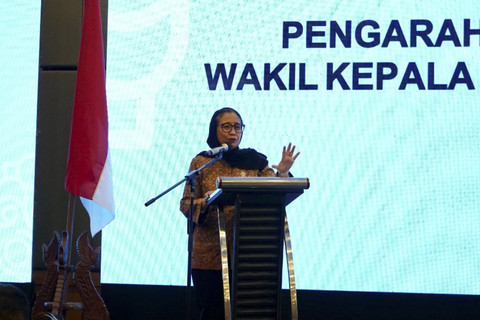

Nanik Sudaryati Deyang, Vice Head of the National Nutrition Agency (BGN) for Public Communication and Investigation, has issued a critical reminder to nutrition supervisors, financial supervisors, and Field Assistants (Aslap). They are mandated to conduct joint inspections upon the arrival of raw materials, a crucial step to ensure that all food ingredients destined for the kitchens of the Nutrition Fulfillment Service Units (SPPG) are in a fit and safe condition for consumption. This meticulous scrutiny from the outset is deemed essential to proactively prevent any potential food safety incidents.
“If signs of unsuitable ingredients are evident from the start, such as unhealthy chicken, stale vegetables, or poor-quality tofu, they must be immediately returned to the partner,” Nanik asserted during a Coordination and Evaluation event for Nutritionists, Accountants, and Chefs across Pacitan, Ponorogo, and Trenggalek Regencies in Pacitan, as quoted on Monday, February 9, 2026. This directive underscores the unwavering commitment to maintaining stringent food quality standards within the program.
Furthermore, Nanik emphatically instructed Nutrition Supervisors and Financial Supervisors to vehemently reject any form of intervention from SPPG partners regarding the operational aspects of the Free Nutritious Meals (MBG) kitchens. This rejection is particularly vital when such interventions pertain to modifications to menus meticulously prepared by the Nutrition Supervisors. She highlighted that these interferences are often disguised with the pretext that the resident Nutritionists are “junior,” “inexperienced,” or “lack understanding of food pricing.”
“Report it directly to me. If any intervention occurs, I will immediately shut down the kitchen. Menu planning has absolutely nothing to do with partners, let alone altering menus already meticulously crafted by the Nutritionists. Should anyone dare to make changes, I will suspend them,” declared Nanik, who also serves as the Daily Chairman of the Coordinating Team of 17 Ministries and Institutions for the implementation of the MBG Program. This stern warning emphasizes the critical importance of upholding menu integrity and the professional autonomy of the nutrition experts.
Nanik dismissed the notion that MBG kitchen managers are junior and uninformed about food prices as a mere pretext. She firmly believes that such interventions hold the potential to encourage the use of lower-quality raw materials, driven by the pursuit of higher profits. This practice, she argues, directly compromises the well-being of the beneficiaries and the credibility of the entire initiative.
“This is precisely what leads to cases of food poisoning, stemming directly from the selection of inappropriate raw materials,” she stated, drawing a clear link between material quality and public health outcomes.

Beyond ingredient inspection, Nutrition Supervisors and Chefs are also mandated to possess a comprehensive understanding of proper food handling techniques and the technical guidelines for using kitchen equipment. This knowledge is paramount in preventing food safety incidents that could arise from incorrect material handling or the use of equipment that does not meet established standards. For instance, upon the arrival and inspection of ingredients like chicken, the Nutritionist must be capable of immediately determining whether the item requires instant boiling or proper storage in a chiller at a temperature below 5 degrees Celsius.
Nanik cited a sobering incident in Magelang, where chicken stored in a chiller at an improper 19 degrees Celsius led to the proliferation of Salmonella bacteria, ultimately causing food poisoning among approximately 200 individuals. This case serves as a stark reminder of the grave consequences of neglecting proper temperature control.
A similar alarming situation unfolded recently in an SPPG in Boyolali, which experienced a food safety incident last week. In this case, the SPPG partner was found to have supplied only used and unsuitable chillers and refrigerators, directly contributing to the precarious conditions.
Consequently, Nanik has urged Chefs, who possess the most intimate knowledge of kitchen equipment conditions, to promptly report any deficiencies to the Head of the SPPG. This reporting is crucial for initiating requests to partners for immediate equipment replacement.
Partners bear the unequivocal responsibility of providing new and high-quality kitchen equipment in strict accordance with technical guidelines. Any partner failing to fulfill this essential obligation will face the penalty of work suspension until their commitments are fully met.
“If equipment is damaged or unfit for use, do not force its operation. Report it to the Head of the SPPG to demand a replacement. We are essentially renting these facilities, so if equipment breaks down, the partner is obligated to replace it with standard, compliant equipment as per the existing technical specifications. We cannot afford a situation like in Boyolali, where all the equipment was used and problematic,” Nanik emphasized, reinforcing the critical importance of reliable and safe kitchen infrastructure for the success of the nutrition program.
Summary
Nanik Sudaryati Deyang dari Badan Gizi Nasional (BGN) menekankan pentingnya pengawas gizi, pengawas keuangan, dan asisten lapangan untuk bersama-sama memeriksa bahan baku saat tiba guna memastikan keamanan dan kelayakan makanan untuk Program Makanan Bergizi Gratis (MBG). Bahan yang tidak layak, seperti ayam tidak sehat atau sayuran basi, harus segera dikembalikan ke mitra untuk mencegah insiden keamanan pangan. Beliau juga dengan tegas melarang intervensi mitra dalam perencanaan menu, memperingatkan bahwa tindakan tersebut dapat mengorbankan kualitas makanan dan berpotensi menyebabkan keracunan makanan, yang akan berujung pada penutupan dapur atau penangguhan.
Selain inspeksi bahan, pengawas gizi dan koki wajib memahami teknik penanganan makanan yang benar serta pedoman penggunaan peralatan dapur untuk mencegah insiden. Nanik mengutip kasus keracunan makanan di Magelang karena penyimpanan ayam yang tidak tepat dan insiden di Boyolali dengan peralatan yang tidak layak sebagai bukti pentingnya kepatuhan. Para koki diinstruksikan untuk segera melaporkan setiap kerusakan atau ketidaksesuaian peralatan kepada Kepala SPPG, karena mitra bertanggung jawab penuh untuk menyediakan peralatan baru dan berkualitas tinggi, dan kegagalan dalam memenuhi kewajiban ini akan mengakibatkan penangguhan kerja.