
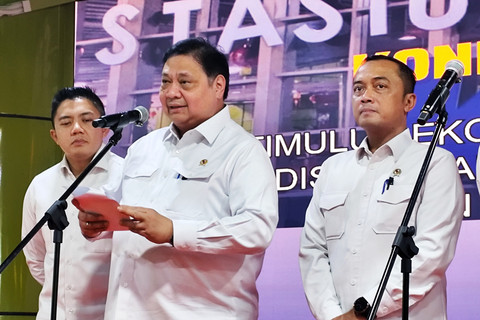

The Indonesian government is set to implement a five-day Work From Anywhere (WFA) or Flexible Working Arrangement policy around the upcoming Nyepi and Lebaran holidays in 2026. This significant move, announced by Coordinating Minister for Economic Affairs Airlangga Hartarto, is part of a broader economic stimulus package designed to boost both public mobility and purchasing power across the nation.
This progressive policy will encompass all workers in Indonesia, including both Civil Servants (ASN) and those employed in the private sector. Minister Hartarto clarified that this initiative is a structured Work From Anywhere scheme, distinctly not an additional holiday. The specified dates for this flexible work period are March 16, 17, 25, 26, and 27, marking five dedicated days. The announcement was made during a press conference on the Eid al-Fitr 2026 Economic Stimulus at Gambir Station, Central Jakarta, on Tuesday, February 10.
Further elaborating on the implementation for the public sector, Minister of State Apparatus Utilization and Bureaucratic Reform (PANRB), Rini Widyantini, confirmed the issuance of Circular Letter Number 2 of 2026. This directive specifically outlines the execution of WFA among Civil Servants. Minister Widyantini underscored the government’s expectation that all public institutions will continue to deliver essential services optimally. This includes critical areas such as healthcare, transportation, security, and other strategic services, ensuring that vital functions remain uninterrupted even during the national holiday period.
In adherence to this policy, Minister Widyantini has also urged agency leaders to diligently monitor and oversee the WFA implementation, ensuring it proceeds in an orderly manner while upholding the integrity of public service provision. Furthermore, agency heads are tasked with strategically allocating ASN staff for duties, whether performed in the office or remotely, in a flexible arrangement that strictly adheres to prevailing legal regulations.
Regarding the private sector, Minister of Manpower Yassierli has called upon regional leaders to encourage companies to adopt the WFA policy on the government-designated dates. This recommendation is strategically designed to mitigate the anticipated surge in mobility as travelers return to their homes after the Eid al-Fitr festivities, a phenomenon often referred to as ‘mudik’ in Indonesia.
Minister Yassierli clarified that certain essential sectors may be exempted from this Flexible Working Arrangement. These include critical areas such as healthcare, hospitality, shopping centers, manufacturing, food and beverage industries, and other sectors vital for continuous production or factory operations. It is important to note that employees undertaking WFA are still required to diligently fulfill all their assigned tasks and responsibilities.
Crucially, Minister Yassierli highlighted that the WFA period will not be counted as part of an employee’s annual leave entitlement. Moreover, workers’ wages during this time must remain consistent with what they typically receive when working from their usual workplaces. Companies are also granted flexibility to arrange working hours and supervision for WFA staff in a manner that ensures sustained productivity. These guidelines, Minister Yassierli confirmed, will be formally communicated through a circular letter to Governors, Regents, and Mayors across the country.

Summary
The Indonesian government will implement a five-day Work From Anywhere (WFA) policy for both Civil Servants (ASN) and the private sector around the 2026 Nyepi and Lebaran holidays. This initiative, scheduled for March 16, 17, 25, 26, and 27, aims to stimulate the economy by boosting mobility and purchasing power. Coordinating Minister Airlangga Hartarto clarified it is a structured WFA scheme, not an additional holiday, and applies nationwide.
For ASN, a Circular Letter will guide WFA implementation, ensuring optimal delivery of essential services like healthcare and transportation. The Ministry of Manpower encourages private sector adoption to ease post-Eid travel, though critical sectors such as healthcare and manufacturing may be exempt. Employees on WFA must fulfill tasks, their wages will remain consistent, and this period will not be counted as annual leave.