
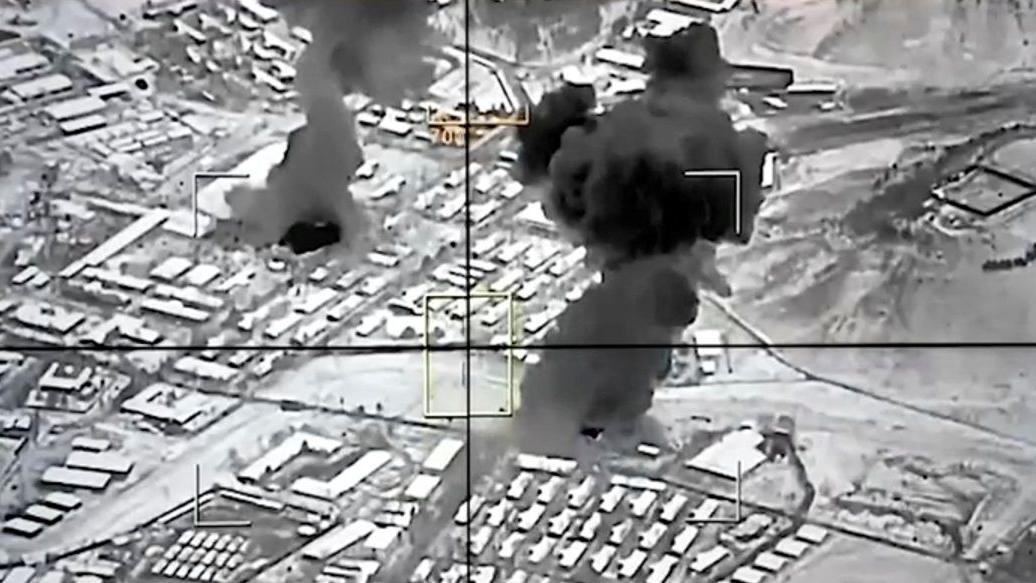

The Pakistani military launched a significant offensive against Afghanistan’s capital, Kabul, on Friday, February 27. High-ranking Pakistani officials declared their intent to expand attacks across multiple regions of Afghanistan, not confining operations solely to Kabul.
Earlier, Pakistani Prime Minister Shehbaz Sharif had warned that his nation possessed the “full capability to thwart any aggressive ambitions.” Further escalating tensions, Pakistan’s Defense Minister explicitly declared “open war” against the Taliban, the de facto ruling group in Afghanistan.
Taliban spokesperson Zabihullah Mujahid initially responded to Pakistan’s war declaration on X, asserting that the Taliban had retaliated against Pakistani military forces. However, this social media post was subsequently deleted. A Taliban military spokesperson, speaking to the BBC, stated, “We will retaliate if we are attacked, but we will not initiate clashes at this time.”
How Did the Conflict Unfold?
Early on Friday, February 27, Pakistan officially confirmed that it had initiated military strikes targeting several Afghan cities, notably Kabul and Kandahar. A Pakistani official explicitly stated that these military operations were a direct retaliation for prior Taliban assaults against Pakistan. The confirmation of strikes into Afghanistan closely followed Pakistan’s announcement that two of its soldiers had been killed during a Taliban operation along the volatile shared border.

Pakistan’s Defense Minister, Khawaja M Asif, underscored his nation’s diplomatic efforts, stating that Pakistan had “made every effort to maintain a normal situation through direct engagement and via friendly nations. Pakistan was fully engaged in diplomacy.” However, Asif declared a shift in policy, asserting, “Our patience has run out. Now this is open war between us and you.”
Notably, Pakistan and Afghanistan had previously agreed to a fragile ceasefire in October 2025. This agreement was reached after a series of deadly cross-border incidents. Despite the ceasefire accord, intermittent clashes between Pakistan and Afghanistan persisted.
In the early hours of Friday, powerful explosions rocked Kabul, as reported by AFP journalists present in the city. The resonant blasts, accompanied by the distinct roar of fighter jets, reverberated across Kabul around 01:50 local time. Intense volleys of gunfire were also reported in central Kabul, continuing until approximately 02:30 AM.
Pakistan’s offensive reportedly resulted in the destruction of 27 Afghan military outposts. Mosharraf Zaidi, spokesperson for the Pakistani Prime Minister, further claimed that Pakistani forces had successfully seized nine additional Afghan military positions. Zaidi also asserted that Pakistan had decimated over 80 pieces of Afghan military equipment, including tanks, artillery, and armored personnel carriers. Through his X social media account, Zaidi emphasized that “Pakistan’s swift and effective response to aggression continues.”

Conversely, Afghanistan’s Ministry of Defense presented its own account, claiming to have captured 19 Pakistani military posts and two bases on Thursday, February 26, alongside reports of killing 55 Pakistani soldiers. It is crucial to note that independently verifying the diverse claims from both nations remains challenging amidst the escalating conflict. Indeed, throughout months of ongoing border disputes, both Pakistan and Afghanistan have routinely claimed to inflict substantial casualties and material losses on their adversaries.
International Reactions and Calls for Diplomacy
“This is a terrible dynamic that must be stopped,” urged Zalmay Khalilzad, a prominent diplomat who served as the US special representative for Afghanistan reconciliation from 2018 to 2021. Khalilzad’s remarks appeared to be a direct response to earlier Taliban declarations of retaliatory operations against Pakistan. He highlighted the human cost on X, writing, “Innocent Afghan and Pakistani citizens are being wounded or killed.” Khalilzad advocated for a diplomatic resolution, stating, “A better option is a diplomatic agreement between the two countries that would not allow their territory to be used by individuals and groups to threaten the security of another country.” He further suggested that the implementation of such an agreement should be robustly monitored by a neutral third party, proposing Turkey as a potential overseer. Notably, in 2025, Khalilzad was part of a U.S. delegation that traveled to Afghanistan for meetings with Taliban officials.

Meanwhile, Iran has extended an offer to facilitate dialogue between Pakistan and Afghanistan, as articulated by Iranian Foreign Minister Abbas Araghchi in a statement on X. Araghchi implored both nations to “resolve their differences through good neighborly relations and dialogue,” underscoring the importance of diplomatic engagement. Iran had previously offered its mediation services during earlier periods of border tension between the two states.
Separately, Saudi Foreign Minister Faisal bin Farhan Al Saud reportedly engaged in a telephone conversation with his Pakistani counterpart, Ishaq Dar. According to a statement from the Saudi Ministry of Foreign Affairs, Al Saud discussed “developments in the region” and “avenues to de-escalate tensions” with Dar. At the time of the call, Ishaq Dar was on an official visit to Saudi Arabia.
Potential Trajectory of the Conflict
Analysts, speaking to BBC Urdu, suggest that the Taliban are unlikely to engage in conventional warfare against Pakistan. A profound disparity in military capabilities exists between Pakistan and Afghanistan. Pakistan’s armed forces, a nuclear-armed power, consistently maintain a position among the world’s top 15 military strengths. Afghanistan, in stark contrast, lacks comparable military resources and is grappling with significant economic challenges.
The weaponry at the disposal of the Taliban largely originates from three primary sources: arms abandoned by former Afghan national army personnel, equipment left behind by withdrawing foreign forces, and newly acquired weapons from various channels, including the black market. Experts point to videos from past border skirmishes, which indicate that Taliban forces predominantly employ light weaponry against their Pakistani counterparts. Nevertheless, analysts emphasize that the Taliban possess extensive and formidable experience in guerrilla warfare tactics. An Afghan security expert conveyed to BBC Urdu that numerous clashes between the Taliban and Pakistani forces have historically involved classic guerrilla tactics, such as ambush attacks and improvised explosive devices (roadside bombs).
- Who are the Taliban? The history of the group that now controls Afghanistan again
- Where do the Taliban’s revenues come from?
- Large quantities of US military weaponry now controlled by the Taliban
- What is the difference between the Taliban, al-Qaeda, and ISIS?
- Delving into the minds of Taliban leaders after two years in power in Afghanistan
- The story of a man once ready to die for the Taliban – ‘If they represent Islam, why are they so cruel?’
- Who are the Taliban? The history of the group that now controls Afghanistan again
- Where do the Taliban’s revenues come from?
- Large quantities of US military weaponry now controlled by the Taliban