
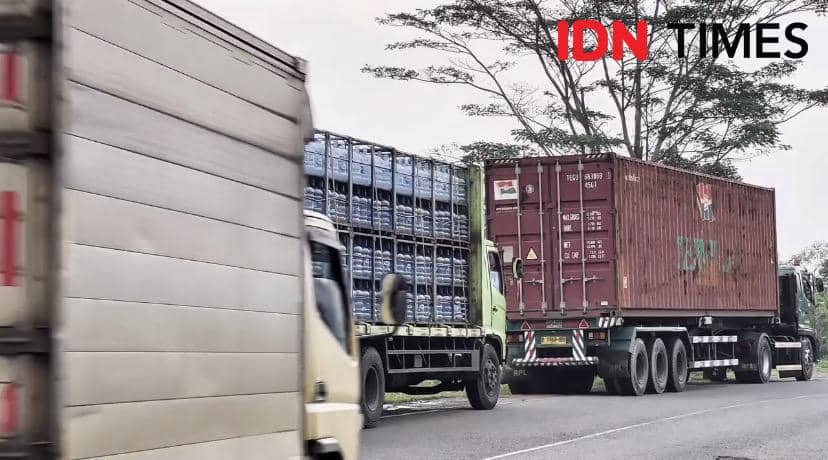
Jakarta, IDN Times – The Indonesian government has officially implemented significant operational restrictions for trucks on both toll and arterial roads during the upcoming 2026 Eid al-Fitr exodus period. This crucial measure is primarily aimed at ensuring seamless traffic flow and enhancing road safety for millions of commuters traveling across the archipelago.
Aan Suhanan, the Director General of Land Transportation, articulated the necessity behind these preemptive restrictions. He emphasized that the policy is a direct response to the anticipated surge in public mobility, a pattern observed during previous Eid and Christmas/New Year holidays. “Similar to last year’s Eid and the recent Christmas and New Year transport periods, a substantial increase in public movement is predicted,” Aan stated in an official release on Monday, March 9, 2026. He further added, “To maintain smooth traffic flow and elevate road safety aspects, it is imperative to implement regulations for logistics vehicles.”
These stringent truck operational restrictions will be in effect from Friday, March 13, 2026, at 12:00 PM WIB, until Sunday, March 29, 2026, at 00:00 AM WIB. The comprehensive policy is enshrined in a Joint Decree (SKB) comprising multiple official numbers: KP-DRJD 854 of 2026; HK.201/1/21/DJPL/2026; Kep/43/II/2026; and 20/KPTS/Db/2026. This collaborative decree was jointly signed by the Ministry of Transportation, the National Police’s Traffic Corps (Korlantas Polri), and the Ministry of Public Works, ensuring unified enforcement across all designated toll and non-toll roads outlined within the SKB.

The government’s directive specifically targets certain categories of goods vehicles to alleviate congestion during the Eid al-Fitr exodus 2026. The prohibitions apply to:
-
Goods vehicles equipped with three axles or more.
-
Goods vehicles operating with trailers or semi-trailers.
-
Goods vehicles transporting excavation materials, mining products, or construction materials.
While the bulk of the restrictions focuses on larger vehicles, goods vehicles with two axles are generally permitted to operate. However, this allowance comes with a critical caveat: they are explicitly prohibited from transporting specific raw materials, including soil, sand, stone, iron, cement, and wood. This targeted approach ensures that critical supply chains remain functional while reducing the overall volume of heavy transport during peak travel times.


Acknowledging the continuous need for essential supplies, certain categories of multi-axle goods transport vehicles are exempted from these restrictions, provided they carry vital commodities. These exceptions include vehicles transporting:
-
Fuel (BBM or BBG).
-
Livestock.
-
Fertilizer.
-
Natural disaster relief aid.
-
Staple goods (basic necessities).
To qualify for these exemptions, these vehicles must adhere to strict additional conditions: they must not exceed stipulated load capacities and dimensions, carry an official cargo manifest from the goods owner, and this manifest must clearly state the type of goods, their destination, and the owner’s name and address. Crucially, this document must be visibly affixed to the left side of the vehicle’s front windshield.
These meticulously planned traffic management measures are anticipated to yield significant benefits for the 2026 Eid al-Fitr exodus. Officials predict a smoother flow of traffic, a marked improvement in road safety across major routes, and the uninterrupted distribution of essential logistics to meet the public’s needs. The comprehensive approach underscores the government’s commitment to facilitating a safe and efficient holiday travel period for all citizens.
Summary
The Indonesian government has imposed significant operational restrictions on trucks on toll and arterial roads for the 2026 Eid al-Fitr exodus. This measure, implemented from March 13 to March 29, 2026, aims to ensure smooth traffic flow and enhance road safety during the anticipated surge in public mobility. The policy is a joint decree by the Ministry of Transportation, Korlantas Polri, and the Ministry of Public Works.
The restrictions target goods vehicles with three axles or more, those with trailers/semi-trailers, and those carrying excavation, mining, or construction materials. Two-axle vehicles are generally permitted but cannot transport specific raw materials like soil or wood. Exemptions apply for vehicles carrying vital commodities such as fuel, livestock, fertilizer, disaster relief, and staple goods, provided they meet specific conditions regarding load, documentation, and manifest display.