
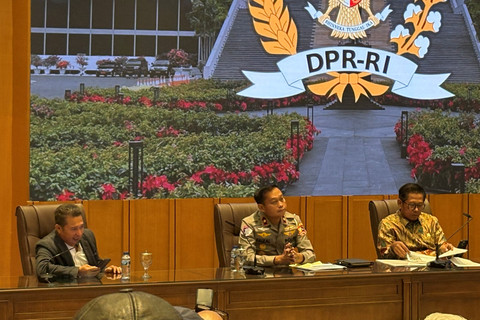

A recent train collision at Bekasi Timur Station has prompted calls for a comprehensive review of Indonesia’s railway safety systems. Sudjatmiko, a member of the House of Representatives’ Commission V, commented on the tragic incident involving the KA Argo Bromo Anggrek and KRL trains on Monday, April 27th, which resulted in 16 fatalities. The lawmaker underscored the urgent need to address underlying issues to prevent future disasters.
While the exact cause of the collision remains under investigation, Sudjatmiko highlighted several potential factors, ranging from system malfunctions to fundamental track deficiencies. He specifically pointed out a critical lapse: “The red signal was off, so from Bekasi Station, it appeared green.” This immediately brings into question the integrity of the signaling system. Furthermore, Sudjatmiko emphasized that the Cikarang-Bekasi route, serving both commuter and long-distance trains, ideally requires a double-double track configuration to ensure efficient and safe operations.
Spotlight on Infrastructure and Level Crossings
Sudjatmiko detailed the current state of rail infrastructure, explaining that while the Manggarai-Bekasi line already features separate double tracks for Commuter Line and long-distance services, the Bekasi-Cikarang stretch continues to use unseparated double tracks. This disparity creates operational bottlenecks and potential safety hazards. He also stressed the importance of properly maintaining level crossings, which must adhere to strict regulations based on road classification. The President has reportedly instructed a significant investment of Rp 4 trillion to replace these crossings, with hopes for completion within the current year.
Proposed Solutions: From Short-Term to Long-Term
The PKB politician put forth a series of recommendations spanning short, medium, and long-term strategies to bolster railway safety. For immediate action, he advocated for full, round-the-clock guarding of high-risk level crossings by certified personnel. This includes enhancing safety measures at these crossings with additional signage, warning signals, and rigorous enforcement against violations.
An innovative short-term proposal involves equipping locomotive cabins with visual monitoring screens, providing drivers with a forward view of 1,000 to 2,000 meters. Sudjatmiko explained that currently, train control is primarily managed from stations, leaving drivers without direct visual access to potential hazards far ahead. He elaborated on the critical need for such a system, noting that a train traveling at 60 km/h requires about 600 meters to brake, while at 100 km/h, it needs approximately 1,000 meters. This visual access, he suggested, could be cost-effectively achieved by connecting existing CCTV cameras at every level crossing and station to the locomotive cabins, providing drivers with crucial advance warning.
 Evaluating Safety Systems
Looking to the medium term, Sudjatmiko called for a comprehensive audit of the national railway safety system. This would also involve crucial improvements to the physical condition of level crossings, both on the tracks and road surfaces. He pointed out that often, poor road conditions at crossings (e.g., uneven asphalt or concrete) can disrupt motorists and contribute to accidents. Integrating advanced safety systems would further enhance overall resilience.
For a long-term vision, Sudjatmiko emphasized the accelerated construction of flyovers and underpasses, particularly in densely populated areas like Jabodetabek, where trains operate as frequently as every five minutes. He asserted that in such high-traffic regions, these grade separations are indispensable. Additionally, the closure of illegal level crossings was highlighted as a critical measure. Modernizing the entire railway system, including the implementation of the aforementioned visual monitoring for drivers, forms a key part of this long-term strategy.
Beyond Individual Factors
Sudjatmiko firmly believes that the recent train collision cannot be attributed solely to individual error. Instead, he views it as a stark indicator of systemic issues that urgently require rectification. He concluded by stating that this tragic event must serve as a pivotal moment for a thorough evaluation of the national transportation safety system, especially concerning level crossings. Ultimately, ensuring the safety of the public must remain the paramount priority.
Summary
A recent train collision at Bekasi Timur Station, involving KA Argo Bromo Anggrek and KRL trains, resulted in 16 fatalities and prompted calls for a comprehensive review of Indonesia’s railway safety systems. Lawmaker Sudjatmiko highlighted potential causes like a faulty signaling system, where a red signal appeared green, and emphasized the need for a double-double track configuration on the Bekasi-Cikarang route. He also noted that while the Manggarai-Bekasi line has separate tracks, the Bekasi-Cikarang stretch still uses unseparated double tracks, creating operational bottlenecks. Furthermore, the President has instructed a significant investment of Rp 4 trillion to replace level crossings.
To bolster railway safety, Sudjatmiko proposed short-term solutions including 24/7 guarding of high-risk level crossings and equipping locomotive cabins with visual monitoring screens. Medium-term strategies involve a comprehensive audit of safety systems and improving physical conditions at crossings, while long-term plans include accelerating flyover and underpass construction and closing illegal crossings. This tragic incident underscores systemic issues requiring thorough evaluation and rectification to ensure public transportation safety.
