
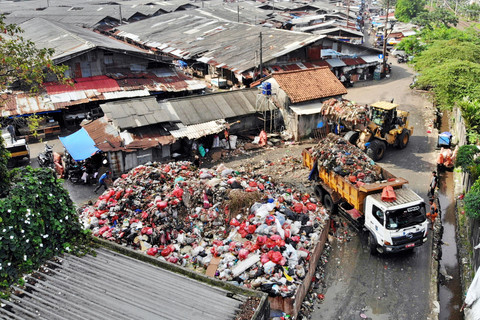
 The Ministry of Environment (KLH) has set an ambitious target to completely eliminate open dumping of waste by 2026. This practice, defined as the uncontrolled disposal of refuse by piling it openly on land without any processing or sorting, poses significant environmental risks and is a major focus for improved waste management in Indonesia.
Minister of Environment Hanif Faisol Nurofiq expressed strong optimism that this crucial target is achievable. He noted that out of 485 operational Landfill Sites (TPA) across the nation, approximately 40 are currently still utilizing this outdated method of waste disposal.
Clarifying the scale of the challenge, Minister Hanif detailed, “Of the 485 sites we monitor, about 66%—or around 325 TPAs—are still engaging in some form of open dumping. However, within that 325, those truly practicing direct, uncontrolled open dumping number only about 44 or roughly 40 sites. These specific sites have now entered a preliminary investigation phase.” This distinction highlights a more focused problem than the broader statistics might initially suggest, underscoring targeted enforcement efforts.
Hanif emphasized that the impending ban on open dumping practices does not mean the closure of existing landfills. Instead, the policy aims to halt the direct deposition of waste onto open ground, a method known to severely pollute the environment and endanger public health. The objective is to transition from harmful practices to more sustainable solutions.
“It’s not about closing the landfills, but about ending the environmentally damaging practice itself,” he elaborated. “The practice will be terminated by implementing a controlled landfill approach, where waste disposal sites are properly covered with soil or geotextile, among other measures, to mitigate environmental impact.” This transition to controlled landfills is crucial for modernizing Indonesia’s waste infrastructure.
In parallel with policy adjustments, the Ministry is also pursuing a rigorous legal approach to ensure compliance. Hanif confirmed that several landfills are presently undergoing formal investigation and inquiry, demonstrating the government’s commitment to enforcing environmental regulations.
He further specified that several major cities have already seen their landfills move into the official inquiry phase. Notably, the Suwung Landfill and the Bantar Gebang Landfill are both under scrutiny, with the Bantar Gebang site having progressed into the inquiry stage of legal proceedings.
Beyond these major sites, the scope of legal action extends to other regions. “Cities now entering the inquiry phase include Denpasar and Badung Regency,” Hanif stated. “Furthermore, we are currently conducting a serious investigation into sites in South Tangerang.” These widespread investigations underscore the comprehensive effort to eradicate open dumping across Indonesia and foster more responsible environmental protection and waste management practices.
Summary
The Ministry of Environment (KLH) aims to eradicate open dumping of waste by 2026, a practice posing significant environmental risks. Out of 485 operational Landfill Sites (TPA) nationwide, approximately 40 are currently identified as truly practicing direct, uncontrolled open dumping. These specific sites have now entered a preliminary investigation phase, signaling a targeted enforcement effort.
The policy focuses on ending environmentally damaging open dumping by transitioning to a controlled landfill approach, not closing existing sites. The Ministry is pursuing rigorous legal action, with several landfills undergoing formal investigation and inquiry. Notably, sites like Bantar Gebang, Suwung, and those in Denpasar, Badung Regency, and South Tangerang are under scrutiny or have progressed to the inquiry stage.