
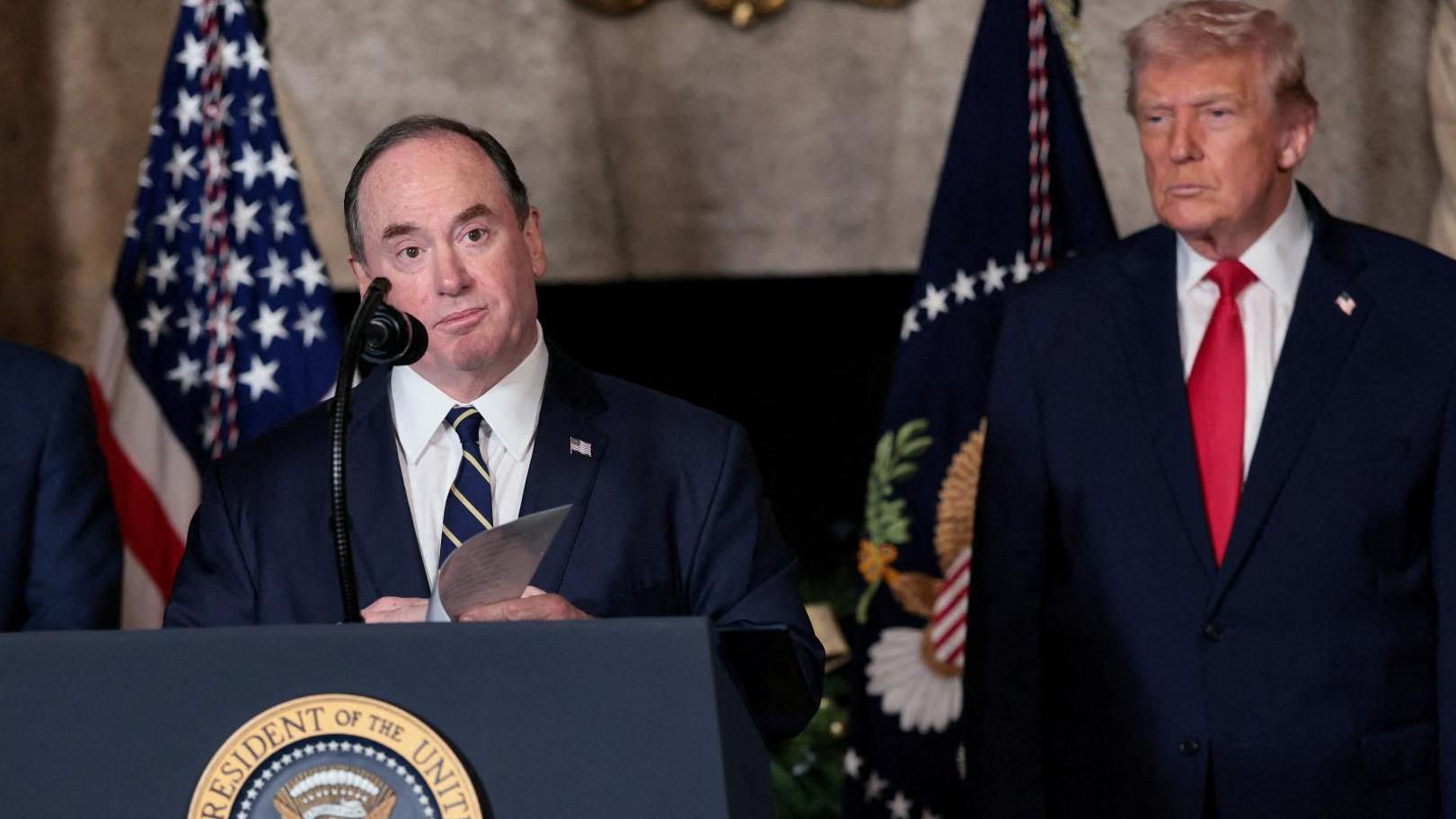
The United States Secretary of the Navy, John Phelan, has resigned from his post, the Pentagon announced on Wednesday. Pentagon spokesperson Sean Parnell confirmed the resignation via a social media post, stating that Phelan’s departure was “effective immediately.” The position, largely administrative in nature, will now be filled by Deputy Chief of Naval Operations Hung Cao.
Phelan’s resignation marks him as the latest high-ranking military official to step down in recent months. His departure occurs amidst escalating tensions, particularly the ongoing US-Israel conflict with Iran and the continued US blockade of the Strait of Hormuz. While US Navy authorities have not provided an official reason for the resignation, unconfirmed reports from US media suggest internal disagreements within US leadership regarding shipbuilding initiatives may have played a significant role in Phelan’s exit.
“On behalf of the Secretary of War and the Undersecretary of War, we thank Phelan for his service to the Department and the US Navy,” Pentagon spokesperson Sean Parnell wrote. “We wish him the very best in his future endeavors.”
This announcement follows a pattern of senior military leadership changes, coming just weeks after US Defense Secretary Pete Hegseth requested Army Chief of Staff Randy George’s resignation. Additionally, two other Army officials, General David Hodne and Major General William Green, were recently removed from their positions. Since assuming his role at the Pentagon, Hegseth has dismissed over a dozen senior military officers, including the Chief of Naval Operations and the Vice Chief of Staff of the Air Force, signaling a significant shake-up within the defense establishment.
According to various US media sources, Phelan’s loss of position stemmed from a direct conflict with Hegseth over the implementation of President Trump’s ambitious shipbuilding initiatives.
The role of the Secretary of the Navy is primarily administrative, encompassing policy formulation, recruitment, training, and equipping the Navy. This vital position also oversees the substantial budget and complex logistics of naval operations, including the construction and repair of ships and maritime military facilities.
John Phelan, a civilian with no prior military service, was sworn in as Secretary of the Navy in March 2025, having been nominated by President Donald Trump in 2024. A prominent businessman, Phelan was also a significant donor to Trump’s campaign. The two appeared together at Mar-a-Lago in December 2025, when Trump unveiled plans for a new series of warships to be armed and named after himself—a component of the “Golden Fleet,” an initiative strongly supported by Phelan.
Andrew Peek, former Deputy Assistant US Secretary of State, told the BBC that President Trump clearly aimed to expand the nation’s commercial and civilian fleet. “Ultimately, someone was going to be made a scapegoat for the lack of progress. I think that’s about 30% of the reason,” Peek stated. “The other 70%—Phelan’s replacement is very well known to the MAGA base. I think this is simply a replacement with someone the president prefers and trusts more.”
Phelan’s successor, Hung Cao, has served as Deputy Secretary of the Navy since October 2025 and is a 25-year Navy veteran. In 2024, Cao ran for the US Senate in Virginia with Donald Trump’s endorsement but was defeated by incumbent Democratic Senator Tim Kaine. During one campaign debate, he was notably critical of diversity, equity, and inclusion initiatives within the military.
Discussing Navy recruitment during the debate, Cao reportedly stated, according to an Associated Press report: “What we need are alpha males and alpha females who are willing to sacrifice themselves, eat it, and ask for more. Those are the young men and women who will win the wars.”
This leadership change in the Navy comes as Trump reaffirms that the US blockade of Iranian ports will persist despite a ceasefire in the conflict. Clashes continue in the Strait of Hormuz—a crucial global trade route supplying much of the world’s oil—with Iran announcing it has “seized” two vessels in the strait.
White House Spokesperson Karoline Leavitt stated that the president is “satisfied” with the US Navy’s blockade of Iranian ports, asserting that Iran is in a “very weak position.” Meanwhile, Iran’s chief negotiator, Mohammad Bagher Ghalibaf, declared on Wednesday that it would be “impossible” to reopen the Strait of Hormuz due to “blatant violations of the ceasefire” by the US and Israel.
- Trump extends ceasefire but maintains Strait of Hormuz blockade
- Over 100 international legal experts assess serious violations in US-Israel war with Iran
- Iran and US fail to reach agreement – Five sticking points in negotiations
Summary
The United States Secretary of the Navy, John Phelan, has resigned from his post effective immediately, a decision confirmed by the Pentagon. This leadership change occurs amid escalating tensions, particularly regarding the US blockade of the Strait of Hormuz and a broader shake-up of senior military officials under Defense Secretary Pete Hegseth. Unconfirmed reports indicate Phelan’s departure was due to internal disagreements with Hegseth over President Trump’s ambitious shipbuilding initiatives, specifically the “Golden Fleet.”
Phelan, a civilian nominated by Trump, is succeeded by Deputy Chief of Naval Operations Hung Cao, a 25-year Navy veteran who previously ran for Senate with Trump’s endorsement. Cao assumes the administrative role as Trump reaffirms the US blockade of Iranian ports, even as clashes persist in the critical Strait of Hormuz. This transition highlights ongoing tensions in the region, with Iran claiming to have seized two vessels in the strait while the White House expresses satisfaction with the blockade.
