
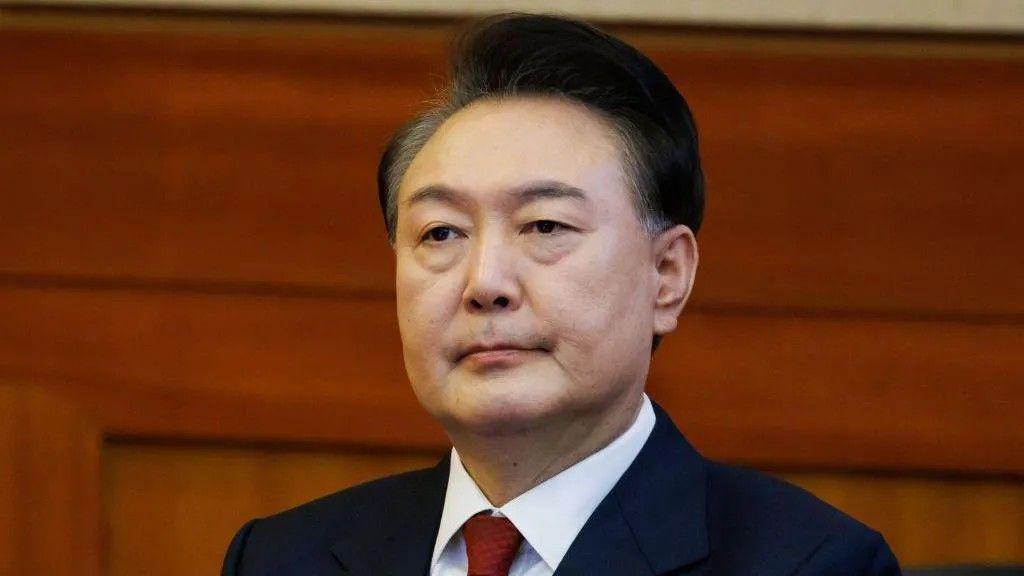

Former South Korean President Yoon Suk Yeol has been handed a life sentence for leading a rebellion, a landmark ruling delivered one year after his controversial attempt to impose martial law. This short-lived decree plunged South Korea into chaos, deeply dividing the nation and ultimately leading to a resounding victory for the opposition six months later.
The 65-year-old former leader also received a five-year prison term for abuse of power and obstructing his own arrest. While Yoon still faces two additional trials, today’s verdict addresses the most egregious charge: orchestrating a rebellion against the state.
The Charge of Rebellion
In the context of South Korean law, rebellion refers to acts of defiance or attempts to overthrow the government or national authority, often through violent means. Significantly, under the country’s constitution, a sitting president enjoys immunity from criminal prosecution unless the charges specifically involve rebellion or treason.
On Thursday, February 19, a Seoul court definitively ruled that Yoon’s actions on December 3, 2024—specifically, the deployment of military forces to blockade the National Assembly and the issuance of orders for politicians’ arrests—constituted a direct undermining of the constitution. Presiding Judge Ji Gwi-yeon stated during Yoon’s sentencing, “The court found that his intention was to incapacitate the assembly for a sufficiently long period.”
Earlier in the proceedings, prosecutors had sought the death penalty for Yoon, describing him as “unrepentant” for his actions. They argued that a lighter sentence might not “send a sufficiently strong message” to others contemplating similar unconstitutional maneuvers. Yoon, however, maintained that he declared martial law to safeguard the nation from “anti-state” forces he claimed sympathized with North Korea.

Investigations in the weeks following the declaration revealed a more complex motivation: Yoon’s decision was reportedly fueled by a dramatic decline in his approval ratings, a string of damaging scandals, and the looming threat of opposition investigations into his wife for alleged corruption. Despite these revelations, he steadfastly defended his martial law decision throughout his trial, characterizing it as “an act to protect the people’s freedom and sovereignty and to preserve the nation and its constitution.”
This is not the first instance of a former South Korean leader being convicted for their involvement in a rebellion. Chun Doo-hwan, the military dictator who governed South Korea in the 1980s, was initially sentenced to death for leading a rebellion, a sentence later commuted to life imprisonment. His ally and successor, Roh Tae-woo, also received a lengthy prison term for his role in the same rebellion. Both were eventually pardoned.
However, prosecutors contended that Yoon’s 2024 attempt to impose martial law “stained the nation’s dignity much more severely” than the military coup orchestrated by Chun and Roh in 1979. Leading law professor Lim Ji-bong told the BBC prior to the verdict that he anticipated a life sentence to prevent Yoon from being perceived as a martyr. He argued that a death sentence carried significant political risks, potentially alienating Yoon’s supporters further and exacerbating the existing political turmoil in South Korea. Even if Yoon had been sentenced to death, it would, in practice, likely convert to life imprisonment, as South Korea has not carried out an execution since December 1997.
Christopher Jumin Lee, a US-based lawyer and expert on Korean affairs, also believes that Yoon will ultimately be pardoned, mirroring the fate of Chun and Roh. “That is the custom in Korean politics,” Lee remarked. “Whatever the sentence, it is merely symbolic recognition of the gravity of the crime.”
Obstruction of Justice Charges
In January, Yoon was also found guilty of attempting to obstruct justice by evading arrest, abusing his power by failing to convene a cabinet meeting before declaring martial law, and falsifying official documents. Prosecutors accused him of weaponizing state institutions “for personal gain” to conceal his transgressions and undermine the constitutional mechanisms of checks and balances.

Last January, it required approximately 3,000 police officers across two separate attempts to interrogate Yoon regarding the rebellion charges. During this period, Yoon mobilized a substantial security detail, forming a human barrier at his residence to impede arrest efforts – a move described by the special prosecutor investigating the allegations as unprecedented. Mason Richey, an associate professor at Hankuk University of Foreign Studies in Seoul, noted that the chaos surrounding the failed arrest attempts “demonstrated clear lawlessness by Yoon, his conservative party, and South Korea’s domestic security apparatus.” Richey added that the obstruction of justice trial served as “a way to ensure accountability for other things.”
Accusations of Aiding an Enemy State
Prosecutors have also leveled accusations against Yoon, alleging that he deliberately attempted to provoke North Korea into attacking South Korea to justify his declaration of martial law. To support these claims, prosecutors cited evidence found on the phone of former military intelligence chief Yeo In-hyung, which contained communications suggesting potential provocations. They also referenced a memo that seemingly advocated for steps to “create an unstable situation.”
A separate trial, which commenced last January, is set to determine whether Yoon ordered drone flights into North Korea to instigate a military conflict between the two Koreas, among other serious allegations. Yeo and Yoon’s former defense minister, Kim Yong-hyun, face similar charges in connection with this investigation.
Additional Allegations and Trials
Yoon is further implicated in perjury charges, stemming from his testimony during the trial of former Prime Minister Han Duck-soo last year on accusations of aiding the rebellion. Prosecutors subsequently accused Yoon of providing false testimony by claiming he had long planned to hold a cabinet meeting before declaring martial law. Investigators, however, concluded that Yoon had no such prior plan and only convened the meeting at Han’s insistence.
Beyond the accusations directly linked to his martial law attempt, Yoon faces charges in a series of other high-profile cases. He is among 33 individuals indicted for allegedly obstructing the investigation into the death of a young marine officer in 2023 and for aiding suspects in that case. Additionally, Yoon stands accused of interfering in the 2022 presidential election and making false statements during his campaign.
- Constitutional Court’s decision on President Yoon’s military decree: Implications for South Korea
- A history of South Korean presidential scandals: Imprisonment, exile, and impeachment
- Former South Korean first lady sentenced to 20 months for bribery involving Chanel bags and diamond necklaces – The full story
- Kim Keon Hee: From First Lady to prison cell – Tracing her journey
- South Korean presidential scandals: A legacy of imprisonment, exile, and impeachment
- Fear, anger, and triumph: The six hours that shook South Korea
Summary
Former South Korean President Yoon Suk Yeol has been sentenced to life imprisonment for leading a rebellion, a year after his attempt to impose martial law. He also received a five-year term for abuse of power and obstructing arrest. A Seoul court ruled that his actions on December 3, 2024, including deploying military forces and ordering arrests, directly undermined the constitution.
Prosecutors sought the death penalty, describing Yoon as unrepentant, though he maintained he acted to protect the nation. Investigations revealed his decision was partly fueled by declining approval and scandals. Yoon also faced convictions for obstructing justice and is accused in separate trials of attempting to provoke North Korea, perjury, and other serious allegations.