
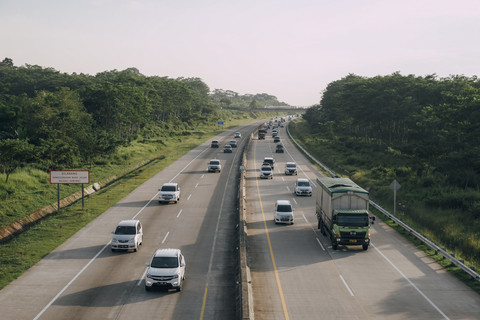
Traffic congestion plagued the return flow on March 26, with significant bottlenecks observed at various points along the Trans-Java Toll Road. Our team at kumparan witnessed this firsthand while traversing the Trans-Java Toll Road towards Jakarta on Thursday, March 26.
By 10:00 AM WIB, severe congestion had already formed at the KM 389 rest area. The queue of vehicles attempting to enter the rest area stretched for a considerable distance, causing significant slowdowns in the main traffic flow.
Further down the road, the KM 360 rest area presented a similar scene. Once again, the sheer volume of holiday travelers’ vehicles attempting to access the facilities brought traffic on the toll road to a crawl.
Beyond these congested rest areas, traffic generally resumed a smoother flow. However, intermittently along the stretch from Kendal to Brebes, a concerning trend emerged: numerous travelers were spotted stopping on the road shoulder.
Our observations at kumparan suggest several reasons behind these impromptu stops. These ranged from apparent vehicle troubles to travelers simply pulling over for a rest.
The critical issue arising from these roadside stops was the subsequent disruption to the main traffic flow. Vehicles using the shoulder to bypass congestion often had to slow down significantly to merge back into the primary lanes, especially when navigating around other stationary vehicles on the shoulder.
Consequently, vehicles in the main lanes were forced to decelerate and yield, accommodating those merging back from the shoulder, further exacerbating the overall slowdown. This pattern of congestion and slowdowns extended continuously from the rest areas all the way to the KM 160 mark.
Long Queues at Rest Area Toilets
Within the rest areas themselves, the scene was one of overwhelming occupancy, with every available space filled by travelers’ vehicles. Dining establishments and mosques were similarly packed to capacity.
Travelers sought respite, using these stops to alleviate fatigue, enjoy meals, and perform religious prayers.
However, a particularly concerning aspect was the extensive queues at the restrooms. At locations like KM 360, travelers faced waits of up to 20 minutes just to access a toilet.
Fortunately, rest area personnel proved invaluable in managing the situation. Equipped with megaphones, they diligently guided travelers, directing them to available restroom facilities.
Furthermore, these diligent officers used their megaphones to admonish unruly travelers, particularly those parking indiscriminately, which otherwise exacerbated internal traffic flow issues within the already crowded rest areas.
Summary
On March 26, severe traffic congestion affected the Trans-Java Toll Road towards Jakarta, primarily due to long queues of vehicles attempting to enter rest areas at KM 389 and KM 360. Further exacerbating the issue, numerous travelers stopped on the road shoulder, causing disruptions to the main traffic flow when re-merging. This pattern of congestion and slowdowns extended for a considerable distance along the toll road.
Within the rest areas themselves, all available spaces were heavily occupied, with dining establishments and mosques also packed. A notable problem was the extensive queues for restrooms, with travelers facing waits of up to 20 minutes at some locations, such as KM 360. Rest area personnel actively managed the situation, guiding travelers and admonishing indiscriminate parking to help alleviate the crowded conditions.