
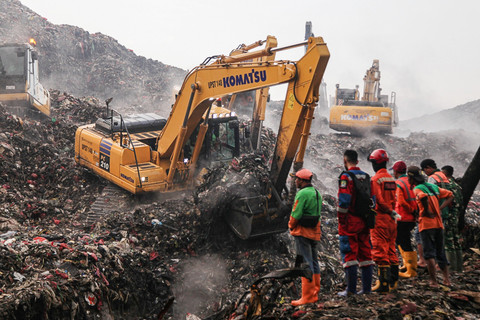

A devastating waste landslide at Zone 4A of the Bantargebang Integrated Waste Treatment Plant (TPST) in Bekasi, West Java, has tragically claimed four lives and left five others injured. In response to the disaster, DKI Jakarta Governor Pramono Anung swiftly announced that the DKI Jakarta Provincial Government would bear the full medical expenses for all those who sustained injuries.
Speaking at the DKI Jakarta City Hall on Monday (March 9), Pramono affirmed, “The medical treatment costs for the injured will be entirely covered by the DKI Jakarta Government.” He further noted that while all five injured victims were initially transported to hospitals for care, they have since been discharged and have returned to their respective homes, indicating a positive recovery trajectory for those affected.
Compensation for Fatalities

Beyond medical aid, Governor Pramono Anung also assured that the families of the deceased victims would receive due compensation. Specifically, he stated, “The DKI Jakarta Provincial Government confirms that the victims who passed away, particularly those from the Public Infrastructure and Facilities Handling (PJLP) unit of the Environmental Agency, will receive compensation through BPJS Ketenagakerjaan,” referring to the Workers Social Security Agency.
Expressing his profound condolences for the tragic incident, Pramono outlined immediate mitigation measures. As a critical first step, he announced the temporary closure of Zone 4A. Operations for waste delivery to the Bantargebang TPST will be significantly minimized and rerouted to Zone 3, while two new temporary disposal points are being prepared and existing areas are being tidied up to manage the influx.
Cause of the Landslide

Shedding light on the origins of the catastrophic landslide that occurred on Sunday (March 8), Governor Pramono identified extreme rainfall as a primary trigger. He elaborated that the intense downpour on that day is suspected to have caused the operational road and a 40-meter stretch of the Ciketing River to become entirely submerged under waste, exacerbating the instability of the massive refuse piles.
Pramono highlighted the severity of the weather, noting that rainfall on the day of the incident reached an extraordinary 264 millimeters per day. This exceptionally high volume for Jakarta and its surrounding areas saturated the already towering waste heaps, rendering them highly unstable. Consequently, the prolonged penetration of rainwater into the waste layers led to a loss of friction, causing the colossal piles to become slick and ultimately slide downward in a devastating landslide.
In the aftermath of the incident, the DKI Jakarta Environmental Agency (DLH) immediately launched an emergency response operation. This crucial initiative aims to manage the extensive impacts of the landslide while simultaneously ensuring the safety and well-being of all personnel on the ground. The operation is a collaborative effort, involving a multi-agency team comprising Basarnas (National Search and Rescue Agency), Polda Metro Jaya (Jakarta Metropolitan Police), TNI (Indonesian National Armed Forces), BPBD DKI Jakarta and Bekasi City (Regional Disaster Management Agency), Damkar (Fire Department), and local territorial authorities.
During the critical evacuation and recovery process, emergency teams deployed a formidable array of resources to accelerate the search for potential victims and manage the disaster site. This included the strategic deployment of 19 excavator units and 7 ambulances, underscoring the scale of the effort to respond effectively to the Bantargebang waste landslide.
Summary
A devastating waste landslide at Zone 4A of the Bantargebang Integrated Waste Treatment Plant resulted in four fatalities and five injuries. DKI Jakarta Governor Pramono Anung confirmed that the provincial government would bear all medical expenses for the injured, who have since been discharged. Additionally, families of the deceased, especially those from the Public Infrastructure and Facilities Handling (PJLP) unit, will receive compensation via BPJS Ketenagakerjaan.
The landslide, which led to the temporary closure of Zone 4A and rerouting of waste to Zone 3, was primarily caused by extreme rainfall. Intense downpours saturated the towering waste heaps, leading to a loss of friction and the collapse. An emergency response operation, involving a multi-agency team, was immediately launched by the DKI Jakarta Environmental Agency to manage the disaster.