
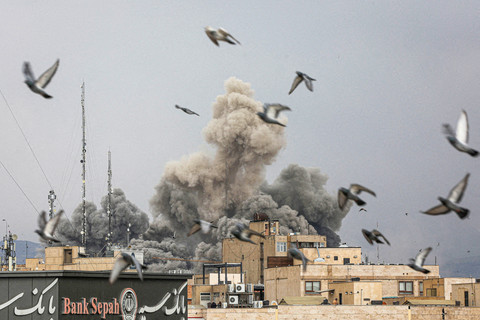

A significant explosion once again rocked Iran, specifically in Tehran, on Tuesday, March 3rd. Thick plumes of smoke were observed rising from the eastern parts of the capital, fueling speculation that the incident specifically targeted the Islamic Revolutionary Guard Corps (IRGC). As of now, the Iranian government has maintained silence regarding the precise nature of the target struck in the blast, as reported by Al Jazeera.
This latest incident occurs amidst growing pressure on the IRGC, which has reportedly suffered a “devastating blow” from a series of coordinated attacks. These previous assaults were said to have aimed at the IRGC’s supreme commander and more than ten other senior military officials. The intensified campaign against the elite force began shortly after the official announcement of the death of Iran’s supreme leader, Ayatollah Ali Khamenei. An Al Jazeera report starkly described the situation, stating, “It was nothing short of a very, very big blow.”
Further developments indicate that the scope of these Iran attacks extends beyond just high-ranking military personnel. Reports suggest that several headquarters and centers affiliated with the IRGC in various districts of Tehran and other cities have also come under assault. This broadening of targets points to a more extensive and complex campaign impacting the Guard’s operational capabilities across multiple fronts.
Since the initial wave of attacks commenced in the early hours of Saturday, February 28th, the IRGC has consistently released statements detailing the evolving situation. Crucially, they have also confirmed the ongoing nature of what they describe as “retaliatory strikes” in response to these aggressions. This signals an active and dynamic conflict unfolding within the region.
On Monday night, March 2nd, the IRGC publicly asserted that they had targeted a military base in Kuwait and a gathering of United States military forces stationed in Dubai. Their statement underscored the continued nature of their counter-offensive, proclaiming, “Retaliatory attacks continued last night.” This claim highlights the expanding geographical reach of the current Middle East conflict.
However, the escalating crisis is not confined solely to military installations and political nerve centers. Reports are increasingly indicating that civilians are also bearing the brunt of the violence, underscoring that the deepening conflict is now impacting multiple layers of society and extending its reach far beyond conventional combat zones.

Summary
A significant explosion once again rocked Tehran on Tuesday, March 3rd, with thick plumes of smoke observed rising from the capital’s eastern parts. Speculation suggests the incident specifically targeted the Islamic Revolutionary Guard Corps (IRGC), although the Iranian government has maintained silence regarding the precise nature of the target. This latest blast occurs amidst growing pressure on the IRGC, which has reportedly suffered a “devastating blow” from a series of coordinated attacks.
These intensified assaults, which began shortly after the announcement of Ayatollah Ali Khamenei’s death, have broadened to include IRGC headquarters and centers across Tehran and other cities, not just high-ranking officials. The IRGC has confirmed launching “retaliatory strikes” since February 28th in response to these aggressions. On March 2nd, they publicly asserted targeting a military base in Kuwait and a gathering of United States military forces in Dubai. The escalating conflict is also reportedly impacting civilians, extending its reach beyond conventional combat zones.