

Teknowarta – The Corruption Eradication Commission (KPK) has affirmed that the majority of corruption perpetrators are male. This observation is supported by KPK data spanning from 2004 to 2025, which indicates that out of 1,904 individuals implicated in corruption based on gender, men predominantly comprise this figure.
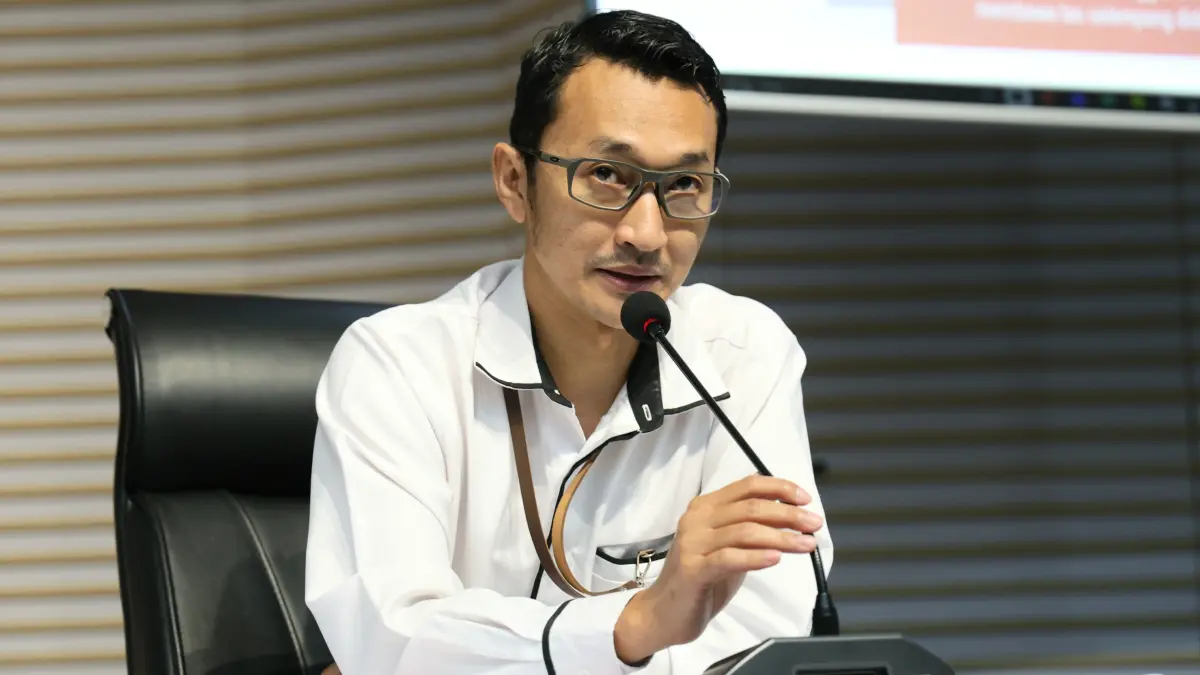
“KPK enforcement data shows that from 2004 to 2025, there were 1,904 perpetrators of corruption cases, categorized by gender, who have been handled. This comprises 91% (1,742) men and 9% (162) women,” stated KPK spokesperson Budi Prasetyo to reporters on Tuesday (21/4).
Budi elaborated that key figures in corrupt practices consistently involve a “circle” of associates, who act as layers in the reception of illicit funds or serve as a means to disguise and channel the proceeds of suspected corruption. This intricate web is crucial for the successful execution of fraudulent schemes.
Rachmat Irianto Jalani Operasi Lutut Kanan! Siap Menggila Bersama Persebaya Surabaya Musim Depan
“In several cases handled by the KPK, the phenomenon of primary perpetrators’ ‘circles’ being involved has come to light, extending to family members, trusted confidants, colleagues, and even political associates,” Budi added, highlighting the pervasive nature of these networks.
He further revealed that these ‘circles’ play a critical role from the initial planning stages of corrupt activities, actively participating in the execution, or acting as intermediaries and layers in receiving illicit money. Furthermore, they are often involved in helping to harbor or camouflage the flow of these funds.
As an illustration, Budi cited a case in Pekalongan Regency, where a suspected conflict of interest emerged. Regent Fadia Arafiq allegedly used her family to intervene with regional officials, ensuring that the Regent’s family companies secured procurement tenders.
“Additionally, family members were also suspected of receiving a share of the proceeds from these corrupt acts,” he disclosed, underscoring the direct financial benefits reaped by the circle.
Fadly Alberto Hengga Angkat Bicara! Menyesal dan Minta Maaf Tendangan Kungfunya Coreng Timnas Indonesia
Similarly, in Bekasi Regency, a corruption case involved a family circle—specifically, a father and son. Regent Ade Kuswara Kunang, allegedly through his father H. M Kunang, received illicit upfront payments or ‘ijon’ from various private entities within Bekasi Regency. This intricate family involvement underscores the depth of embedded corruption.
“Meanwhile, in Tulungagung Regency, a similar scheme was executed through a circle of colleagues, involving the Regent’s trusted aide or ADC, who was tasked with collecting and pooling ‘shares’ from several regional government bodies,” he explained, revealing another common method of illicit fund collection.
Moreover, in Cilacap Regency, corruption manifested within a professional network, encompassing the Regent, Regional Secretary, and Assistant Regional Secretary, who collectively communicated and coordinated demands for money from the Regent. This demonstrates how official positions can be leveraged for personal gain.
In the Ponorogo Regency case, a practice of “political patronage” or “reciprocal favors” was suspected. Political funders who supported the Bupati during the 2024 regional elections allegedly received preferential treatment.
“The elected Bupati subsequently orchestrated the selection of project winners,” Budi stated, illustrating how political debts are repaid through public resources.
The KPK indicated that these project winners allegedly provided sums of money, functioning as a repayment of capital initially extended to the Bupati during the election campaign. This arrangement highlights a cycle of political financing and corruption.
A similar pattern of receiving illicit funds was observed in the Riau Provincial Government, where the Riau Governor allegedly appointed a trusted confidant as an intermediary for the flow of funds. Consequently, the Riau Governor did not directly receive the money, but rather it flowed through this trusted individual, creating a layer of plausible deniability.
BMKG Prediksi Hujan Landa Jakarta pada Selasa Siang-Malam
Beyond these, the KPK also uncovered a multi-layered scheme in a customs case. Besides the alleged receipt of cash stored in safe houses, the KPK found evidence of colleagues’ names being used as nominees or their accounts serving as holding accounts for illicit funds, further illustrating the complexity of money laundering operations.
“This condition shows that corruption operates like an ecosystem; there are those who arrange, those who execute, and those who store. Public office no longer stands neutral but often becomes a nexus for various interests, including as a tool for political patronage or financing,” Budi emphasized, offering a profound insight into the systemic nature of corruption.
Budi affirmed that in detecting money flows, the KPK receives crucial support from the Financial Transaction Reports and Analysis Center (PPATK), which actively provides data and analysis of financial transactions related to ongoing cases. This collaboration is vital for effective investigations.
“This support enables the KPK to map patterns of money movement, identify involved parties, and uncover sophisticated schemes for disguising money flows through various layers,” he elaborated, highlighting the enhanced investigative capabilities.
Kualitas Udara Jakarta Tidak Sehat Selasa Pagi Ini, Jangan Lupa Pakai Masker!
The KPK stresses that eradicating corruption is not merely about targeting principal perpetrators but also about dismantling the entire network involved. Building integrity cannot be achieved individually; rather, it must be reinforced from the closest environments, including family, colleagues, and political networks, forming a robust defense against corruption.
Therefore, the KPK actively encourages active public participation as a watchdog. This includes reporting suspected acts of corruption through the KPK Whistleblower System (KWS) website at kws.kpk.go.id, via email at [email protected], Call Center 198, or by directly visiting the KPK’s Merah Putih Building in Jakarta, fostering a culture of accountability.
“In this regard, the KPK, through its Directorate of Education and Public Participation, continues to intensify anti-corruption socialization and education. These efforts target not only state officials but also their closest circles, such as spouses, family, and relatives, as part of building a fortress of integrity from the most intimate spheres,” he concluded, emphasizing the holistic approach to fostering an anti-corruption mindset.
Summary
The Corruption Eradication Commission (KPK) data from 2004-2025 indicates that 91% of corruption perpetrators are male. The KPK highlights that corrupt practices consistently involve a “circle” of associates, including family members, trusted confidants, colleagues, and political allies. These individuals are crucial for planning, executing, and receiving illicit funds, often helping to disguise the money flow. This intricate network reveals corruption operating as an ecosystem with various roles.
Examples from Pekalongan and Bekasi illustrate how family members are used to secure tenders or receive illicit payments, while political patronage, as seen in Ponorogo, repays campaign support. The KPK, supported by the Financial Transaction Reports and Analysis Center (PPATK), aims to dismantle these entire networks rather than just targeting principal perpetrators. The commission also actively encourages public participation in reporting corruption and intensifies anti-corruption education for officials and their close circles.
