

The Corruption Eradication Commission (KPK) has unearthed an elaborate scheme involving the rental of “safe houses” by rogue officials within the Directorate General of Customs and Excise (DJBC), allegedly to stash illicit funds derived from corruption. This revelation points to a sophisticated method used to conceal ill-gotten gains, adding a new dimension to ongoing investigations into financial misconduct within the agency.
This clandestine modus operandi initially surfaced during a KPK sting operation (OTT) in early February 2026, which targeted alleged import lane bribery within Customs. The operation led to the naming of six suspects, several of whom were high-ranking Customs officials. Among them were Rizal, the former Director of Enforcement and Investigation for DJBC; Sisprian Subiaksono, Head of the Sub-directorate of Intelligence for Enforcement and Investigation; and Orlando Hamonangan, Head of the Intelligence Section at DJBC. These initial arrests laid the groundwork for uncovering the broader network of corruption.
Further investigations into the import lane bribery case subsequently led the KPK to name Budiman Bayu Prasojo, Head of the Excise Intelligence P2 Section at the Directorate General of Customs and Excise, as a suspect in a separate gratification charge. His involvement underscored the expanding scope of the corruption allegations and the interconnectedness of various illicit activities.
Asep Guntur Rahayu, Deputy for Enforcement and Execution at the KPK, explained the intricate details of the scheme to reporters at the KPK Building in Jakarta on Friday, February 27. “These rogue DJBC officials rented several apartments in Central Jakarta, which were used as safe houses. The proceeds of their crimes were then stored in these safe houses,” he stated, highlighting the deliberate efforts made to secure and hide the illegal assets.

“Why did they need multiple safe houses? Because they constantly moved their operations to avoid detection,” Asep added, shedding light on the strategic nature of their evasion tactics designed to thwart law enforcement. This constant movement was a critical element in their efforts to remain undetected and continue their corrupt practices.
Following the significant OTT on February 4, 2026, KPK investigators launched a series of raids. One raid on an apartment in Jakarta, believed to be one of the safe houses, uncovered substantial amounts of cash discreetly stored in envelopes, along with gold. This initial discovery provided tangible evidence of the illicit wealth being hoarded.
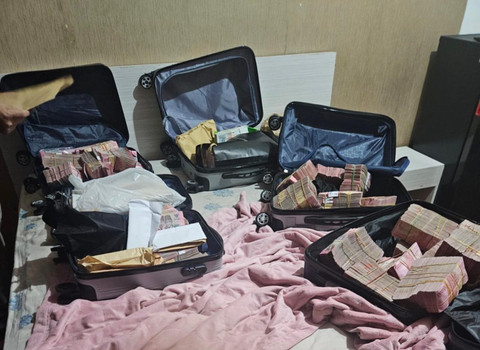
The investigation then led the KPK to another apartment in Ciputat, South Tangerang, which also served as a safe house. Here, investigators made a more significant discovery: IDR 5 billion (approximately $320,000 USD) meticulously packed into five suitcases. This substantial find further cemented the scale of the alleged corruption.
It is suspected that the IDR 5 billion found in Ciputat had been hastily moved from the Jakarta safe house. Salida Asmoaji, an employee within the Directorate of Enforcement and Investigation, is believed to have carried out this transfer under the direct orders of Budiman Bayu Prasojo, prompted by the KPK’s ongoing OTT. This suggests a desperate attempt to protect the illicit funds from seizure.

Interestingly, Budiman was among those initially apprehended during the OTT. However, he was released at the time due to insufficient evidence linking him directly to the initial allegations. His subsequent designation as a suspect for gratification highlights the evolving nature of the investigation as new evidence emerged.
Asep elaborated on the movement of funds, confirming, “SA then moved the money to another safe house located in an apartment in the Ciputat area, South Tangerang. There, investigators discovered cash in various foreign currencies and rupiah, totaling more than IDR 5.19 billion, stored in five suitcases. Yes, they kept it in suitcases.” This detailed account paints a clear picture of the sophisticated methods employed to hide the money.

Beyond the large sums of cash, the raid on the Ciputat safe house also yielded vehicle ownership documents (BPKB). These documents are suspected to belong to vehicles used as operational transport for their illicit activities, indicating a well-resourced operation. Furthermore, Asep revealed that cash was also stored in these operational vehicles to cover urgent needs, allowing quick access to funds without needing to retrieve them from the safe houses directly.
As of now, no statements have been released by the implicated suspects regarding these serious allegations, leaving many questions unanswered as the KPK continues its rigorous investigation.
Summary
The Corruption Eradication Commission (KPK) has exposed an elaborate scheme by rogue Directorate General of Customs and Excise (DJBC) officials who rented “safe houses” to store illicit funds derived from corruption. This discovery stemmed from a February 2026 sting operation targeting import lane bribery, which led to the arrest of several high-ranking officials and the subsequent naming of Budiman Bayu Prasojo as a suspect in a separate gratification charge. Officials strategically used multiple rented apartments, constantly moving their operations to evade detection.
KPK raids uncovered significant evidence, including substantial cash and gold in a Jakarta apartment. Another safe house in Ciputat, South Tangerang, yielded over IDR 5.19 billion in various currencies, stored in five suitcases. This large sum was reportedly moved from Jakarta by an employee under Budiman’s orders to prevent seizure during the ongoing KPK operation. Vehicle ownership documents and cash for operational use were also found, indicating a well-resourced illicit network.