
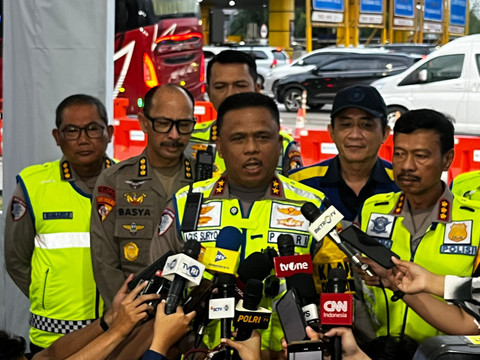

The National Traffic Corps (Korlantas Polri) is strategically preparing a comprehensive traffic engineering plan, specifically implementing a Phase 3 local one-way system, along the critical Trans-Java Toll Road. This proactive measure is in response to the anticipated surge in Eid al-Fitr return traffic. The planned scheme is set to span from Kilometer (KM) 390 in the Kendal region all the way to KM 70, heading towards Jakarta.
Kakorlantas Polri Irjen Agus Suryonugroho elaborated on the current traffic management efforts, stating that a local one-way system is already in effect, stretching from KM 263 to KM 70. He emphasized, however, that the duration and extent of this one-way operation remain flexible and can be expanded as dictated by real-time field conditions.
“The night was somewhat calm, and following coordination with our stakeholders today, we will proceed with implementing a precise Phase 3 local one-way system,” Agus explained from the command center at KM 29 on the Jakarta-Cikampek Toll Road in Cikarang Utara, on Saturday, March 28th. He further clarified that this local intervention precedes any potential implementation of a second phase of the national one-way system for the return flow of Eid al-Fitr travelers.
Agus highlighted that the existing one-way scheme has, so far, proven effective in accommodating the considerable volume of vehicles originating from the eastern regions. Nevertheless, the option to activate the Phase 2 national one-way system is being kept on standby, ready for deployment should a significant and unforeseen spike in traffic volume occur.
“This current arrangement is still effectively managing the flow of return traffic from the east, encompassing vehicles from East Java, Central Java, the Solo Raya area, and Yogyakarta. We will continue to implement it as planned. However, should there be a sudden resurgence in traffic, we will seek direct guidance from the National Police Chief regarding the potential necessity of initiating the Phase 2 national one-way system for the return journey,” he affirmed.

He also added a crucial point: any decision regarding these traffic schemes will thoughtfully consider vehicles traveling in the opposite direction, ensuring their movement is also adequately accommodated.
“That will be thoroughly considered. We must also take into account the citizens traveling towards the east. While all these considerations are important, we will ultimately prioritize based on the most pressing needs,” he elaborated, emphasizing a balanced approach to traffic management.
Drawing upon comprehensive traffic counting data, Korlantas has identified that approximately 22 percent of vehicles have yet to return to Jakarta. This suggests that the anticipated increase in traffic volume is likely to become more pronounced from the afternoon onwards and potentially extend into tomorrow.
“Based on our traffic counting calculations, nearly 22% of vehicles have not returned yet. Therefore, we anticipate a rise in traffic flow starting late this afternoon, potentially continuing into tomorrow,” he concluded, providing a clear forecast for commuters.
Summary
Korlantas Polri is implementing a Phase 3 local one-way system on the Trans-Java Toll Road, spanning from Kilometer (KM) 390 to KM 70 towards Jakarta, to manage the anticipated Eid al-Fitr return traffic surge. A local one-way system from KM 263 to KM 70 is already in effect, with its duration and extent flexible based on real-time field conditions. This local intervention precedes any potential implementation of a second phase of the national one-way system for return travelers.
The existing scheme has effectively managed the flow of return traffic from eastern regions such as East Java and Central Java. However, a Phase 2 national one-way system remains on standby for deployment should a significant traffic spike occur, with decisions also considering vehicles traveling in the opposite direction. Based on traffic counting data, approximately 22% of vehicles have yet to return to Jakarta, indicating an anticipated increase in traffic volume from late afternoon and potentially continuing into tomorrow.